



Popular Articles
2026 U.S. Window Tint Laws by State: Legal VLT Percentages Guide
2026.01.16
Midnight Purple Paint for GTR R34
2026.01.13
Exploring the Allure of Midnight Purple
2026.01.13

About Company
Colorfuul is a global leader in high-end automotive films, offering Color TPU PPF, Transparent PPF, PET Window Films, and Vinyl Wrapping. With exports to over 100 countries, we deliver consistent quality, competitive pricing, and professional service. Beyond production, we provide OEM/ODM customization, shaping the future of automotive aesthetics.
 mary@colorfuul.com
  86 13541196952
 2026 U.S. Window Tint Laws by State: Legal VLT Percentages Guide
Learning the laws on tinting windows is also important to people who own vehicles who would wish to have a comfortable, privacy, and UV protection without breaking the state laws. Different states in the United States have their own regulations on how far their automotive windows can be tinted, mostly on the basis of percentages of Visible Light Transmission (VLT).
This guide on window tint law of 2026 is an updated version on the working principle of tint regulations, the meaning of VLT and what drivers ought to be aware of when installing window film.
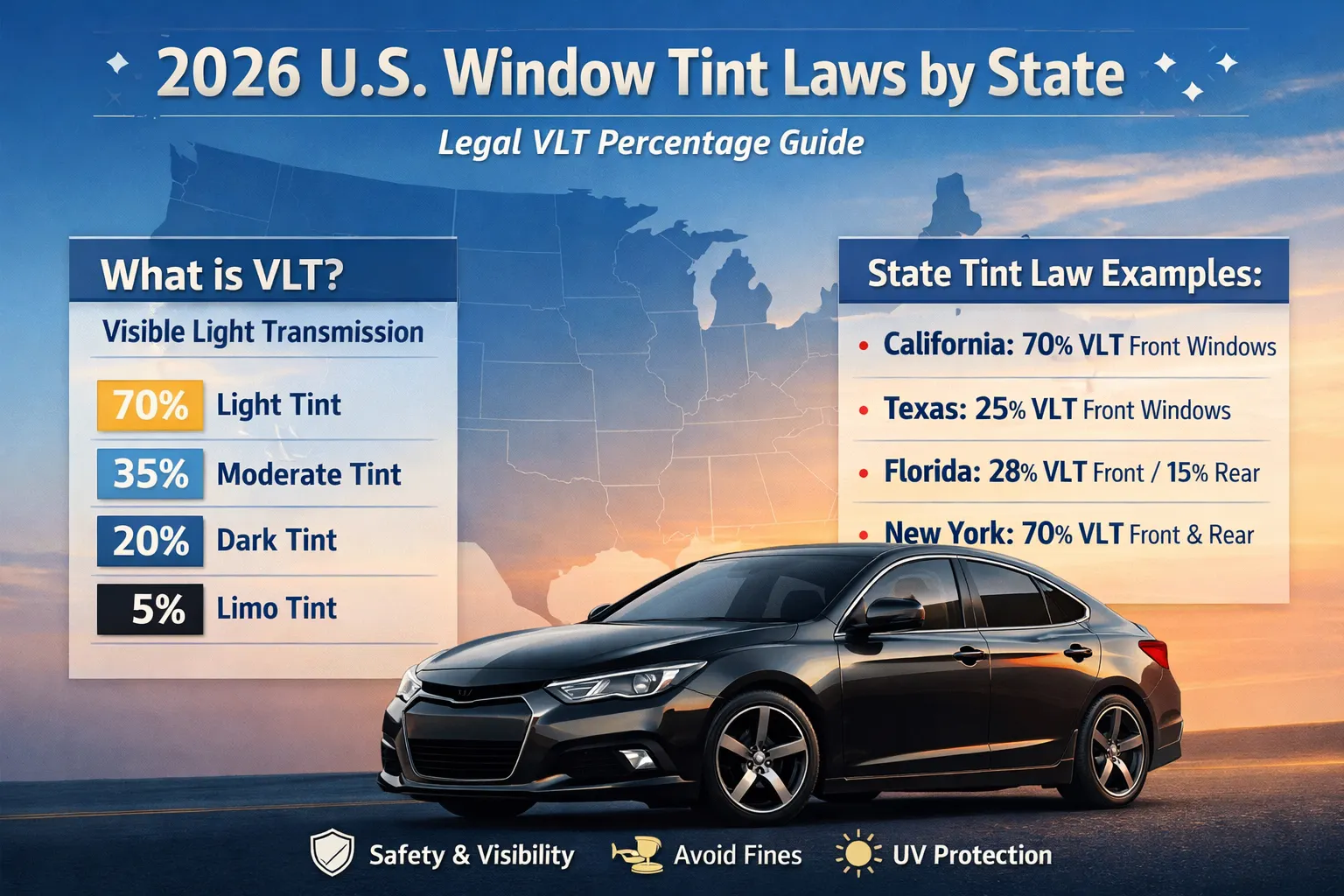
What Is VLT (Visible Light Transmission)?
VLT percentage refers to the amount of visible light that can pass through a window and its tint film.
-
70% VLT: Very light tint, high visibility
-
35% VLT: Moderate tint, balanced privacy and clarity
-
20% VLT: Dark tint, increased privacy
-
5% VLT: Extremely dark tint, often called “limo tint”
Lower VLT numbers indicate darker window film. While darker tints provide better privacy and heat rejection, they are more strictly regulated by law.
How Window Tint Laws Differ by State (2026 Update)
Most state regulations distinguish between:
-
Windshield
-
Front side windows
-
Rear side windows
-
Rear windshield
Below are examples of common state requirements. Always verify local laws before installation.
California Window Tint Laws
-
Front side windows: Minimum 70% VLT
-
Rear side & rear windows: Darker tint allowed
-
Windshield: Tint allowed above the AS-1 line
-
Red, amber, and blue tints are prohibited
Texas Window Tint Laws
-
Front side windows: Minimum 25% VLT
-
Rear side & rear windows: No VLT limit for most vehicles
-
Windshield: Tint allowed on top 5 inches
Florida Window Tint Laws
-
Front side windows: Minimum 28% VLT
-
Rear side & rear window: Minimum 15% VLT
-
Windshield: Tint allowed above AS-1 line
New York Window Tint Laws
-
Front side windows: Minimum 70% VLT
-
Rear side & rear window: Minimum 70% VLT
-
Windshield: Top 6 inches may be tinted
Other States (General Patterns)
-
Many states require 30–35% VLT on front side windows
-
Rear windows often allow darker tint, especially on SUVs and vans
-
Some states restrict reflective or mirrored films
-
Medical exemptions may apply in certain cases
Why Window Tint Laws Matter
✔ Driving Safety
Excessively dark tint can reduce visibility, especially at night or in poor weather.
✔ Legal Compliance
Non-compliant tint can lead to fines, inspection failure, or removal orders.
✔ Balanced Comfort
Legal tint still provides glare reduction, UV protection, and interior cooling.
How to Choose the Right Legal Window Tint
1. Check Your State’s Current Law
Regulations vary widely and can change. Confirm rules through official state or DMV sources.
2. Understand AS-1 Line Rules
Many states allow darker tint only above the AS-1 line on the windshield.
3. Match Tint to Your Driving Needs
-
High visibility & night driving → higher VLT (50–70%)
-
Privacy & heat reduction → lower VLT within legal limits
4. Don’t Confuse Shade With Performance
High-quality ceramic window films can block heat and UV rays without using dark tint.
Final Thoughts
The laws expressing window tints in the U.S. are strictly enforced and state specific. This window tint law summary of 2026 will help the drivers to be aware of the legal VLT limits and make a decision before the window film installation.
To be secure, and to have a good sleep, it is always better to select the window tint that will satisfy the local laws as well as your requirements on the road.


