



Artículos populares
TPU vs. TPH vs TPH. PVC PaTPU vs. TPH vs TPH. Película protectora de pintura de PVC (PPF) – 2026 Película de protección guía para comparación de materiales (PPF) – 2026 Guía de comparación de materiales
2026.01.16
Comprendiendo el TPU Film: Propiedades y aplicaciones
2026.01.16
Envoltura vs Pintura: ¿Cuál es mejor??
2026.01.16

Acerca de la empresa
Colorfuul es líder mundial en películas automovilísticas de alta gama, ofreciendo TPU a color PPF, PPF transparente, Películas PET para ventanas, y Envoltura en vinilo. Con las exportaciones a más 100 Países, Ofrecemos una calidad constante, precios competitivos, y servicio profesional. Más allá de la producción, ofrecemos personalización OEM/ODM, Moldeando el futuro de la estética automovilística.
 mary@colorfuul.com
  86 13541196952
 2026 EE. UU.. Leyes de tintado por estado: Guía de porcentajes legales de VLT
Aprender las leyes sobre el tintado de las ventanas también es importante para quienes poseen vehículos y desean estar cómodos, privacidad, y protección UV sin infringir las leyes estatales. Diferentes estados de Estados Unidos tienen sus propias regulaciones sobre hasta qué punto se pueden tintar los cristales de los coches, mostly on the basis of percentages of Visible Light Transmission (VLT).
This guide on window tint law of 2026 is an updated version on the working principle of tint regulations, the meaning of VLT and what drivers ought to be aware of when installing window film.
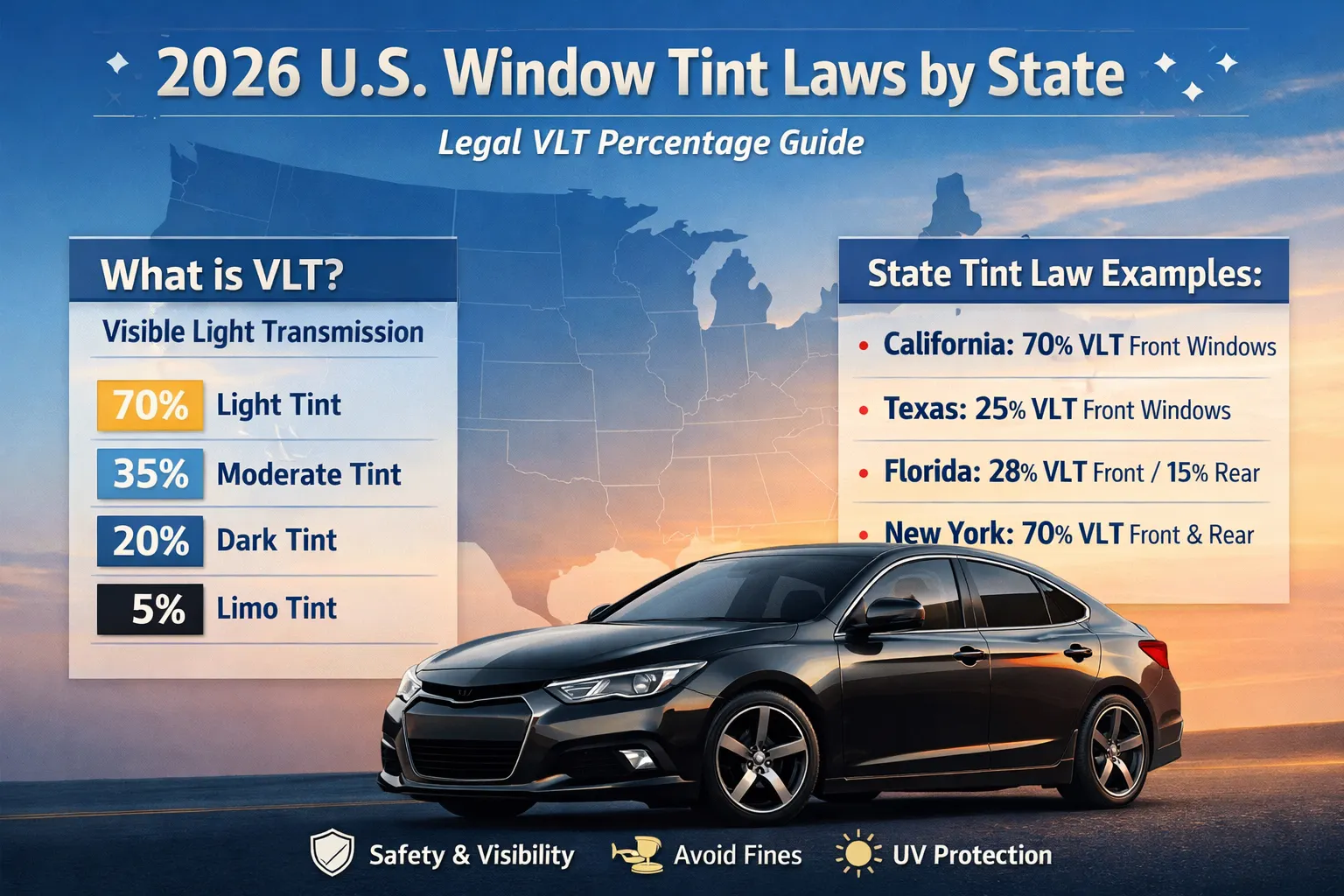
¿Qué es VLT? (Transmisión de luz visible)?
VLT percentage refers to the amount of visible light that can pass through a window and its tint film.
-
70% VLT: Very light tint, high visibility
-
35% VLT: Moderate tint, balanced privacy and clarity
-
20% VLT: Dark tint, increased privacy
-
5% VLT: Extremely dark tint, A menudo llamado "tinte de limusina”
Lower VLT numbers indicate darker window film. While darker tints provide better privacy and heat rejection, they are more strictly regulated by law.
How Window Tint Laws Differ by State (2026 Update)
Most state regulations distinguish between:
-
Parabrisas
-
Ventanas laterales delanteras
-
Rear side windows
-
Rear windshield
Below are examples of common state requirements. Always verify local laws before installation.
Leyes de Polarización de Ventanas en California
-
Ventanas laterales delanteras: Minimum 70% VLT
-
Parte trasera & rear windows: Darker tint allowed
-
Parabrisas: Tint allowed above the Línea AS-1
-
Rojo, Ámbar, and blue tints are prohibited
Texas Window Tint Laws
-
Ventanas laterales delanteras: Minimum 25% VLT
-
Parte trasera & rear windows: No VLT limit for most vehicles
-
Parabrisas: Tint allowed on top 5 Pulgadas
Florida Window Tint Laws
-
Ventanas laterales delanteras: Minimum 28% VLT
-
Parte trasera & Ventana trasera: Minimum 15% VLT
-
Parabrisas: Tint allowed above AS-1 line
New York Window Tint Laws
-
Ventanas laterales delanteras: Minimum 70% VLT
-
Parte trasera & Ventana trasera: Minimum 70% VLT
-
Parabrisas: Arriba 6 inches may be tinted
Other States (General Patterns)
-
Many states require 30–35% VLT on front side windows
-
Rear windows often allow darker tint, especially on SUVs and vans
-
Some states restrict reflective or mirrored films
-
Medical exemptions may apply in certain cases
Why Window Tint Laws Matter
✔ Seguridad vial
Excessively dark tint can reduce visibility, especially at night or in poor weather.
✔ Cumplimiento legal
Non-compliant tint can lead to fines, inspection failure, or removal orders.
✔ Balanced Comfort
Legal tint still provides glare reduction, Protección UV, and interior cooling.
How to Choose the Right Legal Window Tint
1. Check Your State’s Current Law
Regulations vary widely and can change. Confirm rules through official state or DMV sources.
2. Understand AS-1 Line Rules
Many states allow darker tint only above the AS-1 line on the windshield.
3. Match Tint to Your Driving Needs
-
High visibility & Conducción nocturna → VLT superior (50–70%)
-
Privacidad & Reducción de calor → lower VLT within legal limits
4. Don’t Confuse Shade With Performance
High-quality ceramic window films can block heat and UV rays without using dark tint.
Reflexiones finales
The laws expressing window tints in the U.S. are strictly enforced and state specific. This window tint law summary of 2026 will help the drivers to be aware of the legal VLT limits and make a decision before the window film installation.
To be secure, and to have a good sleep, it is always better to select the window tint that will satisfy the local laws as well as your requirements on the road.


