



Popular Articles
TPU PPF Training with ColorFuul — Become a Certified Paint Protection Film Installer
2026.01.10
Full PPF Cost Guide 2026: Price Ranges, Coverage Options & What Drives Cost
2026.01.10
TPU vs TPH vs PVC Paint Protection Film (PPF): Material Comparison & How to Choose in 2026
2026.01.10
About Company
Colorfuul is a global leader in high-end automotive films, offering Color TPU PPF, Transparent PPF, PET Window Films, and Vinyl Wrapping. With exports to over 100 countries, we deliver consistent quality, competitive pricing, and professional service. Beyond production, we provide OEM/ODM customization, shaping the future of automotive aesthetics.
 mary@colorfuul.com
  86 13541196952
 Best Types of Window Tint 2026: Pros, Cons & What Works for Your Car
Choosing window tint isn’t just about looks — the type of tint you pick affects heat rejection, UV protection, durability, signal interference, and overall comfort. Today’s market offers a variety of technologies and materials, each with unique performance traits. Understanding window tint types and their strengths and weaknesses can help you pick the right film for your priorities and budget.
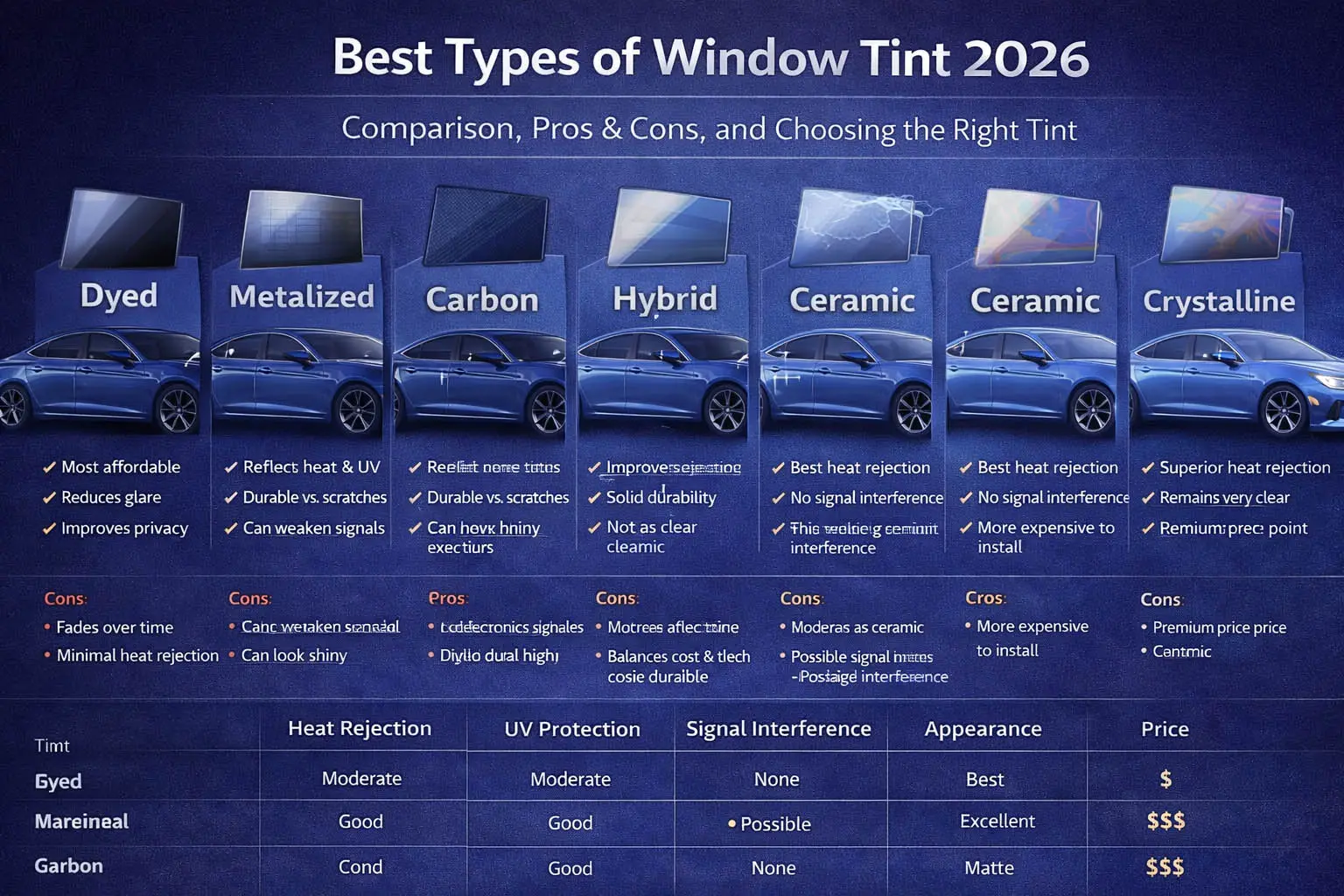
Below you’ll find a clear comparison of the most popular window tint types in 2026, from affordable dyed films to advanced ceramic and crystalline options.
1) Dyed Window Tint
What it is: A straightforward film with dyed polyester layers to absorb light.
Pros:
-
Most affordable tint option
-
Delivers a consistent dark appearance
-
Reduces glare and improves privacy
Cons:
-
Less effective at heat rejection
-
Dye can fade or turn purple over time
-
Moderate UV protection compared to premium options
Best for: Budget buyers who want privacy and basic glare reduction without paying for advanced tech.
2) Metalized Window Tint
What it is: A film embedded with tiny metallic particles that reflect heat and UV rays.
Pros:
-
Stronger heat and UV reflection than dyed films
-
Increases film durability and scratch resistance
Cons:
-
Metal particles can interfere with GPS, radio, and cell signals
-
Heavier films sometimes look more reflective than desired
Best for: Drivers seeking more heat rejection without skyrocketing cost, and who don’t mind minor signal interference.
3) Carbon Window Tint
What it is: A non-metallic tint infused with carbon particles that delivers strong UV rejection and a matte finish.
Pros:
-
Excellent UV protection
-
Non-metallic — no electronics interference
-
Distinctive matte look and solid durability
Cons:
-
Heat rejection generally less than premium ceramics
-
Slightly higher price than basic dyed or metalized films
Best for: Mid-range performance and style with good longevity and no signal disruption.
4) Ceramic Window Tint
What it is: A high-tech film made with nano-ceramic particles that block heat and UV without degrading signal quality.
Pros:
-
Top-tier heat and UV rejection
-
Excellent durability and fade resistance
-
No interference with electronics (GPS, phones, radios)
-
Strong clarity even at darker shades
Cons:
-
More expensive than carbon and basic tints
-
Requires skilled installation to perform optimally
Best for: Drivers who want the best balance of performance, comfort, and durability.
5) Hybrid Window Tint
What it is: A blend of dyed and metalized layers designed to strike a balance between performance and price.
Pros:
-
Better heat rejection than dyed alone
-
Offers some reflective benefits without heavy signal issues
-
A balanced middle ground for many drivers
Cons:
-
Not as strong as ceramic in heat rejection or clarity
-
May still cause minor interference if metal content is significant
Best for: Drivers who want a balanced upgrade without a premium cost.
6) Crystalline Window Tint
What it is: Advanced multi-layer nano-film that offers excellent UV and heat control while remaining very clear.
Pros:
-
Blocks significant infrared and UV energy while keeping high visibility
-
Excellent heat rejection even at lighter tint densities
-
Premium performance without extremely dark appearance
Cons:
-
Premium price tag
-
Often considered overkill for some climates or casual drivers
Best for: High-performance comfort — ideal in very hot climates or for frequent long drives.
Quick Comparison Table
| Tint Type | Heat Rejection | UV Protection | Signal Interference | Appearance | Price |
|---|---|---|---|---|---|
| Dyed | Moderate | Moderate | None | Dark | $ |
| Metalized | Good | Good | Possible | Reflective | $$ |
| Carbon | Good | Good | None | Matte | $$ |
| Hybrid | Moderate-Good | Good | Low | Mixed | $$ |
| Ceramic | Excellent | Excellent | None | Clear | $$$ |
| Crystalline | Excellent | Excellent | None | Light/clear | $$$ |
How to Pick the Right Window Tint in 2026
Consider your climate:
-
Hot regions benefit most from ceramic or crystalline tints for superior heat reduction.
Think about electronics:
-
If you use GPS or digital keys frequently, avoid metalized films to reduce signal interference.
Balance budget vs benefits:
-
Dyed and hybrid tints are wallet-friendly but not the best for extreme heat.
-
Carbon and ceramic are middle to high-tier options with stronger performance and longevity.
Privacy goals:
-
Darker shades and dyed films offer more privacy but watch for legal limits in your state.
Final Thought
There’s no single “best” window tint for every driver — it depends on your goals. If your priority is budget and basic UV protection, simpler dyed or hybrid films are worthwhile. If you want maximum heat rejection, clarity, and long-term performance, then ceramic or crystalline tints are worth the investment. Always consider local tint laws, climate conditions, and your daily driving needs when choosing the right film.
FAQ
Which window tint is best for heat rejection?
Ceramic and crystalline films typically offer the strongest heat and UV rejection.
Do metalized tints interfere with signals?
Yes — metalized films can interfere with GPS, mobile, and radio signals.
Is a more expensive tint always better?
Not always — premium options like ceramic offer better performance, but if your climate is mild, mid-range tints may be sufficien


