



Popular Articles
Midnight Purple Paint for GTR R34
2026.01.13
Exploring the Allure of Midnight Purple
2026.01.13
Benefits of Using Carbon Fiber Vinyl Wraps
2026.01.13

About Company
Colorfuul is a global leader in high-end automotive films, offering Color TPU PPF, Transparent PPF, PET Window Films, and Vinyl Wrapping. With exports to over 100 countries, we deliver consistent quality, competitive pricing, and professional service. Beyond production, we provide OEM/ODM customization, shaping the future of automotive aesthetics.
 mary@colorfuul.com
  86 13541196952
 California Window Tint Laws 2026: What You Must Know to Stay Legal
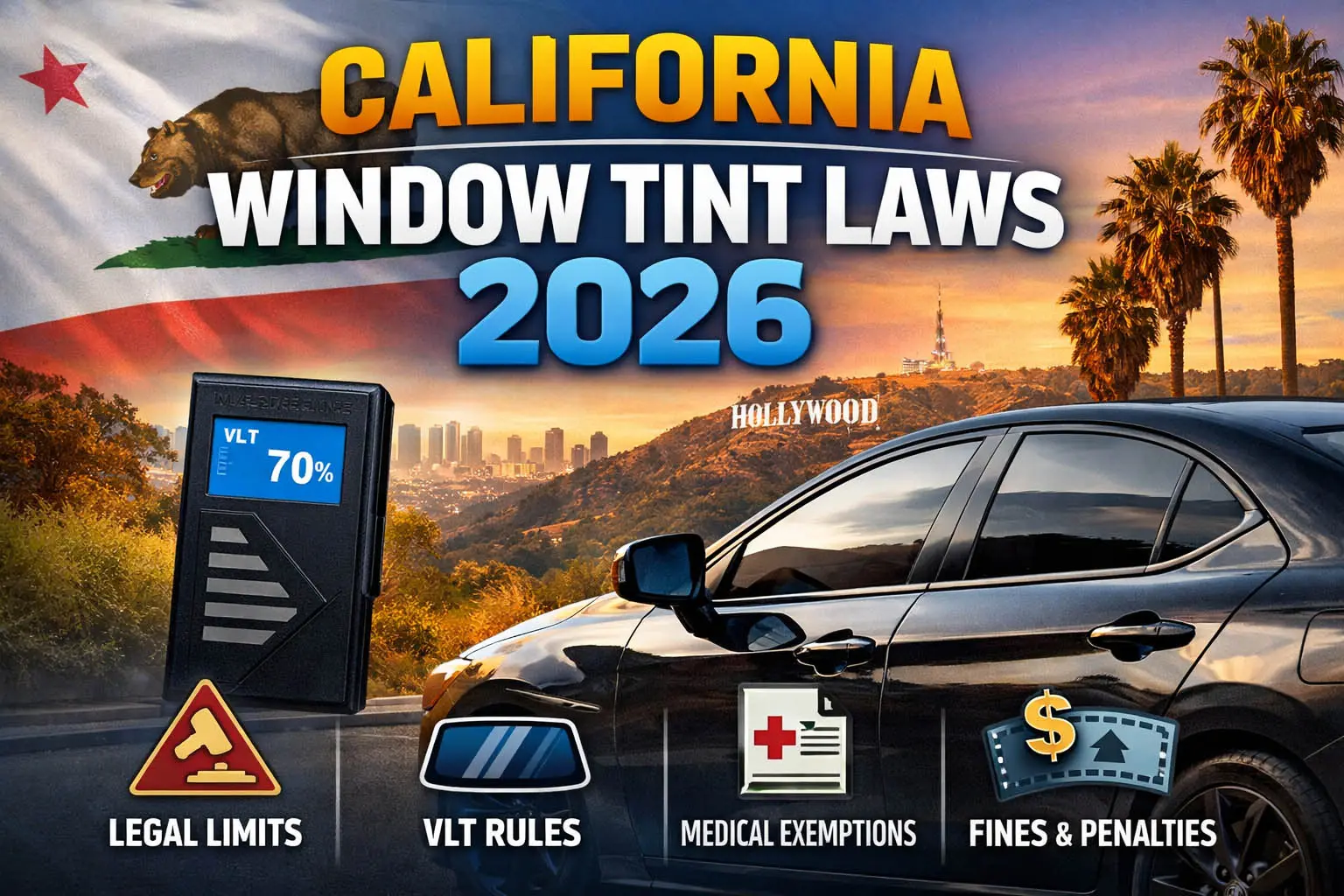
Tinting your vehicle’s windows in California offers heat reduction, UV protection, and privacy — but the state has some of the strictest legal requirements in the U.S. Knowing the rules before installation can save you fines, fix-it tickets, or failed inspections. In 2026, the key concepts — Visible Light Transmission (VLT) limits, windshield rules, medical exemptions, and penalties — remain essential for drivers and installers alike.
Understanding California Tint Laws in 2026
In California, window tint laws are designed to maintain driver visibility and safety while allowing reasonable heat rejection and privacy. These laws are based on how much visible light transmission (VLT) your window tint allows through the glass and film combined.
What Is VLT?
-
Visible Light Transmission (VLT) is the percentage of visible light that passes through both the glass and applied tint film. Higher VLT means lighter tint; lower VLT means darker tint.
-
Enforcement measures VLT using electronic tint meters during roadside stops.
Legal Tint Limits in California (2026)
The following window tint limits apply statewide in 2026:
Windshield
-
Only non-reflective tint is allowed on the top portion of the windshield.
-
Tints cannot extend below the AS-1 line or top few inches.
Front Side Windows
-
Must allow at least 70% VLT.
-
Darker films on front windows are illegal and subject to enforcement.
Rear Side & Rear Windows
-
No minimum VLT limit — you can install darker tints for privacy.
-
Vehicles with dark rear tint must have dual side mirrors installed.
Reflectivity, Colors & Restrictions
California also regulates reflectivity and tint colors:
-
Reflective or mirror-like films are prohibited on all windows.
-
Red, blue, and amber tint colors are not allowed because they can impair visibility and distract other drivers.
Medical Exemptions
California provides medical exemptions for drivers with specific conditions that make them especially sensitive to sunlight.
To qualify, drivers must carry valid documentation from a licensed physician. However:
-
Medical exemptions do not allow full windshield tinting beyond allowed zones.
-
Exemptions typically still require compliance with reflectivity and color rules.
Penalties for Illegal Tint
Failing to follow window tint laws in California can lead to:
-
A fix-it ticket requiring you to remove or correct the tint and prove compliance within a set timeframe.
-
Repeated offenses or unresolved violations can lead to higher fines and even potential impact on registration.
Tips to Stay Legal in California
Here are practical steps to ensure your vehicle’s tint complies with 2026 laws:
-
Measure VLT after installation, not just film specifications.
-
Choose non-reflective, high-VLT films (especially for front side windows).
-
Keep documentation and certification stickers from installers and manufacturers.
-
If you qualify for a medical exemption, carry the official paperwork at all times


