



Popular Articles
Midnight Purple Paint for GTR R34
2026.01.13
Exploring the Allure of Midnight Purple
2026.01.13
Benefits of Using Carbon Fiber Vinyl Wraps
2026.01.13

About Company
Colorfuul is a global leader in high-end automotive films, offering Color TPU PPF, Transparent PPF, PET Window Films, and Vinyl Wrapping. With exports to over 100 countries, we deliver consistent quality, competitive pricing, and professional service. Beyond production, we provide OEM/ODM customization, shaping the future of automotive aesthetics.
 mary@colorfuul.com
  86 13541196952
 Comprehensive Car Wrap Vinyl Size Guide (2026 Edition)
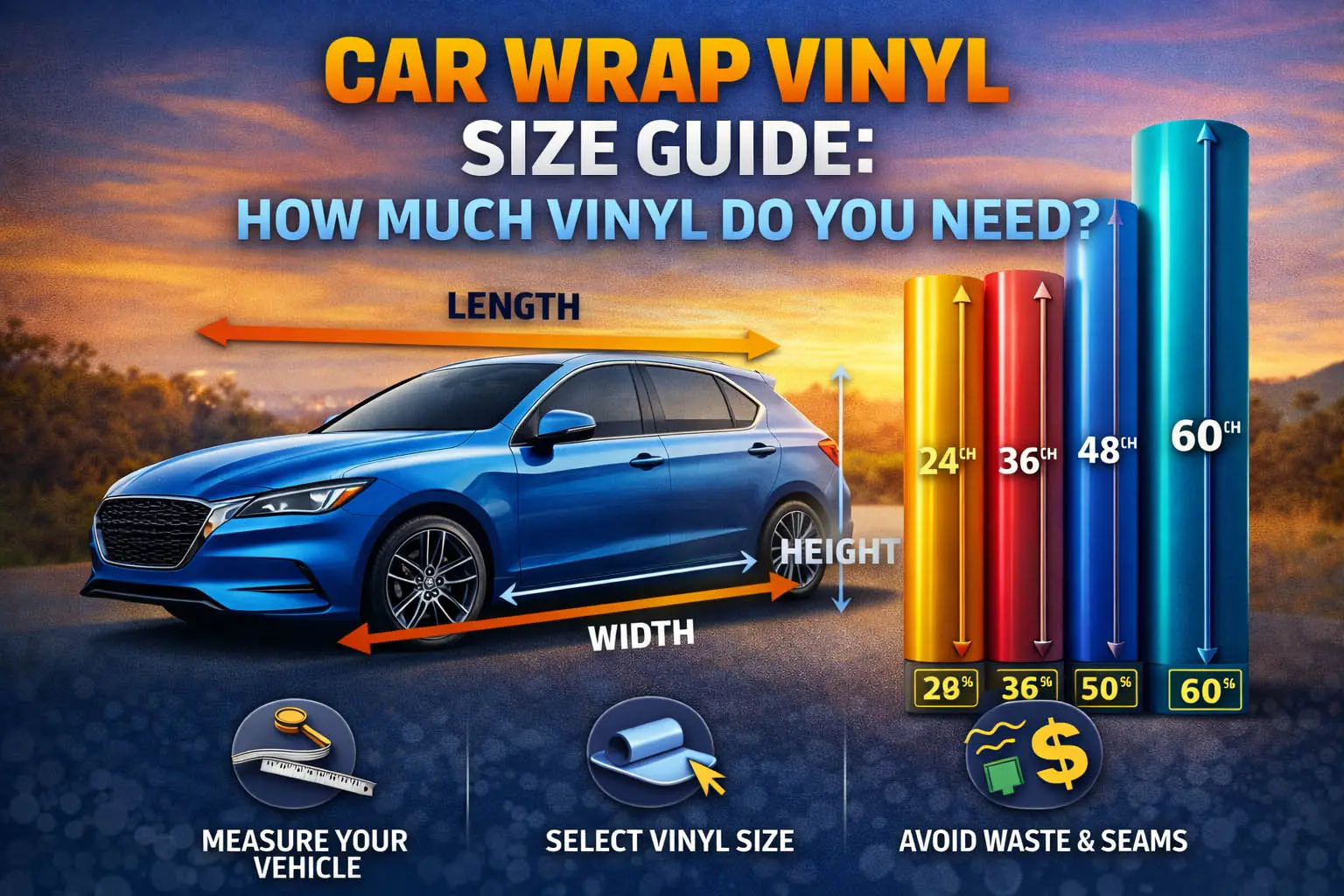
The right size of vinyl wrap is crucial to a successful vehicle wrap project, regardless of whether you are a professional wrapping crew or you are wrapping your own car. The process of wrapping a vehicle should be taken with accurate measurements in order to make the vehicle properly covered, with little wastage and installation. This 2026 instructional guide divides the process of measuring your car, getting the correct size of vinyl, and preventing the usual errors.
Why Vinyl Size Matters
Using the wrong vinyl width or length can lead to:
-
Insufficient coverage, forcing seams in visible areas
-
Increased material waste, raising costs
-
Difficult installation, especially on curves and edges
By understanding the dimensions of your vehicle and the available vinyl sizes, you can plan smarter and wrap more efficiently.
Standard Vinyl Widths
Vinyl wrap film typically comes in the following standard widths:
-
12 inches (30 cm) – ideal for small parts and detailed cuts
-
24 inches (60 cm) – perfect for bumpers and mirrors
-
36 inches (90 cm) – commonly used for doors and panels
-
48 inches (120 cm) – versatile width for hoods and larger sections
-
60 inches (150 cm) – best choice for full roof or long panels
Using wider vinyl reduces seams, improves appearance, and speeds up installation.
Measuring Your Vehicle
To determine how much vinyl you need:
Step 1 — Measure Length
Run a tape measure along the longest point of the car (from front to back). Add roughly 10–15% extra for overlapping and trimming.
Step 2 — Measure Width
Measure the vehicle’s widest points (typically doors or fenders). Again, add a margin to ensure coverage around curves and edges.
Step 3 — Height & Curves
Check heights of the hood, roof, and trunk, as well as wheel arches and mirrors. Complex curves require extra material for stretching and tucking.
Choosing the Right Vinyl
Here’s how to match your measurements to vinyl roll sizes:
Small Cars & Compact Panels
Compact vehicles often use 36-inch (90 cm) width for most panels. For tiny areas, a 24-inch (60 cm) roll may suffice.
Medium & Large Vehicles
Mid-sized and large cars typically require 48-inch (120 cm) or wider vinyl to minimize seams across large surfaces.
Full Wrap Projects
For full vehicle wraps — especially trucks or SUVs — 60-inch (150 cm) vinyl is recommended to handle expansive panels like roofs and hoods.
Tips for Efficient Vinyl Usage
-
Plan panel by panel before cutting, to avoid waste.
-
Buy extra material — around 10–20% more than your calculated need — to cover mistakes and complex curves.
-
Match film type to vehicle shape; some films stretch better on contoured surfaces.
Common Mistakes to Avoid
-
Choosing too narrow rolls, causing excessive seams
-
Not accounting for curved surfaces that require extra material
-
Failing to add overlap allowances when calculating needs
Proper planning prevents costly errors and improves wrap quality.
Summary
Choosing the appropriate car wrap vinyl is one of the basic steps towards any wrapping job. Measure your car correctly and learn the understandable widths of typical vinyls to select the material that you can easily work with, with few seams and good professional results. Whether you are dealing with full wrap or a custom accent, this 2026 guide will enable you to make the right decision.


