



Popular Articles
Midnight Purple Paint for GTR R34
2026.01.13
Exploring the Allure of Midnight Purple
2026.01.13
Benefits of Using Carbon Fiber Vinyl Wraps
2026.01.13
About Company
Colorfuul is a global leader in high-end automotive films, offering Color TPU PPF, Transparent PPF, PET Window Films, and Vinyl Wrapping. With exports to over 100 countries, we deliver consistent quality, competitive pricing, and professional service. Beyond production, we provide OEM/ODM customization, shaping the future of automotive aesthetics.
 mary@colorfuul.com
  86 13541196952
 Titanium Nitride vs Ceramic Window Film — Next-Gen “Black Technology” Explained
what has been discussed in the industry when selecting the best automotive window film or architectural tint solution. They both are high-tech black technology with better thermal protection and UV blocking performance, but which one is the next-generation one to pick? In this case we separate out the differences, advantages, and the best application cases of each.
What is Titanium Nitride (TiN) Window Film?
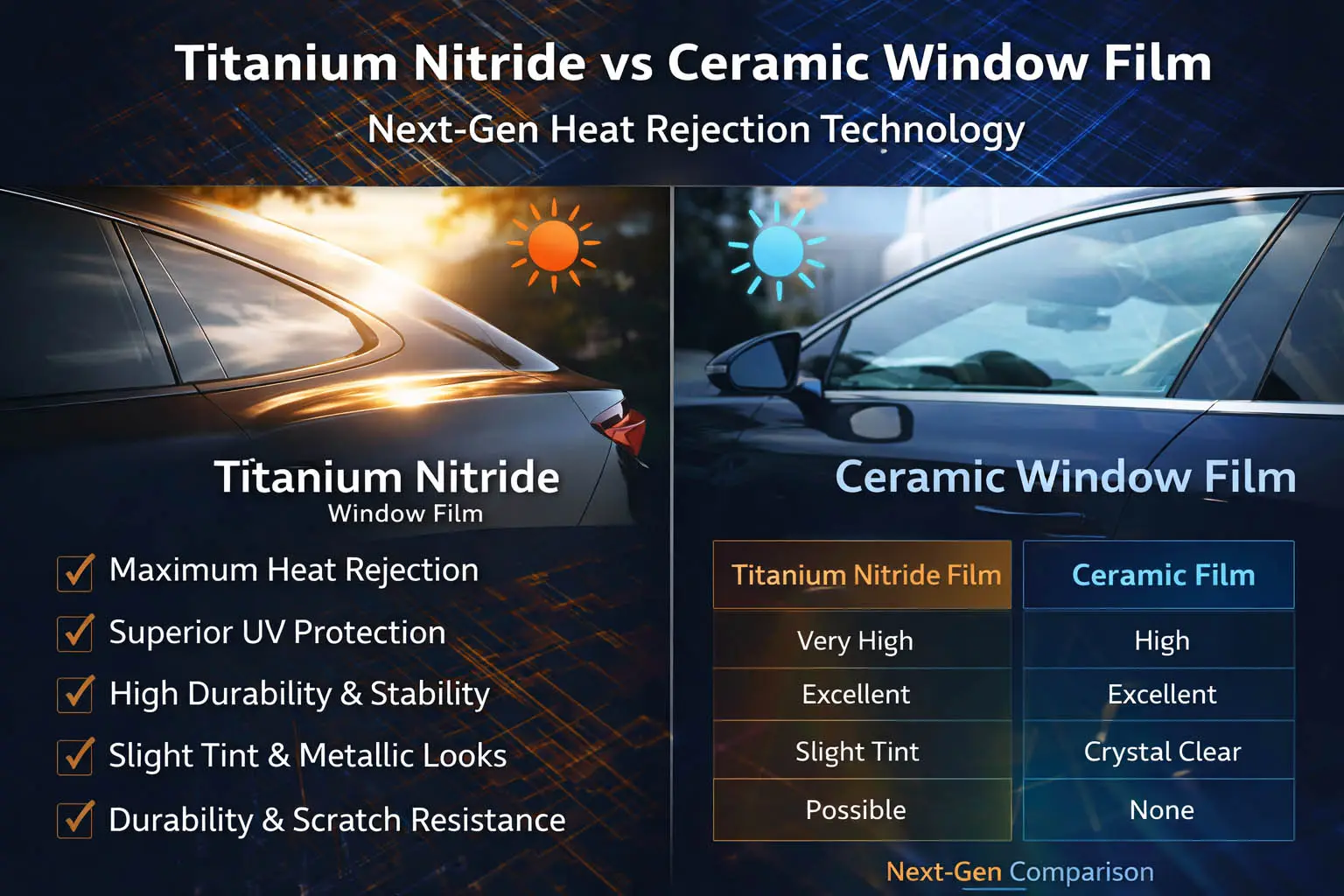
Titanium Nitride (TiN) is a hard, metallic-like material created through magnetron sputtering technology, where ions bombard a metal target to form an ultra-thin, dense TiN layer on the film surface. This results in exceptional heat rejection, high UV protection, and strong stability under prolonged sun exposure.
Key strengths of TiN window film include:
-
Superior heat rejection — Titanium nitride films can block a very high percentage of infrared (IR) heat, helping keep interiors cooler in hot climates.
-
Maximum UV protection — Effectively cuts harmful UV rays and helps protect vehicle interiors and skin.
-
High clarity with slight tint — Offers a premium, sleek look with deep rejection of heat without overly dark tinting.
-
Durability and scratch resistance — TiN coatings are robust and maintain performance over time.
Because of these attributes, Titanium Nitride films often appeal to high-end automotive, luxury vehicles, and performance applications where both aesthetic quality and UV/heat resistance are priorities.
What is Ceramic Window Film?
Ceramic window film uses advanced nano-ceramic particles to absorb and dissipate solar heat, rather than simply reflecting it. This allows for excellent temperature control and signal compatibility with modern vehicle systems (like GPS, ETC, and ADAS), since ceramics do not interfere with electronic signals as some metal films can.
Core advantages of ceramic film include:
-
Strong infrared (IR) heat rejection — Although slightly less extreme than TiN in some cases, ceramic films deliver efficient cooling.
-
Zero signal interference — Safe for vehicles equipped with advanced driver systems and connectivity electronics.
-
Crystal-clear optical quality — High visibility and low reflectance make it ideal for daily driving and premium user experience.
-
High UV blocking and fade resistance — Offers long-term protection against sun damage.
Ceramic films are widely chosen for everyday automotive use, commercial buildings, and residential installations because they strike a balance between performance and price.
Side-by-Side Comparison
| Feature | Titanium Nitride Film | Ceramic Film |
|---|---|---|
| Heat Rejection | Very High | High |
| UV Protection | Excellent | Excellent |
| Optical Clarity | Slight tint | Crystal clear |
| Signal Interference | Possible with electronic systems | None |
| Durability | High | High |
| Cost | Premium | More affordable |
| Best For | Luxury vehicles, high-performance builds | General automotive & architectural use |
Which One is Next-Gen?
Both Titanium Nitride and Ceramic window films represent next-generation technology compared to traditional dyed or metal films. However:
-
**Titanium Nitride ** stands out for maximum heat rejection and premium finish — ideal for luxury or performance-oriented automotive markets.
-
**Ceramic film ** excels in signal neutrality and everyday comfort, making it perfect for broad applications including cars, homes, and commercial buildings


