



Popular Articles
Midnight Purple Paint for GTR R34
2026.01.13
Exploring the Allure of Midnight Purple
2026.01.13
Benefits of Using Carbon Fiber Vinyl Wraps
2026.01.13

About Company
Colorfuul is a global leader in high-end automotive films, offering Color TPU PPF, Transparent PPF, PET Window Films, and Vinyl Wrapping. With exports to over 100 countries, we deliver consistent quality, competitive pricing, and professional service. Beyond production, we provide OEM/ODM customization, shaping the future of automotive aesthetics.
 mary@colorfuul.com
  86 13541196952
 Exploring the Allure of Vantablack Car Wraps
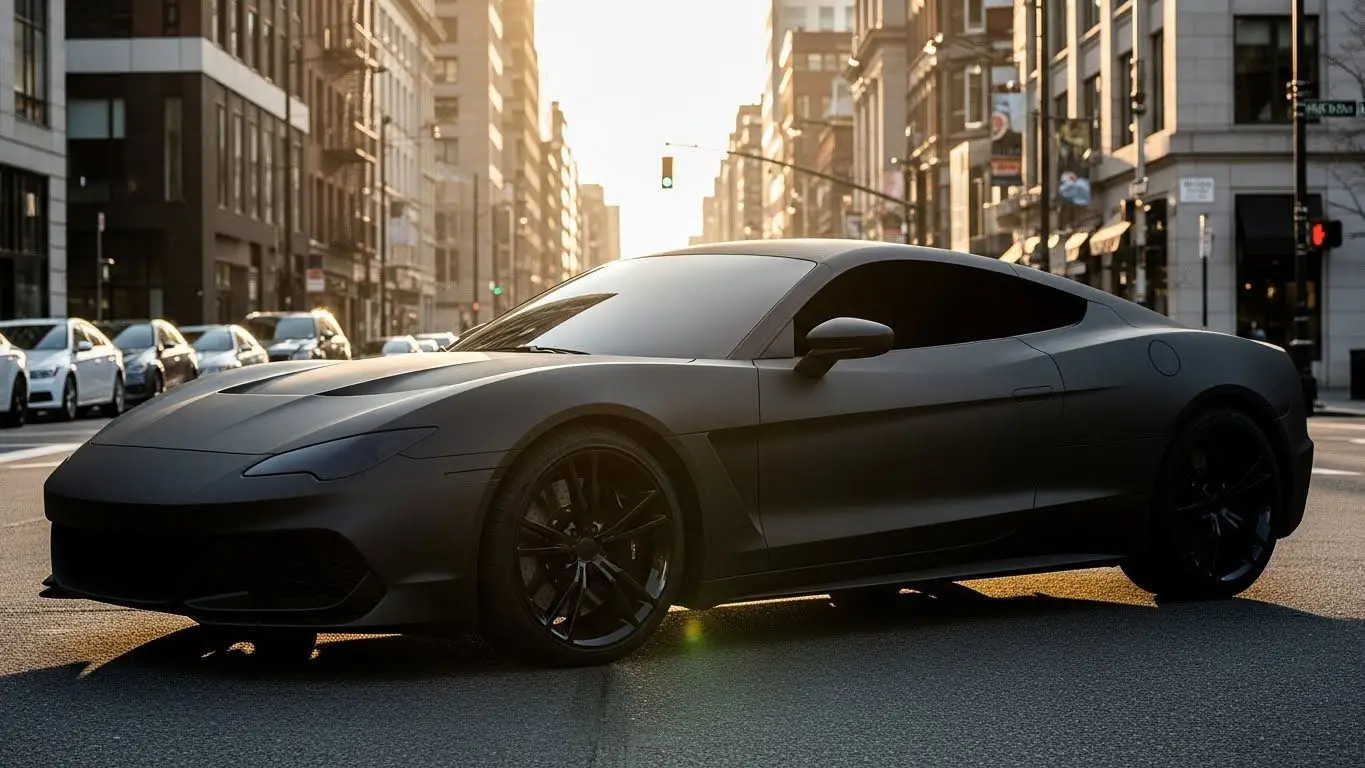
Have you ever seen a picture of a car that looks fake? Not because it’s shiny, but because it’s so dark it looks like a black hole on wheels. It’s a vehicle so black it seems to swallow its own shape, flattening into a two-dimensional shadow that defies logic. This isn't a Photoshop trick; it’s a real-world technology creating the ultimate Vantablack car effect, and the story behind it is even stranger than it looks.
The reason these cars baffle our brains is simple: we see objects because light bounces off them. Even a standard black car reflects enough light for us to perceive its curves, edges, and details. This new generation of light-absorbing car finish, however, works differently. Its unique surface traps nearly all light that hits it. With almost no light returning to your eyes, your brain can't process the car's form, and the three-dimensional object collapses into an unnerving, flat void.
Here’s the secret most people don’t know: you can’t actually wrap your car in the original Vantablack. That material, famously applied to a one-of-a-kind BMW X6, is a delicate, lab-grown substance licensed almost exclusively for aerospace and artistic use. The ultra-black cars you see online are using commercially available alternatives—paints and vinyl wraps engineered to mimic that "blackest black" effect.
What's the difference between the real deal and the tribute acts? How much does it cost to make your car look like a rolling shadow, is it even safe to drive, and what’s it like to live with a finish that absorbs the world around it?

How We See a Car's Shape: The Secret Role of Light
Understanding why a “black hole car” looks so strange starts with how we see any car at all. It’s not just about color; it’s about light. When you look at a car, your brain is actually processing a complex map of light and shadow. The bright, glossy streaks that trace the curve of a fender or the sharp, dark line that defines a door panel are crucial visual cues.
These reflections and shadows are what give an object its sense of three-dimensional shape. Without them, a curved surface would look confusingly flat. Think about a brand-new car with a deep, glossy black finish. You can still clearly make out its every contour because the paint, while dark, still reflects a small but critical amount of light. Those reflections act as a guide for your eyes, allowing you to perceive its size, shape, and position.
Essentially, even the most stunning black paint you’ve ever seen is designed to play with light, not erase it. It absorbs most of the light that hits it, but it purposefully reflects just enough to show off the vehicle's design. This balance is what our eyes are used to. But what happens when a material comes along that doesn’t play by these rules?
Trapping Light: The "Microscopic Forest" Behind Super-Black Cars
The material that breaks those rules doesn't just absorb light; it traps it. While black paint is a pigment designed to soak up most light rays, these super-black coatings are physical structures designed to catch light and never let it go. The result is an unnerving void, a patch of nothingness where an object should be.
Imagine shining a light into a vast, dense forest at noon. The light rays enter between the trees, but they bounce from trunk to trunk, getting dimmer with each reflection until they are completely gone. Almost no light ever bounces back out to your eyes. This is exactly how the original carbon nanotube vehicle coating works, just on a microscopic scale. Its surface is a tightly packed forest of tiny, hollow tubes that are incredibly effective at swallowing light.
This is precisely the technology that was used in the famous BMW X6 Vantablack project. Created by Surrey NanoSystems, the coating wasn't a paint but a delicate, lab-grown material. When applied to the car, the light that would normally define the vehicle's muscular curves and sharp edges simply entered the nanotube "forest" and vanished. The car's features were effectively deleted, leaving behind only its silhouette against the background.
Ultimately, this effect happens because you are not looking at a color, but at a physical trap for light. It tricks your brain into seeing a flat, featureless hole. Since this amazing material from the Surrey NanoSystems vehicle application isn't a simple paint or wrap, a crucial question emerges: what are people actually putting on their cars?
Vantablack vs. Musou Black: The "Super-Black" You Can Actually Buy
The super-black car you saw online almost certainly wasn’t coated in the original Vantablack. Think of Vantablack as the exclusive, one-of-a-kind celebrity; it’s a specific, trademarked material from a company called Surrey NanoSystems. It isn't a paint or a wrap but a delicate coating "grown" in a lab, and its use is extremely restricted, like on the one-off BMW. You simply cannot buy it for your car.
Instead, the cars you see stunning crowds with are using the "tribute act"—an incredibly convincing and accessible alternative. The most famous of these is Musou Black paint from Japan's Koyo Orient. This is the leading Vantablack alternative for cars because, unlike its lab-grown cousin, it’s a commercially available acrylic paint. This means it can be sprayed onto a car or, more commonly, used to produce a Musou Black vinyl wrap that installers can apply just like any other color.
In the great Vantablack vs. Musou Black debate, the difference is subtle but important. Vantablack absorbs an astonishing 99.965% of light, creating a near-perfect void. Musou Black is right behind it at 99.4%, which is still so dark that it dramatically flattens a car's appearance. As reviewers note, you might see a faint outline of the car’s body up close, whereas Vantablack completely erases it.
So, while Vantablack remains a piece of scientific art, Musou Black is the product that brought the "black hole" look to the streets. It delivers that same jaw-dropping, two-dimensional effect that makes our brains short-circuit. Knowing you can actually get your hands on it leads to the most practical question of all: what would it really cost?

What It Really Costs to Wrap a Car in Musou Black
Wrapping a car in Musou Black is a serious investment. While prices vary by vehicle size and shop location, you can expect the cost to fall somewhere between $8,000 and $15,000, and often even higher. This isn't your average color change; it's a specialty project that costs two to four times more than a standard premium wrap.
Why the jaw-dropping price tag? The cost is driven by two key factors: the material itself and the intense labor required. The vinyl is a low-volume, imported product, making the raw material significantly more expensive than typical wrap films. Furthermore, its delicate, light-absorbing surface is notoriously difficult to work with. Think of it like trying to perfectly tailor a suit out of ash—the material is fragile and shows every single fingerprint, stretch mark, or speck of dust. Professionals note that a flawless application requires elite-level skill and far more time, driving up labor costs and making a DIY job a recipe for a very expensive disaster.
To put that number in perspective, here’s how it stacks up against other professional wrap jobs for a standard sedan:
-
Standard Gloss or Matte Wrap: $3,000 - $5,000
-
Premium Chrome or Color-Shift Wrap: $6,000 - $8,000
-
Musou Black Ultra-Black Wrap: $8,000 - $15,000+
Clearly, the cost puts it in a category of its own. But even if the price doesn't scare you off, there are other critical factors to consider before turning your car into a mobile black hole.
Is Driving an Ultra-Black Car Safe and Legal?
Is a car that absorbs light even safe to drive? The visual magic of an ultra-black finish is also its greatest weakness. Our brains rely on subtle reflections and highlights off a car’s surface to judge its shape, speed, and distance. By erasing those visual cues, the car can appear flat and two-dimensional, almost like a shadow, making it difficult for other drivers to perceive its presence and movement accurately.
This lack of reflection becomes a critical hazard at night or in poor weather. A normal car’s paint still reflects a small amount of ambient light from streetlights or other headlights, defining its edges. An ultra-black car does not. For an oncoming driver, judging the distance to a vehicle that doesn’t reflect light is incredibly difficult, increasing the risk of a collision. The dangers of non-reflective car paint aren't just about being seen, but about being understood as a three-dimensional object moving in space.
From a legal standpoint, you enter a gray area. While there’s likely no specific law in your state that says, "a car cannot absorb more than X percent of light," you could easily fall afoul of broader "unsafe vehicle" regulations. An officer could reasonably argue that the finish is a public hazard, especially after dark. This means the legality isn't a simple yes or no; it depends on enforcement and a situation-by-situation judgment call.
Ultimately, the decision to wrap a car in an ultra-black finish comes with a non-negotiable safety trade-off. You are sacrificing a degree of visibility for an unparalleled aesthetic statement. And even if you’re willing to accept the on-road risks, the practical headaches don’t stop there.
The Nightmare of Maintaining a Super-Black Car
A quick trip through the automatic car wash is out of the question. The delicate, light-trapping texture of an ultra-black finish is far too fragile for abrasive brushes and harsh detergents. It requires a gentle, touchless method using specific, non-abrasive cleaners and a soft microfiber cloth, turning a simple task into a nerve-wracking procedure.
The finish itself acts like a high-contrast canvas for every imperfection. Unlike a normal gloss or metallic paint that can hide a bit of dust, an ultra-black surface makes every single speck, fingerprint, or oily smudge stand out dramatically against the void. It’s the visual equivalent of a black velvet sheet—beautiful when pristine, but unforgiving the moment it’s touched. This makes maintaining an ultra-black vinyl a constant battle against the environment.
This fragility stems from the very structure that makes the wrap work. That microscopic "forest" that traps light is easily damaged. A careless lean, a scraping tree branch, or even an aggressive cleaning attempt can crush or mar the surface, creating a permanent blemish. In terms of durability, while these wraps hold their color, their physical resilience to the real world is extremely low.
Unfortunately, when damage does occur, there’s no simple fix. You can't buff out a scratch or apply touch-up paint, as doing so would polish the surface, create a reflection, and permanently ruin the light-absorbing effect in that spot. Any scuff or scratch that won't gently wipe away means one thing: paying to have the entire affected panel stripped and re-wrapped, a costly and frustrating consequence for a minor mistake.
The Verdict: Is the Blackest Black Worth the Hype?
The illusion of a "black hole on wheels" is a clever light-trapping trick, with a key distinction between the exclusive, lab-grown Vantablack and the commercially available "tribute acts" like Musou Black that are actually out on the road.
The decision to pursue this look is no longer about a single "wow" factor but a clear-eyed look at the pros and cons. The high cost, serious safety concerns, and delicate maintenance requirements are central to judging whether a Musou Black wrap is truly worth it.
So, the next time you see one, you won't just see a void. You'll see a deliberate choice—an art piece on wheels where visual impact has eclipsed practicality. And you'll understand exactly why, for a select few, that trade-off is the entire point.


