



Popular Articles
Car Wrapping vs Painting: Which Is More Cost-Effective?
2026.03.22
How to Find the Best Tint Shop Near You in 2026
2026.03.22
Top Trusted PPF Brands and How to Choose the Right One
2026.03.22

About Company
Colorfuul is a global leader in high-end automotive films, offering Color TPU PPF, Transparent PPF, PET Window Films, and Vinyl Wrapping. With exports to over 100 countries, we deliver consistent quality, competitive pricing, and professional service. Beyond production, we provide OEM/ODM customization, shaping the future of automotive aesthetics.
 mary@colorfuul.com
  86 13541196952
 Windshield Protection Film: Invisible Armor for Your Vehicle’s Glass
Your vehicle’s windshield is more than just a pane of glass—it’s a high‑tech structural component that plays a critical role in safety, visibility, and the overall driving experience. Modern windshields often integrate sensitive systems such as Advanced Driver Assistance Systems (ADAS), cameras, and sensors that depend on uncompromised glass surfaces. Yet despite this importance, windshields remain vulnerable to everyday hazards on the road. That’s where windshield protection film comes in: a transparent, high‑performance defensive layer designed to protect your windshield from road debris, cracks, chips, UV rays, and incidental damage — without compromising visibility or aesthetics.
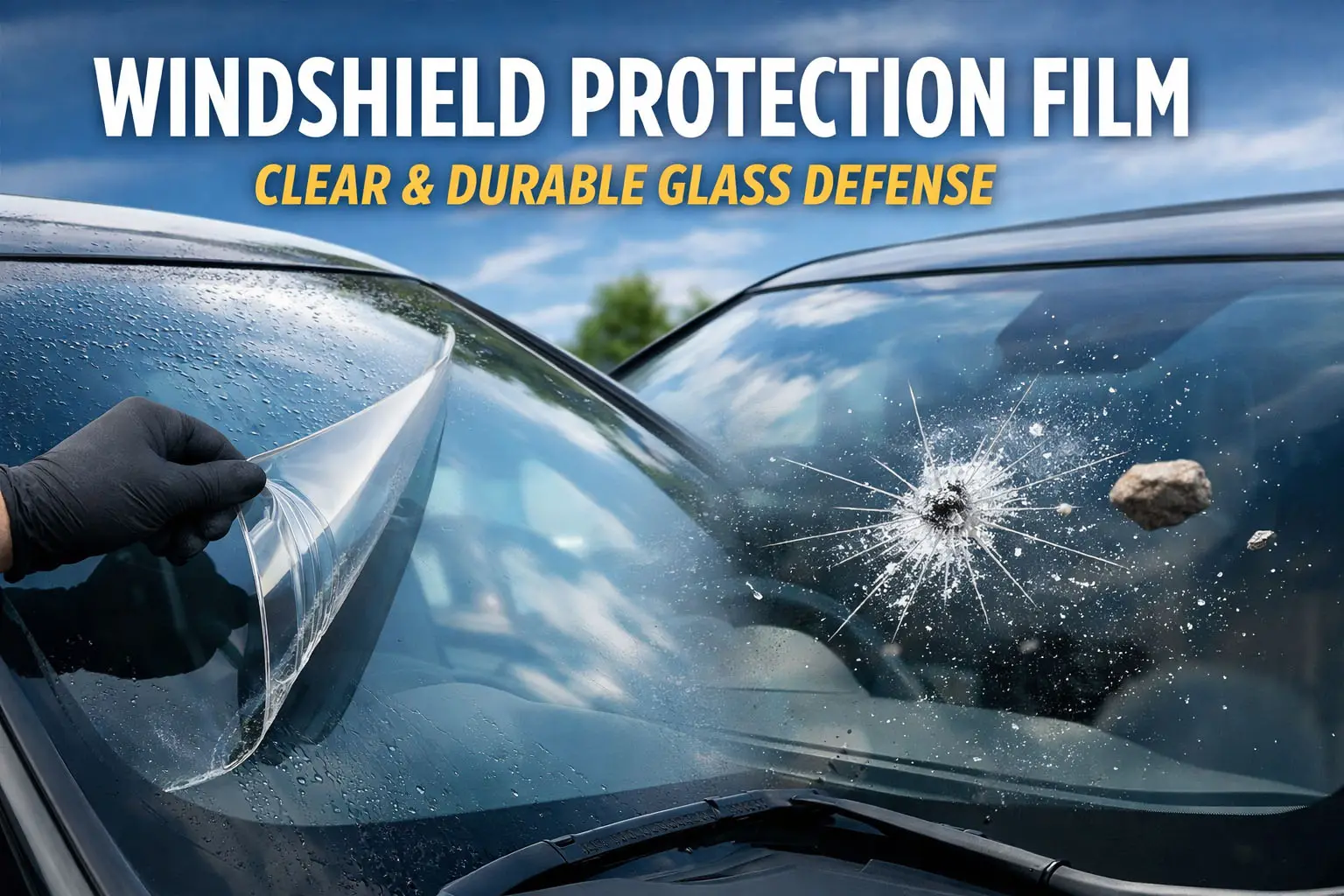
At Colorfuul, we believe in delivering protection solutions that offer both performance and peace of mind. Windshield protection films are one of the most effective ways to safeguard one of the most critical components of your vehicle.
What Is Windshield Protection Film?
Windshield protection film is a multi‑layer, optically clear thermoplastic membrane that adheres seamlessly to your windshield. Unlike conventional paint protection film (PPF) that shields body panels, windshield protection film is engineered specifically for automotive glass, blending crystal‑clear visibility with advanced impact resistance.
Advanced films are designed to absorb and disperse impact energy from rocks, gravel, or flying debris, significantly reducing the risk of pitting, bullseye chips, and cracks that would otherwise break the glass.
Why Your Windshield Needs Protection
1. Road Debris Is Unavoidable
Even careful drivers encounter road debris — tiny stones kicked up by trucks, loose gravel, construction debris, or sand on highways. These small impacts may seem insignificant, but once a crack or chip begins, it can rapidly grow under the stress of driving and temperature changes. Windshield protection film provides an invisible defensive layer that takes the hit so your glass doesn’t.
2. Save on Costly Repairs and Replacements
Windshield replacement costs have risen significantly due to the integration of safety technologies and the need for precise ADAS calibration. A single replacement can cost hundreds — even over a thousand dollars — plus labor and recalibration fees. By investing in protection film upfront, you significantly reduce the likelihood of damage that leads to full glass replacement, which can yield long‑term cost savings for daily drivers and frequent commuters alike.
3. Maintain Safety and Structural Integrity
A windshield isn’t just for visibility — it contributes up to 30–50% of your vehicle’s structural strength in a collision. Preserving the original factory glass is not only safer but also helps ensure that airbags deploy correctly and that your vehicle maintains its designed integrity in emergency situations.
4. Enhanced UV Protection and Comfort
Windshield protection films often block up to 99% of harmful UV radiation, shielding both passengers and interior surfaces. This helps preserve upholstery, reduce fading, and create a more comfortable cabin environment by limiting heat build‑up inside your car.
5. Maintain Clear Visibility and Reduce Glare
Tiny pits, scratches, and chips scatter light and can increase glare — particularly at night or in bright sunlight. Protection films maintain smooth surface integrity, which can lower glare and improve visual clarity. In some premium films, hydrophobic properties also help water bead and roll off during rain, improving rainy‑day visibility without needing aggressive wiper action.
How Windshield Protection Film Works
Windshield protection films are not random plastic sheets — they are engineered composites designed to:
-
Absorb impact energy and disperse force across the film to reduce localized damage.
-
Maintain optical clarity so that visibility is unimpaired.
-
Block UV rays to protect occupants and interiors.
-
Resist everyday abrasion such as windshield wiper wear and environmental contaminants.
When professionally installed, films conform precisely to the curved shape of your windshield, avoiding distortion, bubbles, or lifting edges. This precision is critical — even a small imperfection can create optical distortion at high speeds.
Choosing the Right Film for Your Vehicle
Not all windshield films are created equal. When selecting a product, consider:
-
Optical Clarity: Premium films are virtually invisible and do not distort your view.
-
Impact Resistance: Multi‑layer films with high elasticity will absorb larger impacts better.
-
Self‑Healing Technology: Some advanced films can self‑repair minor surface scratches over time.
-
UV Rejection Efficiency: Look for films that block 99% of UV for both protection and comfort.
-
Professional Installation: Expert installation ensures full coverage and long‑term durability.
DIY vs. Professional Installation
While some films might appear simple in theory, windshield protection film requires specialized tools, precise patterns, and controlled environments to install correctly. Attempting to install film yourself often leads to bubbles, edges lifting, or uneven application — all of which compromise performance and lifespan. Professional installation provides flawless adhesion, optimal alignment, and warranty coverage — crucial for long‑term results.
Real‑World Scenarios Where Film Shines
-
Highway Driving: Faster speeds increase the likelihood of stone impact — protection film acts like an invisible shield.
-
Frequent Commuters: Daily driving accumulates small abrasions and chips over time; a film reduces cumulative damage.
-
Harsh Weather Zones: UV, rain, ice, and debris all add stress to your windshield — film adds resilience.
Long‑Term Value and Resale Benefits
A windshield in excellent condition can be a surprising selling point when you decide to sell or trade in your vehicle. Since windshields are often inspected during vehicle appraisals, preserving original glass quality can boost resale value compared to a windshield that has been replaced or shows visible damage.
Conclusion
Windshield protection film is more than an add‑on accessory — it’s a proactive investment in your vehicle’s safety, cost‑efficiency, visibility, and long‑term durability. Whether you commute on busy highways, live in areas with road debris, or simply want to preserve your investment, high‑quality windshield protection film offers peace of mind on every drive.


