



Popular Articles
Ultimate Guide to 360° Comprehensive Interior Detailing — Deep Clean, Sanitize and Protect Your Car’s Cabin
2026.02.04
Singapore Car Window Tinting Guide: Rules, Benefits, and How to Choose the Right Film
2026.02.04
The Complete Guide to Colour Wraps — Transforming Your Car’s Look with Style and Protection
2026.02.04
About Company
Colorfuul is a global leader in high-end automotive films, offering Color TPU PPF, Transparent PPF, PET Window Films, and Vinyl Wrapping. With exports to over 100 countries, we deliver consistent quality, competitive pricing, and professional service. Beyond production, we provide OEM/ODM customization, shaping the future of automotive aesthetics.
 mary@colorfuul.com
  86 13541196952
 Best Lighting for Midnight Purple Cars: Visual Explainer & Tips
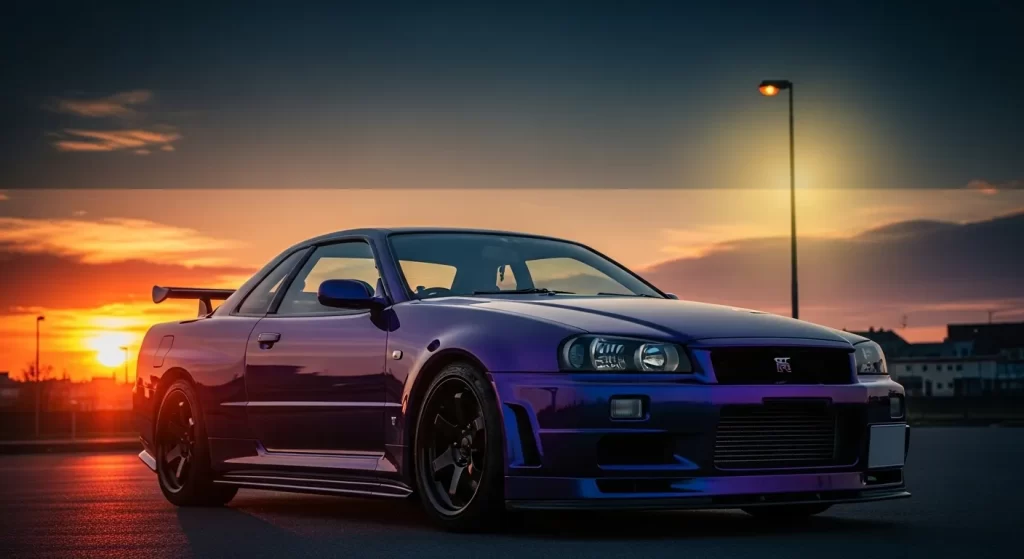
The best lighting conditions for Midnight Purple cars are found during the "golden hour" of sunrise or sunset and under high-output LED arrays, as these environments provide the specific wavelengths needed to reveal the color's hidden violet soul without washing out its deep charcoal foundation. Lighting matters so much for this color because it is a multidimensional metallic—it relies on light penetration and reflection to "activate" the pigments, meaning the car's identity can shift from a stealthy black to a vibrant violet in a matter of seconds depending on the light source.
Why Lighting Matters So Much for Midnight Purple Cars
Midnight Purple’s appearance depends heavily on lighting because it is engineered with layered pigments that respond to the angle and intensity of incoming light rays. Unlike a flat or solid paint color that looks consistent in most environments, Midnight Purple has significant visual depth; it uses a dark, light-absorbing base paired with reflective metallic or pearlescent flakes that sit at various depths within the clear coat.
When you observe a purple car appearance in low light, the dark base dominates, absorbing the majority of light and making the car look like a sophisticated black. However, when the light source is strong enough to penetrate the top layers, it strikes the metallic flakes and reflects a vibrant violet hue back to your eyes. This sensitivity means that your perception of the color is never static. It is a reactive finish that makes the car look like a living object, constantly changing its tone as it moves through different environments.
What Lighting Conditions Show Midnight Purple at Its Best?
Certain lighting conditions highlight Midnight Purple best by providing a balance between direct illumination and soft ambient diffusion. You will find that "direct" isn't always better; the goal is to have enough light to spark the metallic "pop" while maintaining enough shadow to keep the dark, mysterious character of the paint intact.
The most effective environments for a high-quality midnight purple appearance include:
- Golden Hour: The low-angle sun during the hour after sunrise or before sunset provides a warm, soft light that brings out the reddish-violet tones.
- Partial Overcast: Thin clouds act as a giant softbox, allowing the purple to glow consistently across the entire car rather than just in localized "hot spots."
- Gas Station LED Arrays: Modern, cool-white overhead LEDs are famous in car culture for revealing the deep blue and magenta highlights that sunlight sometimes hides.
- Studio Lighting: High-output, directional white lights allow you to "paint" the body lines with purple gradients.
How Does Direct Sunlight Affect Midnight Purple Paint?
Direct sunlight impacts Midnight Purple by providing the maximum amount of energy to the reflective pigments, causing the metallic flakes to sparkle with intense saturation. You will notice that under the high midday sun, the car’s purple identity is impossible to miss; it becomes a bold, vibrant statement that dominates the vehicle’s aesthetic.
However, there is a trade-off with midnight purple sunlight. While the color is at its brightest, the sheer intensity can sometimes "flatten" the perceived depth of the paint. The extreme brightness of the reflections can overwhelm the subtle transitions between shadow and light, making the car look like a standard metallic purple rather than a complex, shifting finish. To see the "midnight" aspect of the color, you actually need a bit of shadow to contrast against these bright sunlit areas.
How Does Shade and Overcast Lighting Change Midnight Purple?
Shade reveals a darker, more sophisticated side of Midnight Purple that many owners find just as appealing as the bright sunlit version. In the absence of direct, high-intensity light, the reflective pigments go "dormant," allowing the charcoal and deep indigo undertones of the base coat to take center stage.
When your car is midnight purple in shade, it takes on a moody, near-black appearance. You might see a faint hint of dark plum or raisin along the edges of the fenders, but the overall vibe is one of stealth and mystery. On an overcast day, the diffused light is often too weak to trigger the metallic "flip," resulting in a very smooth, professional-looking dark violet that appears solid rather than metallic. This is where the color earns its "Midnight" name, offering a professional look that hides its true performance nature until the light returns.
What Happens to Midnight Purple Under Night and Artificial Lighting?
Artificial lighting dramatically changes Midnight Purple’s look by introducing different color temperatures that can make the paint lean toward either blue or magenta. Because artificial sources are often localized (like a single street lamp), they create sharp "pinpoints" of color that highlight the mechanical details of the car with extreme clarity.
Common artificial light types and their effects:
- Cool White LEDs: These bring out the blue and teal undertones, making the midnight purple night lighting look more technical and "electric."
- Warm Halogens / Sodium Vapor: These yellow-toned lights can make the purple look more like a dark cherry or a warm burgundy.
- Fluorescent Shop Lights: These often reveal the "grain" of the metallic flake, making the paint look very textured and raw.
Under a single, bright artificial light in a dark parking lot, the contrast is at its peak. You get a "spotlight" effect where one fender is glowing bright purple while the rest of the car is completely black.
Why Does Midnight Purple Sometimes Look Black or Blue?
Midnight Purple can appear black or blue in certain lighting because of how the human eye perceives low-light absorption and the specific undertones used in the paint’s chemical makeup. You will find that in deep shadows or at night, the violet pigments simply don't have enough energy to reflect back to you, so your brain defaults to the darkest neutral it can find: black.
The blue tone is usually a result of "cool" light sources or sky reflections. Since Midnight Purple often contains blue pigments to anchor its dark base, a clear blue sky can reflect off the clear coat and emphasize those blue undertones. This is why you might hear people argue about whether a car is "actually" blue or purple. It isn't a flaw in the paint; it is a result of midnight purple looks black in the absence of light and midnight purple blue tone emerging when cool light is present.
How Lighting Interacts With Body Lines and Curves
Lighting enhances Midnight Purple’s body-line definition by creating a "gradient" effect that follows the physical shape of the vehicle. Because the color is so reactive, a single body panel can show three or four different shades of purple simultaneously as the light "wraps" around a curve.
On midnight purple car curves, you will see:
- The Highlight: The peak of the curve (the part closest to the light) glows bright, saturated violet.
- The Mid-Tone: As the curve moves away from the light, the color transitions into a dark plum.
- The Core Shadow: The recessed areas or the parts of the curve in shadow appear as a deep, neutral black.
- The Rim Light: Sharp edges, like the "blade" of a fender or the edge of a spoiler, often catch a thin line of electric purple.
This interaction is why the color is so popular on muscular cars with complex aerodynamics; it makes the car look more "sculpted" than it actually is.
Best Lighting for Photos and Showcasing Midnight Purple Cars
The right lighting helps capture Midnight Purple accurately, preventing the car from looking like a flat black blob or a washed-out violet mess. To showcase the depth of the color in photos, you need to be intentional about your environment and timing.
- Seek Side-Lighting: Position the car so the light hits the side at an angle; this creates the best gradients across the doors and fenders.
- Avoid High Noon: The "top-down" sun is too harsh and creates ugly white glares on the roof and hood that hide the purple.
- Use "Golden Hour": The warmth of a setting sun is the most "flattering" light for this specific violet spectrum.
- Find Reflection Sources: Park near a neutral-colored wall or in an open area where the sky can provide a clean, consistent reflection.
- Clean the Surface: Even a thin layer of dust will scatter the light and kill the "pop" of the purple; always wipe the car down before a shoot.
How Proper Paint Maintenance Affects Light Reflection
Paint condition affects how Midnight Purple reacts to light because the "magic" of the color happens within the clear coat and the metallic layers. If your paint is covered in "swirl marks," light scratches, or oxidation, the incoming light rays will scatter in random directions instead of penetrating the paint to hit the purple pigments.
To maintain midnight purple paint for maximum reflection:
- Hand-Wash Only: Avoid automatic car washes that use brushes; these create micro-scratches that dull the purple shine.
- Decontaminate Regularly: Use a clay bar to remove embedded dirt that can "clog" the visual clarity of the clear coat.
- Apply Protection: A high-quality ceramic coating or wax fills in microscopic imperfections, creating a perfectly smooth "mirror" surface that allows light to travel straight to the metallic flakes.
- Polish for Clarity: Periodically removing the top layer of oxidized clear coat will "reset" the depth of the color, making it look as vibrant as the day it was applied.
Why Lighting Is Part of the Midnight Purple Color Experience
Midnight Purple is designed to interact with light, meaning that the environment you are in is just as important as the car itself. You should view the midnight purple color experience as a partnership between the paint and the world around it. It is a color that encourages you to look at your car every time you park it in a new location.
The joy of owning this color is the "surprise" of discovery. You might walk out of a grocery store at night and see a blue tone you’ve never noticed before under the parking lot lights, or you might see a warm magenta glow during a summer sunset. It is a sophisticated, adult way to enjoy a "custom" look that never gets boring. By understanding how light works with your paint, you can better appreciate the engineering and artistry that goes into every drop of Midnight Purple.
How Does Midnight Purple Look on a Mustang Under Different Lighting?
Lighting strongly affects Midnight Purple Mustangs because the car's long, flat hood and wide rear haunches provide massive surfaces for the light to "play" on. On a Midnight Purple Mustang, you will notice that the "C-channel" on the side of the car creates a deep shadow that makes the violet highlights on the door look even more intense. It is a high-contrast look that perfectly suits American muscle.
Why Does Midnight Purple Stand Out So Strongly on GTR Models?
Midnight Purple pairs naturally with GT-R body shapes because those cars are designed with aggressive, boxy fender flares and sharp aerodynamic vents. On a Midnight Purple GTR, the paint highlights the "muscles" of the car, making the R33 or R34 look wider and more purposeful. The complex curves of the GT-R's rear wing also catch the light in a way that creates a constant violet "rim light" against the horizon.
How Does Proper Maintenance Help Midnight Purple Reflect Light Better?
Well-maintained paint reflects light more evenly, ensuring that the color-shifting pigments are not obscured by surface damage. When you Maintain Midnight Purple Paint, you are essentially keeping the "window" to the color clear. A smooth, glass-like surface allows the maximum amount of light to enter the paint and bounce back to your eyes, resulting in the deepest, most vibrant purple possible.
Why Is Midnight Purple Considered a Color?
Midnight Purple anchors many visual styles because it has remained at the top of the automotive desirability list for over thirty years. According to the Midnight Purple, a "pillar" color is one that remains commercially and stylistically relevant across decades. It is a reliable, high-intent color that enthusiasts return to because it consistently delivers a sense of mystery, prestige, and high-performance heritage.
Final Thought
Midnight Purple is the definitive "chameleon" of the automotive world. It is a color that requires you to be present and observant. Whether you are chasing the golden hour for the perfect photo or just admiring the blue-tinted glow at a gas station at midnight, the lighting is what brings the story of this color to life.


