



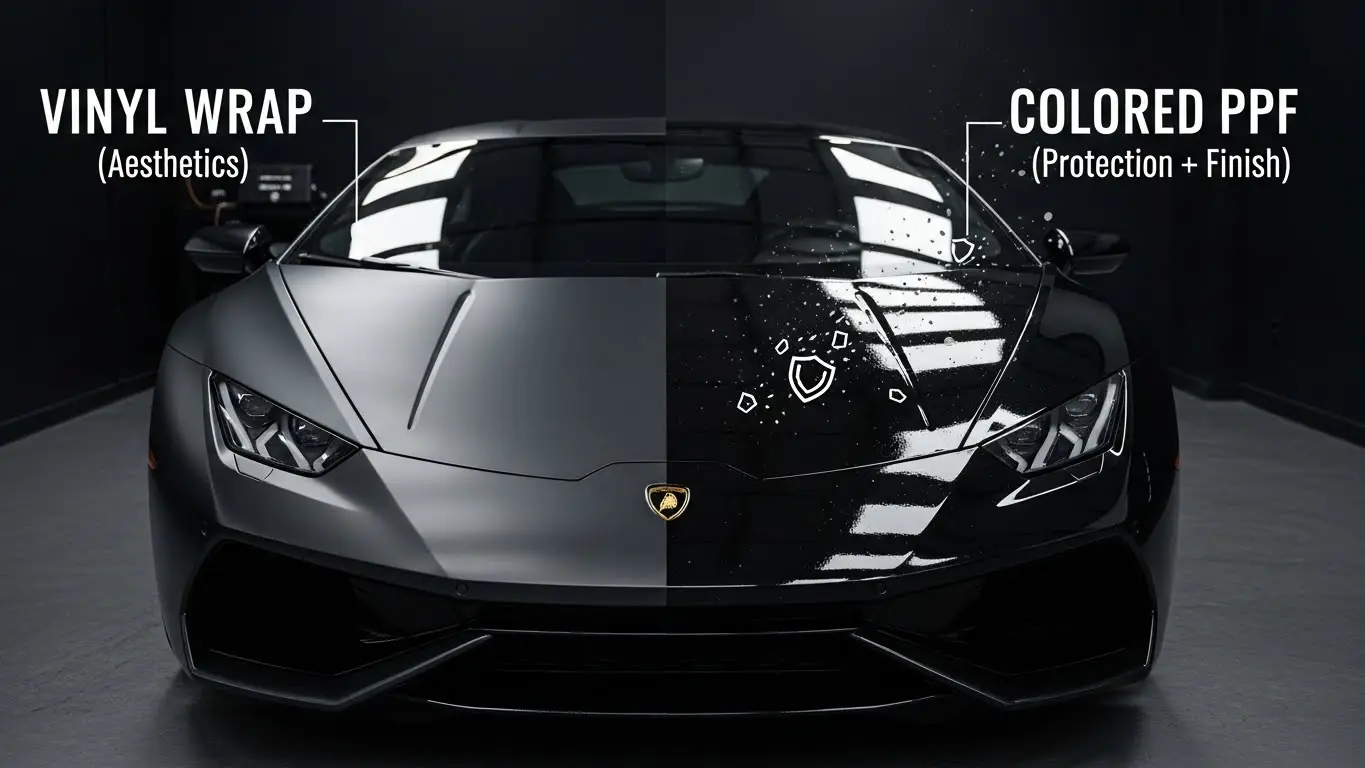
What Are the Pros and Cons of Colored PPF vs Vinyl Wrap?
Colored PPF offers superior protection and longevity (7-10 years) with self-healing TPU technology that prevents rock chips, while Vinyl Wrap is a thinner, aesthetic-only solution that lasts 3-5 years. While Vinyl is 30-40% cheaper upfront, Colored PPF mimics real paint without "orange peel" and protects your vehicle's resale value, making it the better long-term investment ... Read more
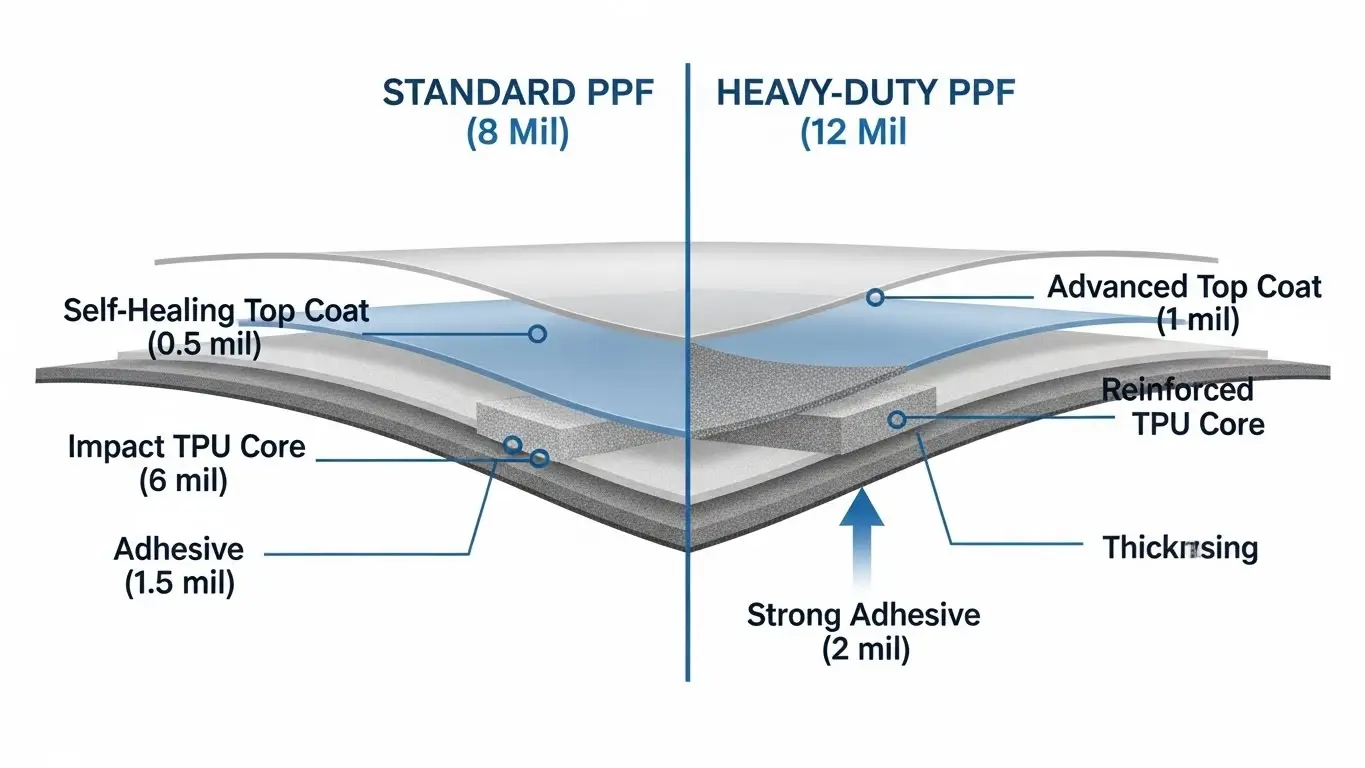
What Is the Thickest PPF Film Available in 2026?
As of 2026, the thickest commercially available Paint Protection Film (PPF) for consumer vehicles typically falls between 10 to 14 mils, depending on the brand and specific "off-road" or "heavy-duty" package selected. While the industry standard remains consistent at 7.5 to 8 mils, specialized impact films designed for track cars, off-road vehicles, and high-wear areas ... Read more

How Does Self-Healing PPF Work on Cars?
Self-healing Paint Protection Film (PPF) works through a top layer of elastomeric polymers that have a "molecular memory." When this layer is scratched, the chemical bonds are stretched but not broken. Exposure to heat (sunlight, hot water, or a heat gun) energizes these molecules, causing them to revert to their original, smooth structure, effectively erasing ... Read more

What's the Difference Between TPU and PVC Wraps?
TPU (Thermoplastic Polyurethane) is a premium, elastomeric protection film designed to shield vehicle paint from physical damage, boasting self-healing properties and a 7–10 year lifespan.1 In contrast, PVC (Polyvinyl Chloride) is a thinner, rigid vinyl material used primarily for aesthetic color changes, offering limited protection and a shorter 3–5 year lifespan. Simply put: choose TPU ... Read more

Does PPF Protect Better Than Vinyl Wrap Against Stone Chips?
Yes, Paint Protection Film (PPF) protects significantly better than vinyl wrap against stone chips. The difference lies in the material and thickness: PPF is typically 6–10 mils thick and made from impact-absorbent Thermoplastic Polyurethane (TPU), specifically engineered to deflect debris and self-heal from scratches. In contrast, vinyl wrap is much thinner (usually 3–4 mils) and ... Read more
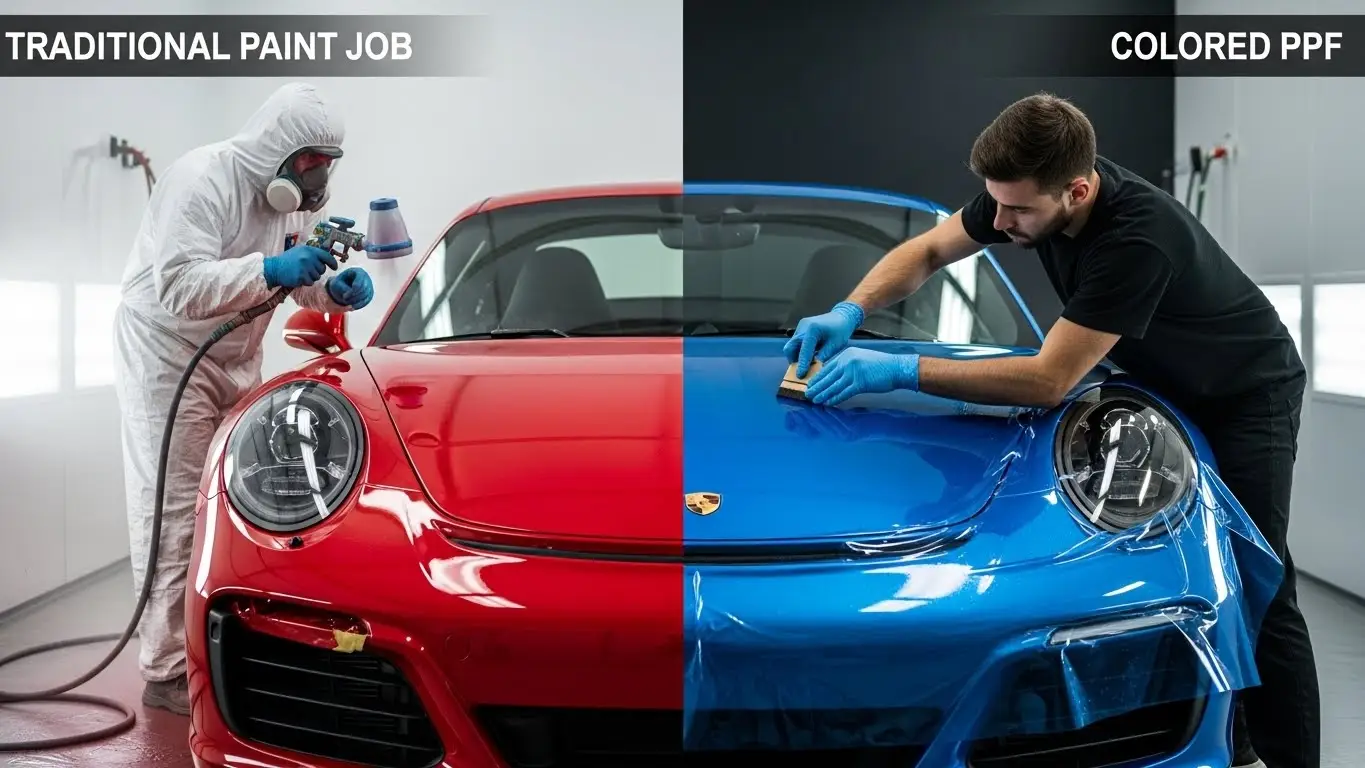
Is Colored PPF or a Paint Job More Cost-Effective?
Colored PPF is generally more cost-effective than a high-quality paint job for vehicles you plan to resell or protect. While both options cost between $5,000 and $10,000+ for premium results in 2025, Colored PPF protects your original factory paint (preserving resale value), self-heals from scratches, and takes only 3–7 days to install. A repaint is ... Read more
