



Popular Articles
Midnight Purple Paint for GTR R34
2026.01.13
Exploring the Allure of Midnight Purple
2026.01.13
Benefits of Using Carbon Fiber Vinyl Wraps
2026.01.13

About Company
Colorfuul is a global leader in high-end automotive films, offering Color TPU PPF, Transparent PPF, PET Window Films, and Vinyl Wrapping. With exports to over 100 countries, we deliver consistent quality, competitive pricing, and professional service. Beyond production, we provide OEM/ODM customization, shaping the future of automotive aesthetics.
 mary@colorfuul.com
  86 13541196952
 How to Clean Color TPU PPF: Easy Tips for a Spotless Finish
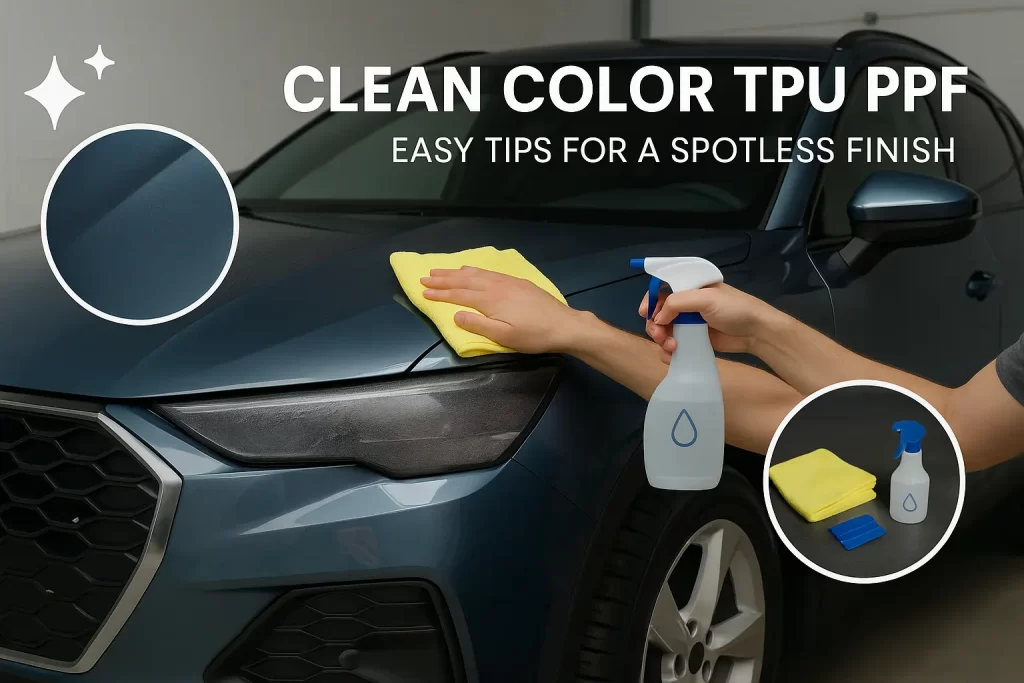
Learning how to clean color TPU PPF correctly is the most important thing an owner can do to protect their investment. A high-quality paint protection film is an incredibly durable and technologically advanced product. It is designed to withstand the harshest elements and protect the paint underneath. However, to keep the film itself looking pristine and to ensure it lasts for its full lifespan, a proper and consistent maintenance routine is essential. Using the right products and techniques will preserve the film’s special properties, like its self-healing and hydrophobic top coat. This guide provides a comprehensive, in-depth look at the professional methods for cleaning and caring for your color TPU PPF, ensuring a spotless finish for years to come.
The Philosophy of PPF Care: Protecting the Top Coat
The entire philosophy of PPF care can be summarized in one core principle: protect the top coat. The outermost layer of a modern paint protection film is a sophisticated, multi-functional material. It is the layer that provides the gloss or matte finish. It is the layer that self-heals from minor scratches. All cleaning and maintenance efforts should be focused on preserving the integrity of this critical surface. Aggressive, abrasive, or improper cleaning methods can damage this layer, diminishing the film's performance and appearance.
Understanding the Hydrophobic and Self-Healing Layers
A premium PPF's top coat is engineered with two key features. First, it is hydrophobic, meaning it has a low surface energy that repels water. This is what causes water to bead up and roll off, taking dirt with it. Second, it is an elastomeric polymer, which gives it the ability to self-heal. This means its flexible molecular structure can reform after being lightly scratched, making the scratch disappear. Gentle cleaning techniques are designed to clean the surface without compromising these two advanced properties.
The Goal: Gentle Cleaning to Avoid Abrasions
The number one goal of any PPF washing routine is to be as gentle as possible. The aim is to remove dirt and contaminants without physically abrading the surface. While the self-healing feature can repair minor swirl marks, it is always better to avoid inflicting them in the first place. Every step of a professional wash process is designed to minimize physical contact and to ensure that any contact that does happen is with soft, clean materials.
Why PPF Care is Different from Traditional Paint Care
Caring for a PPF is similar in many ways to caring for high-end automotive paint, but there are some key differences. PPF cannot be treated with abrasive polishes or compounds, as this can destroy the self-healing top coat. Traditional waxes that contain certain solvents or dyes should also be avoided. The care routine is focused on cleaning and protecting the existing top coat, not on abrading and refining it like traditional paint. For a general overview of protective films, the Paint protection film page offers useful context.
The First Two Weeks: Critical Curing Period Care
After a new PPF installation, there is a critical curing period. This can last from a few days to a few weeks. During this time, any residual moisture under the film is evaporating through its breathable pores, and the adhesive is forming its final, maximum bond. It is essential not to wash the vehicle during this period. Exposing the film to high-pressure water or washing chemicals can interfere with the curing process and can cause the edges to lift. The installer will provide specific instructions for this initial period.
Routine Washing: The Step-by-Step Professional Method
A regular, safe hand wash is the cornerstone of PPF maintenance. Performing this wash correctly will keep your vehicle looking its best and will preserve the life of the film. This professional method is designed to be as touch-free as possible in the early stages, removing the majority of dirt before a wash mitt ever makes contact with the surface.
Step 1: The Pre-Rinse with a Pressure Washer
The process should always begin with a thorough pre-rinse. A pressure washer is the ideal tool for this. The goal is to use the force of the water to knock off as much loose dirt, dust, and grime as possible. Use a wide-angle nozzle (a 40-degree tip is a good choice) to avoid putting too much pressure on any single point. Start at the top of the vehicle and work your way down, systematically rinsing every panel. This step removes the largest and most abrasive particles.
Step 2: The Snow Foam Pre-Soak
After the initial rinse, the next step is a snow foam pre-soak. This involves using a foam cannon attachment on the pressure washer. A high-quality, pH-neutral car soap is added to the cannon. The vehicle is then covered in a thick, clinging layer of foam. This foam should be allowed to dwell on the surface for five to ten minutes (but not allowed to dry). The soap in the foam will break down and encapsulate the remaining dirt and grime, lifting it from the surface of the film. After the dwelling time, the foam is thoroughly rinsed off. This single step can remove up to 80-90% of the dirt without ever touching the car.
Step 3: The Two-Bucket Hand Wash
Now that the vast majority of the grit has been removed, it is safe to perform a gentle hand wash. The two-bucket method is essential. One bucket is for the soap solution, and the other is for clean rinse water. Both buckets should have a grit guard at the bottom. A high-quality, plush microfiber wash mitt is used. Start at the top of the vehicle and work your way down, washing one small section at a time. Wash in straight, overlapping lines, not in circles. After each section, rinse the mitt thoroughly in the rinse bucket before putting it back in the soap bucket.
Step 4: The Final Rinse with Deionized Water
Once the hand wash is complete, a final, thorough rinse is needed. Again, start from the top and work your way down, ensuring all soap residue is removed. For a perfect, spot-free finish, the ideal solution is to use a deionized water system for this final rinse. Deionized water is pure H2O with all the minerals and dissolved solids removed. Because it has no mineral content, it can be left to dry on the surface without leaving behind any water spots.
Step 5: Safe Drying Techniques (Air Blower and Microfiber)
The safest way to dry a vehicle is to touch it as little as possible. The best method is to use a dedicated car dryer or a powerful leaf blower. This allows you to blast the water off the surface and out of all the crevices without any physical contact. For any remaining water, the "blotting" technique should be used. Take a large, plush, high-quality microfiber drying towel. Lay it flat on the panel and gently pat it dry. Do not aggressively wipe or rub the towel across the surface.
Choosing the Right Products: The Do's and Don'ts
Using the correct, high-quality products is just as important as using the correct technique. The wrong chemical or material can cause irreversible damage to the film's top coat. The market is full of specialized products designed for PPF care, and it is important to use them.
Soaps: Why pH-Neutral is Non-Negotiable
The car wash soap you use must be pH-neutral. A soap that is too acidic or too alkaline can be harsh on the film's top coat and can degrade any sealant or ceramic coating that has been applied. You should also choose a soap that is a pure cleaner, without any added waxes, sealants, or gloss enhancers. These additives can leave behind an uneven residue and may not be compatible with the film's top coat.
Wash Mitts: The Importance of High-Quality Microfiber
The quality of your wash mitt is critical. A cheap, low-quality microfiber mitt has fewer, coarser fibers. It is less effective at trapping dirt and can cause scratches. A high-quality, plush mitt has a deep pile with many soft, fine fibers. These fibers safely lift the dirt away from the surface and trap it deep within the mitt, preventing it from being dragged across the film.
Drying Towels: Plush and Absorbent is Key
Similarly, a high-quality drying towel is essential. Look for a large, heavy towel with a high GSM (grams per square meter) rating. This indicates a dense, plush, and highly absorbent material. A good towel can absorb a huge amount of water, allowing you to dry the vehicle by blotting rather than wiping. This dramatically reduces the risk of inflicting swirl marks.
Here are some products and tools you should absolutely avoid when you clean color TPU PPF:
- Abrasive Polishes and Compounds: These will physically abrade and destroy the self-healing top coat.
- Harsh Solvents: Avoid using kerosene, acetone, lacquer thinner, or aggressive bug and tar removers.
- Waxes Containing Dyes or Naphtha/Kerosene: Certain waxes can stain the film or cause the top coat to swell and become hazy.
- Stiff-Bristled Brushes: Only use brushes with very soft, gentle bristles for cleaning wheels or intricate areas.
- Automatic Car Washes with Brushes: The abrasive brushes in these washes can scratch and damage the film. Touchless automatic washes are generally safe.
- Terry Cloth or Other Rough Towels: Only use high-quality microfiber for touching the film's surface.
Advanced Care: Spot Cleaning and Decontamination
Routine washing will handle most of the dirt, but sometimes a vehicle will have more stubborn, isolated contaminants. Dealing with these spots quickly and correctly is an important part of advanced PPF care. The key is to be gentle and use the right product for the job.
Safely Removing Bug Splatter
Bug splatter is a major issue for all vehicle surfaces. The acidic remains can quickly etch into the film's top coat if left for too long. To remove them safely, it is best to first soften them. You can lay a microfiber towel soaked in warm, soapy water over the area for a few minutes. This will rehydrate and loosen the residue. It can then be gently wiped away. For very stubborn spots, a dedicated, PPF-safe bug remover can be used.
Dealing with Bird Droppings Before They Etch
Bird droppings are even more acidic and dangerous than bug splatter. They must be removed as quickly as possible. The removal process is the same. Soften the dropping with a wet towel first. Never try to scrub a dry, hard bird dropping, as its gritty contents can cause deep scratches. Once softened, it should be gently lifted off the surface. The goal is to get it off before it can cause a chemical etch.
Removing Tar and Road Grime
Small black dots of road tar can sometimes get kicked up onto the lower parts of the vehicle. These will not come off with a normal wash. To remove them, use a dedicated, PPF-safe tar remover. Apply a small amount to a microfiber towel and gently wipe the spot until the tar dissolves. After using a solvent-based cleaner like this, it is a good idea to re-wash that small area with car soap to remove any oily residue. A key part of long-term care is knowing how to prevent stains on ppf.
The Art of a Gentle Decontamination
Over time, even a well-maintained film can pick up some bonded iron particles. A full decontamination can be performed, but it should be done gently. Use a pH-neutral iron remover. It is best to avoid aggressive claying of the film unless absolutely necessary. If you do need to clay the film, use a very fine-grade clay with extra-slick lubrication and extremely light pressure.
Long-Term Protection and Enhancement
Washing is about removing dirt. The next level of care is about protecting the film and enhancing its properties. Applying a dedicated protective topper is a highly recommended step that can extend the life and improve the performance of your color PPF.
Using a PPF-Specific Detail Spray
After a wash, using a high-quality, PPF-specific quick detail spray is a great way to add a bit of extra gloss and slickness. These products are designed to be compatible with the film's top coat. They can help to remove any lingering water spots and leave behind a streak-free, anti-static finish that will help the car stay cleaner for longer.
The Benefits of a Sacrificial Ceramic Coating or Sealant
The best way to protect your PPF is to apply a dedicated ceramic coating or sealant over the top of it. There are many ceramic coatings on the market that are specifically formulated for use on paint protection film. These coatings create a hard, slick, and durable sacrificial layer on top of the film's top coat. This layer provides even better protection against stains, UV rays, and chemical etching. It also dramatically enhances the hydrophobic properties, making the vehicle extremely easy to clean.
How a Topper Enhances Hydrophobicity
While a new PPF is already hydrophobic, this property can diminish over time as the top coat gets clogged with microscopic pollutants. Applying a ceramic coating or a sealant rejuvenates and enhances this effect. Water will bead up into tiny, perfect spheres and fly off the surface when you drive. This extreme water beading is not only amazing to look at, but it also means the car practically dries itself and stays much cleaner.
Special Care for Different Finishes
The cleaning and care routine can vary slightly depending on the finish of your color PPF. While the basic principles of gentle washing are the same, gloss and matte finishes have their own unique considerations.
Cleaning a High-Gloss Finish
A high-gloss finish is the most straightforward to care for. It can be washed and protected using the methods described above. The main goal is to avoid swirl marks by using safe washing techniques. A ceramic coating on a gloss finish will make it look even deeper and wetter.
The Unique Challenges of Cleaning a Matte Finish
A matte finish requires more specialized care. It absolutely cannot be polished, waxed, or treated with any product that contains fillers or gloss enhancers. These products will fill in the microscopic texture that creates the matte effect, resulting in shiny, blotchy patches. Owners of matte-finished vehicles must use a dedicated line of matte care products. This includes matte-specific soaps, detail sprays, and ceramic coatings.
Maintaining the Self-Healing Properties
The self-healing feature of your PPF is one of its most valuable assets. Proper care is essential to preserve this function and to use it effectively when needed.
How Proper Washing Prevents Needless Scratches
The best way to maintain the self-healing is to not overuse it. By using the safe, professional washing methods described in this guide, you will inflict the absolute minimum number of new swirl marks. This keeps the top coat in its best possible condition and saves the healing for the accidental scuffs and scratches of daily life.
Using Heat to Repair Minor Swirls
If you do accumulate some light swirl marks, you can use heat to activate the self-healing and erase them. Parking the car in the sun on a hot day is the easiest method. You can also use a heat gun (on a low setting and from a safe distance) or pour warm water over the affected area. This will cause the top coat's polymer network to reform, and the scratches will disappear. The full process for self healing repair ppf is a simple but effective one.
Seasonal and Long-Term Maintenance
Caring for your PPF is a year-round commitment. There are some specific tasks that should be done on a seasonal or annual basis to ensure the film's long-term health.
Preparing Your PPF for Seasonal Changes
The challenges your film faces can change with the seasons. Proper winter care for color PPF might involve more frequent washing to remove road salt and grime. In the summer, it is crucial to remove bug splatter and bird droppings quickly in the hot sun.
Annual Decontamination and Sealant Application
It is a good practice to perform a full, gentle decontamination of the film at least once a year. This will remove any bonded iron particles that have accumulated. After this deep cleaning, it is the perfect time to re-apply your chosen ceramic coating or sealant. This annual ritual will keep the film in peak condition.
Inspecting the Film for Damage or Wear
You should also regularly inspect your film for any signs of significant damage. Check for any deep cuts, punctures, or areas where an edge might be starting to lift. Catching these issues early can prevent them from getting worse. This is also key to knowing when to replace color ppf.
How to Clean Color TPU PPF
Learning how to properly clean color TPU PPF is the key to enjoying your investment for the full decade or more of its lifespan. The process is not difficult, but it does require a commitment to using the right products, the right techniques, and a gentle touch. By following the professional methods of a multi-stage wash, using high-quality supplies, and protecting the film with a dedicated sealant, you can easily maintain a flawless, spotless finish. This routine care will preserve the film's advanced properties and keep your vehicle looking as perfect as the day the installation was completed.


