



Popular Articles
Car Wrapping vs Painting: Which Is More Cost-Effective?
2026.03.22
How to Find the Best Tint Shop Near You in 2026
2026.03.22
Top Trusted PPF Brands and How to Choose the Right One
2026.03.22
About Company
Colorfuul is a global leader in high-end automotive films, offering Color TPU PPF, Transparent PPF, PET Window Films, and Vinyl Wrapping. With exports to over 100 countries, we deliver consistent quality, competitive pricing, and professional service. Beyond production, we provide OEM/ODM customization, shaping the future of automotive aesthetics.
 mary@colorfuul.com
  86 13541196952
 How Do I Clean Stains on Matte PPF?
For most stubborn stains on matte PPF, use a 50:50 mix of 70% Isopropyl Alcohol (IPA) and water. Gently dab the area with a microfiber towel—do not scrub aggressively. For hard water spots, use a dedicated matte-specific chemical cleaner or a mild vinegar dilution. Never use magic erasers, rubbing compounds, or carnauba wax, as these will permanently flatten the texture and create irreversible shiny spots.
Why This Matters: The Science of "No Shine"
Understanding why your matte film looks the way it does is the key to cleaning it safely. Unlike gloss PPF, which has a smooth surface that reflects light directly (like a mirror), Colorfuul’s matte TPU film features a microscopic textured surface. This texture scatters light in different directions, creating that flat, satin look.
Here is the risk: If you use a traditional polish, wax, or abrasive tool, you fill in those microscopic valleys or smooth out the peaks. The result? A permanent glossy patch that looks like a grease stain. Because you cannot "polish" matte PPF back to its original state, chemical cleaning is your only safe option.
Essential Tools for Matte PPF
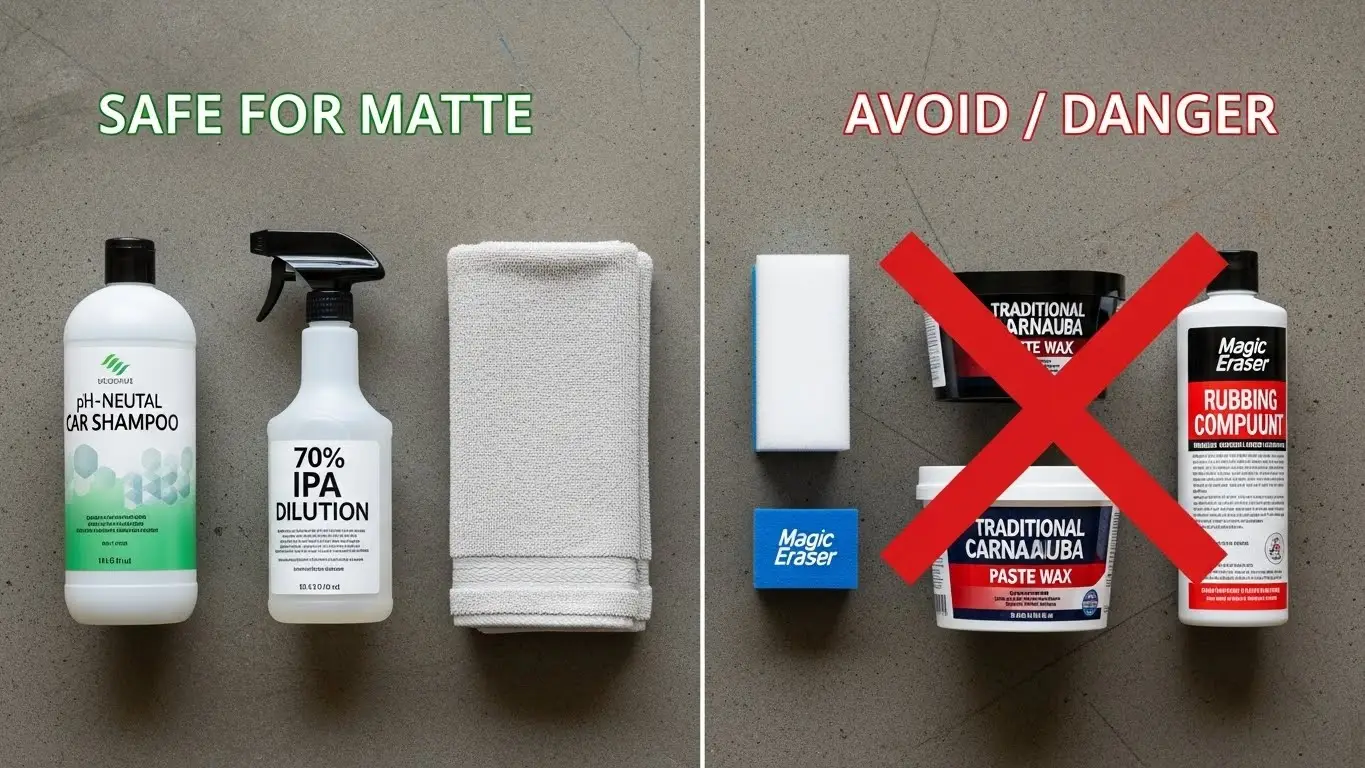
Before you touch the film, ensure you have the right chemistry. Using the wrong product once can compromise the finish.
✅ Safe to Use
- pH-Neutral Car Shampoo: Essential for weekly washes to preserve the hydrophobic top-coat.
- Matte-Specific Detail Sprays: These evaporate quickly without leaving gloss-enhancing residue.
- Microfiber Towels (300+ GSM): Always use clean, plush towels to lift dirt away from the pores.
- Isopropyl Alcohol (70%): Your emergency eraser for tree sap and tough grime (diluted).
❌ Strictly Avoid
- Magic Erasers: These are essentially 3000-grit sandpaper. They will smooth the film and ruin the matte effect.
- Rubbing Compounds/Polishes: Designed to cut and level surfaces—exactly what you don't want.
- Paste Waxes: These contain fillers that dry white in the pores of the film, making it look chalky.
- Automatic Car Washes: The stiff bristles are too abrasive, and the "spray wax" options often contain gloss enhancers.
Step-by-Step: Removing Specific Stains
Different stains require different chemical approaches. Always start with the least aggressive method.
1. Organic Stains (Bird Droppings, Bug Splatter)
Acids from bird droppings can etch the film if left too long.
- Soak: Saturate a microfiber towel with hot water (approx. 140°F / 60°C).
- Dwell: Place the wet towel over the stain and let it sit for 5-10 minutes. This rehydrates and softens the deposit.
- Wipe: Gently lift the debris away.
- Heal: The heat from the water will also activate the TPU's self-healing properties, fixing any micro-marring caused by the debris.
2. Oily Stains & Tree Sap (The IPA Method)
For stubborn, sticky substances that water won't touch.
- Mix: Create a solution of 50% Water and 50% Isopropyl Alcohol (70%).
- Apply: Spray onto a microfiber towel, not directly on the car (to avoid overspray on sensitive plastics).
- Dab: Gently blot the stain. Do not rub in circles.
- Rinse: Immediately rinse the area with water to ensure the alcohol doesn't dry on the surface.
3. Hard Water Spots (Mineral Deposits)
If sprinklers or rain have left white ring marks.
- Chemical Cleaner: Use a dedicated water spot remover safe for matte finishes (check the label for "acid-free" or "matte safe").
- Vinegar Hack: In a pinch, mix white vinegar with distilled water (1:1 ratio).
- Test: Apply to a small, inconspicuous area first.
- Wipe & Neutralize: Wipe the spot, then immediately wash the area with soapy water to neutralize the acid.
Matte vs. Gloss Maintenance: What's Different?
If you are used to caring for glossy cars, you need to unlearn a few habits.
| Feature | Gloss PPF Maintenance | Matte PPF Maintenance |
| Scratch Removal | Light machine polishing or heat healing | Heat healing ONLY (Polishing ruins it) |
| Protection | Carnauba wax, Sealants, Ceramic Coating | Matte-specific Ceramic Coating (No wax) |
| Stain Risk | Moderate (Smooth surface rejects dirt) | High (Texture can trap contaminants) |
| Emergency Cleaning | Clay bar + Lube | Chemical Decontamination (Clay is risky) |
| Visual Feedback | Hides dust well | Shows oil/fingerprints easily |
Advanced Protection: Ceramic Coating
Because you cannot mechanically polish matte PPF to deep clean it, prevention is critical. Applying a ceramic coating specifically engineered for matte surfaces is the single best investment you can make.
- Why? It fills the microscopic pores of the film without smoothing them out, preventing dirt from embedding deep in the texture.
- Benefit: It makes the film super-hydrophobic (water-repellent), meaning mud and dirty water slide off rather than drying into spots.
- Lifespan: A good ceramic coating on PPF can last 1-2 years, significantly reducing your maintenance effort.
Expert Tips for Longevity
"Treat your matte PPF like a premium fabric, not a hard shell. You stain a silk shirt, you dab it out with chemistry; you don't scrub it with a brush. The same logic applies here." — Automotive Detailing Expert
- Wash Weekly: Matte film holds onto dust more than gloss. Regular washing prevents buildup that requires aggressive scrubbing later.
- Check the Edges: When using a pressure washer, keep the nozzle 24 inches away and never spray directly at the edges to avoid lifting.
- Use the Two-Bucket Method: As detailed in our Colorfuul Washing Guide, this prevents you from rubbing dirt back into the sensitive matte texture.
Frequently Asked Questions
Can I use a clay bar on matte PPF?
Technically yes, but it is risky. You must use an ultra-fine grade clay and an excessive amount of lubricant. If you drag the clay on a dry spot, it can leave a "marring" mark that you cannot polish out. Chemical decontamination (like iron removers) is safer for matte finishes.
Will dish soap remove stains?
Dish soap is a degreaser and can strip protective sealants, drying out the film over time. While it might remove a grease stain, it is too harsh for regular use. Stick to pH-neutral car shampoos.
How do I fix a shiny spot on my matte PPF?
Unfortunately, a shiny spot usually means the texture has been smoothed out by abrasion (rubbing). This is permanent damage. Unlike gloss PPF, you cannot sand or polish it back. The only fix is to replace that specific panel of film.
Is 99% Alcohol safe for PPF?
No, 99% Isopropyl Alcohol is too strong and can swell the urethane or cloud the adhesive if left too long. Always dilute it to at least 50% strength with water before using it on automotive films.
Does matte PPF yellow over time?
High-quality TPU films like Colorfuul's are UV-stable and resistant to yellowing. However, using cheap waxes or products with yellow dyes can stain the pores of the matte finish, giving it a yellow appearance.
Can I use "wash and wax" soap?
Avoid these. They contain gloss enhancers that will slowly turn your satin finish into a semi-gloss, patchy mess. Look for soaps labeled "Pure Shampoo" or "Matte Safe."
How much does it cost to fix a stained panel?
If a stain is permanent, replacing a single panel (like a hood or door) can cost between $200 and $600 depending on the vehicle and labor rates in 2025. This is why immediate cleaning is cheaper than replacement!
Can I go through a touchless car wash?
We advise against it. Touchless washes use extremely high-pH (acidic/alkaline) chemicals to melt dirt. These harsh chemicals can strip the hydrophobic coating off your matte PPF and cause premature aging.
Key Takeaways
- No Friction: Never scrub, polish, or clay matte PPF aggressively.
- Chemistry is King: Use 50/50 IPA for oil and hot water for organics.
- No Shine Products: Throw away any waxes or detail sprays that promise "gloss enhancement."
- Act Fast: Matte texture traps stains; clean bird droppings and bug guts immediately.
- Coat It: A matte ceramic coating is your best defense against future stains.


