



Popular Articles
Ultimate Guide to 360° Comprehensive Interior Detailing — Deep Clean, Sanitize and Protect Your Car’s Cabin
2026.02.04
Singapore Car Window Tinting Guide: Rules, Benefits, and How to Choose the Right Film
2026.02.04
The Complete Guide to Colour Wraps — Transforming Your Car’s Look with Style and Protection
2026.02.04

About Company
Colorfuul is a global leader in high-end automotive films, offering Color TPU PPF, Transparent PPF, PET Window Films, and Vinyl Wrapping. With exports to over 100 countries, we deliver consistent quality, competitive pricing, and professional service. Beyond production, we provide OEM/ODM customization, shaping the future of automotive aesthetics.
 mary@colorfuul.com
  86 13541196952
 Which Brands Make Color-Shifting Chameleon PPF?
Top brands for color-shifting Chameleon PPF in 2025 include STEK (DYNOprism), GSWF (Chroma Series), and Colorfuul (Manufacturer Direct). Unlike standard vinyl, these are 8-mil thick TPU films that self-heal scratches while offering dynamic color shifts. Expect to pay $5,000–$8,000 for a full professional installation, significantly higher than vinyl ($3,000) due to the advanced material science.
Why This Matters
For years, car enthusiasts had to choose between protection (Clear PPF) and personality (Vinyl Wrap). If you wanted a "Midnight Purple" or "Chameleon" look, you were forced to use thin vinyl stickers that offered zero protection against rock chips and looked "plastic" after a year in the sun.
In 2025, that compromise is dead. Color-Shifting PPF (also known as Chameleon PPF) is a game-changer. It combines the heavy-duty, self-healing armor of Paint Protection Film (TPU) with the exotic, multi-tonal pigments previously only found in custom paint jobs. For Tesla owners and luxury car drivers, this means you can turn your daily driver into a show car without worrying about highway debris ruining the finish.
Top Brands Making Chameleon PPF (2026 Edition)
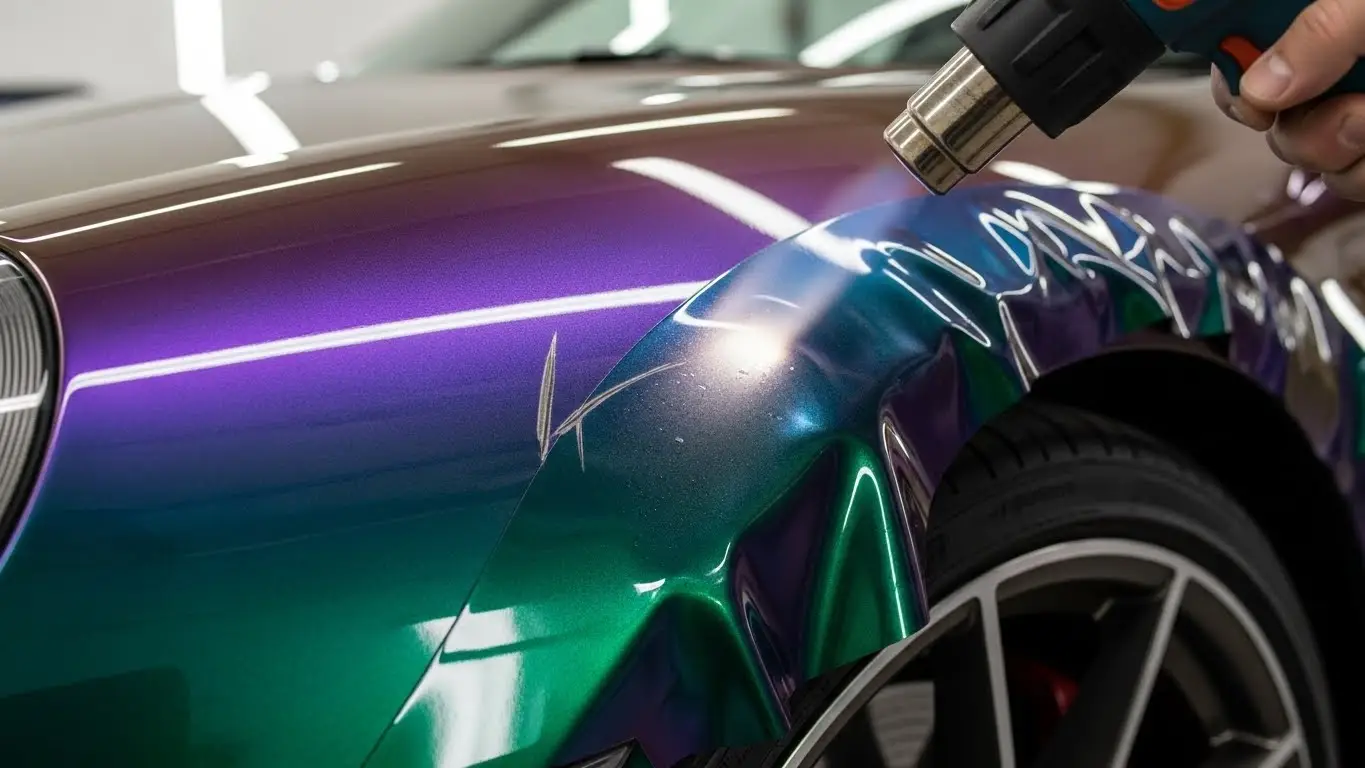
Not all "color-changing" films are created equal. Some are just repackaged vinyl. Below are the actual TPU-based heavyweights dominating the market this year.
1. STEK (DYNOprism)
Best For: The "Brand Name" Buyer
STEK is widely credited with popularizing "Fashion PPF." Their DYNOprism line is iconic, offering a glittery, color-shifting finish that changes from purple to green to gold depending on the light.
- Pros: Incredible brand recognition, high-gloss finish, extensive installer network.
- Cons: One of the most expensive options on the market.
2. Colorfuul (Factory Direct)
Best For: Smart Value & Installers
As a global manufacturer producing 100,000 rolls annually, Colorfuul cuts out the middleman distributor. We offer Color TPU PPF with the same high-grade chemical backbone (Lubrizol TPU, Ashland Glue) as the "big names" but at a more accessible price point.
- Pros: Direct-from-manufacturer pricing, OEM/custom color capabilities, extreme durability (8-10 mils).
- Cons: Primarily B2B or direct-to-installer focus, rather than retail shops.
3. GSWF (Infused Color Series)
Best For: Color Variety
GSWF has aggressively expanded its catalog to offer over 50+ colored PPF options. Their "Chameleon" and "Psychedelic" lines use infused color technology where the pigment is embedded in the TPU, not just printed on top.
- Pros: Huge variety of specific color shifts.
- Cons: Consistency can vary slightly between batches compared to larger manufacturers.
4. Inozetek (Dynamic PPF)
Best For: The "Wet Paint" Look
Originally famous for their "Super Gloss" vinyl, Inozetek has entered the PPF game. Their films are known for having zero orange peel, looking arguably better than factory paint.
- Pros: Unmatched gloss levels.
- Cons: Known to be difficult to install, often requiring higher labor costs.
Chameleon PPF vs. Vinyl Wrap: The Critical Comparison
Many shops will try to sell you a "Chameleon Wrap" without clarifying if it's Vinyl or PPF. Do not get scammed. Here is the difference in real data.
| Feature | Chameleon Vinyl (PVC) | Chameleon PPF (TPU) |
| Material | Polyvinyl Chloride (Plastic) | Thermoplastic Polyurethane (Rubber-like) |
| Thickness | 3–4 Mils (Paper thin) | 8–10 Mils (Thick armor) |
| Durability | Rips easily; no rock protection | Bounces rocks off; protects paint |
| Self-Healing | ❌ No (Scratches are permanent) | ✅ Yes (Scratches heal with heat) |
| Lifespan | 2–3 Years (Fades in sun) | 7–10 Years (UV Stable) |
| Finish | often has "Orange Peel" texture | Flat, glass-like "Wet Paint" look |
The Real Cost Breakdown (2025)
Why does a Chameleon PPF quote make your wallet hurt? Because you are buying engineering, not just a sticker.
- Average Cost: $5,500 – $8,000 for a full vehicle.
- Material Cost: The film itself costs 3x-4x more than vinyl because it involves embedding metallic flakes into liquid TPU without compromising the film's clarity or strength.
- Labor: Chameleon films are directional. If an installer stretches them the wrong way, the colors will shift unevenly (e.g., one door looks purple, the other looks green). It requires expert-level installation, often taking 5-7 days.
Common Mistakes to Avoid
1. "It's Just a Sticker" Mentality
Treating PPF like vinyl is a recipe for disaster. You cannot "stretch" PPF as aggressively as vinyl. If your installer over-stretches a color-shifting film, the metallic flakes will separate, creating "tiger stripes" or dull spots in the color.
2. Ignoring the "Orange Peel"
Cheap chameleon films (often unbranded knock-offs) look pixelated or blurry. High-quality TPU from manufacturers like Colorfuul or STEK will have a distinct, sharp reflection. Ask to see a sample swatch in the sunlight before booking.
3. Washing Too Soon
Because PPF is wet-applied (using slip solution), it needs time to "breath" and dry out. If you pressure wash your car within the first 7 days, you risk lifting the edges and ruining a $7,000 job.
Expert Tips for Buyers
- Check the Adhesive: Ask specifically if the film uses Ashland or similarly high-grade adhesives. Cheap adhesives will yellow and leave nasty glue residue on your paint when removed 5 years later.
- Hydrophobic Top Coat: Ensure the brand you choose has a built-in hydrophobic layer. Chameleon films look best when clean; you want water and dirt to bead up and slide off effortlessly.
- Mix and Match: If $8,000 is over budget, consider doing the Front End (Hood, Bumper, Fenders) in Chameleon PPF for protection, and the rest of the car in a matching high-grade Vinyl. It’s a compromise, but a common one.
Frequently Asked Questions
What is the lifespan of Chameleon PPF?
High-quality Chameleon PPF typically lasts 7 to 10 years. Unlike vinyl, which becomes brittle and cracks after 3 years of sun exposure, TPU remains flexible and UV-stable, maintaining its color shift and protective properties for a decade.
Does Chameleon PPF look like real paint?
Yes, and often better. Because the film is thicker (8 mils) and self-leveling, it can hide minor imperfections in your factory paint. The result is a deep, "liquid metal" look that has more depth than a standard spray job.
Can I wax or ceramic coat Chameleon PPF?
You absolutely should. While many premium films come with a hydrophobic top coat, adding a ceramic coating specifically designed for PPF/Vinyl will enhance the gloss and make the color-shifting effect even more dramatic by keeping the surface contaminant-free.
Is Chameleon PPF legal?
Generally, yes. However, some extremely reflective "chrome" or "mirror" finishes can be illegal in certain states/countries due to blinding other drivers. Standard color-shifting (e.g., Purple-to-Green) is legal in almost all jurisdictions. Check your local laws.
Can I install Chameleon PPF myself (DIY)?
No. We strongly advise against it. Chameleon films are directional and unforgiving. Unlike clear PPF where mistakes are invisible, a stretch mark or dust speck in Chameleon PPF sticks out like a sore thumb. Leave this to the pros.
How do I wash Chameleon PPF?
Use the two-bucket method with a pH-neutral car shampoo. Avoid automatic car washes with spinning brushes, as they can abrade the self-healing top coat over time. Touchless washes are generally safe after the curing period.
Will removing the film damage my paint?
No, provided your car has factory original paint (OEM). High-quality PPF uses technology designed to peel off cleanly without lifting clear coat. If your car has been repainted cheaply, there is always a risk during removal.
Why is Chameleon PPF more expensive than Clear PPF?
The manufacturing process is more complex. Embedding color-shifting pigments evenly into the TPU slurry without creating structural weaknesses requires advanced machinery and more expensive raw materials than producing standard transparent film.
Key Takeaways
- The Big 3: Look for STEK, Colorfuul, or GSWF for verified quality.
- Know the Difference: Ensure you are buying TPU PPF (8-mil), not PVC Vinyl (3-mil).
- Price is Quality: Expect to pay $5,000+. Anything less is likely a vinyl wrap disguised as PPF.
- Maintenance: Treat it like expensive paint—hand wash and ceramic coat for the best longevity.
- Value: It protects your resale value by keeping the factory paint pristine underneath the exotic color.


