



Popular Articles
Midnight Purple Paint for GTR R34
2026.01.13
Exploring the Allure of Midnight Purple
2026.01.13
Benefits of Using Carbon Fiber Vinyl Wraps
2026.01.13

About Company
Colorfuul is a global leader in high-end automotive films, offering Color TPU PPF, Transparent PPF, PET Window Films, and Vinyl Wrapping. With exports to over 100 countries, we deliver consistent quality, competitive pricing, and professional service. Beyond production, we provide OEM/ODM customization, shaping the future of automotive aesthetics.
 mary@colorfuul.com
  86 13541196952
 Color TPU PPF vs Clear PPF: Key Differences Explained
Choosing between color TPU PPF vs clear PPF is a key decision for vehicle owners. Both options offer excellent protection for a car's paint. However, they serve different aesthetic purposes. This guide will explain the key differences in detail. We will cover aspects from appearance to installation and cost. Understanding these distinctions is essential for selecting the right film. This information helps you protect your vehicle while achieving the desired look. We will explore the nuances of each film type.
Foundational Understanding of Paint Protection Film
Before comparing color and clear options, it's important to understand the base technology. Paint protection film, or PPF, is a urethane-based film. It is applied to the painted surfaces of a vehicle. Its primary purpose is to create a sacrificial barrier. This barrier protects the paint from various forms of damage. The development of thermoplastic polyurethane (TPU) was a major advancement in this field. It made the films more durable, flexible, and long-lasting than older materials. The core function of any PPF is preservation of the underlying surface.
The Role of Thermoplastic Polyurethane (TPU)
Thermoplastic polyurethane is the superior material for modern PPF. It is a class of polymer known for its incredible properties. TPU offers high elasticity, meaning it can stretch to fit complex curves. It is also highly resistant to abrasion, impacts, and chemicals. This combination makes it perfect for automotive protection. The TPU PPF materials are engineered to withstand harsh road conditions. They maintain their integrity and appearance for many years. This material forms the foundation of both clear and color paint protection films. The fundamental protective qualities originate from the TPU itself.
The Core Purpose: Protection Above All
The main reason to install any paint protection film is for defense. Vehicles face constant threats. Road debris like gravel and sand can cause rock chips. Tree branches and careless actions can cause scratches. Bird droppings and bug splatter contain acids that etch paint. A high-quality PPF absorbs these damages. It prevents them from reaching the car's delicate clear coat and paint. This protective function is the shared, primary benefit of both clear and color TPU films. For a basic overview, you can learn more about what is TPU paint protection film and its general properties.
What is Clear TPU PPF?
Clear TPU PPF is the traditional and most common form of paint protection film. It is a completely transparent layer. Its design allows it to be virtually invisible once applied to a vehicle. The primary goal of clear PPF is to protect the factory paint without altering the car's appearance. It is the choice for owners who love their vehicle's original color. They simply want to keep it in pristine condition. This film acts as an invisible shield against the hazards of daily driving.
The Goal of Invisibility
The engineering behind clear PPF focuses on optical clarity. Manufacturers work to create films that do not mute or alter the paint color underneath. A high-quality clear film has no tint, haze, or texture. When installed professionally, it is extremely difficult to detect. This allows the car's original design and finish to shine through. The film's edges are carefully wrapped or precisely cut to blend seamlessly with the panels. This pursuit of invisibility is the defining characteristic of clear PPF.
Core Composition and Layering
Clear TPU PPF is a multi-layered product. The top layer is a specialized clear coat. This layer provides stain resistance and often includes self-healing properties. Below this is the main TPU layer, which provides the impact absorption. Under the TPU is a strong, yet safe, acrylic adhesive. This adhesive bonds the film to the car's paint. A protective liner covers the adhesive during shipping and is removed upon installation. Each layer is engineered for transparency and long-term stability.
Primary Applications and Use Cases
Clear TPU PPF is ideal for several scenarios. It is the perfect choice for owners of new cars who want to preserve the factory finish. It is also popular for exotic, collectible, or rare vehicles. In these cases, maintaining the original paint is crucial for the car's value. Many owners choose to apply clear PPF to high-impact areas. These zones include the front bumper, hood, fenders, and side mirrors. This is known as a "partial front" or "full front" installation. Some owners opt to cover the entire vehicle for complete protection.
What is Color TPU PPF?
Color TPU PPF is a newer innovation in the automotive world. It combines the protective qualities of traditional PPF with the aesthetic appeal of a vinyl wrap. This film contains a pigmented layer. This gives it a specific color and finish. It allows a vehicle owner to change their car's appearance completely. At the same time, they get the superior impact and scratch resistance of a true paint protection film. This two-in-one solution has become very popular.
The Evolution into Aesthetics
The journey of colored protective films is an interesting one. Early protective films were purely functional. The history of color PPF shows a gradual shift. As material science improved, manufacturers realized they could add pigments to the TPU. This did not compromise its protective abilities. This opened up a new market. It catered to owners who wanted both customization and top-tier protection. Color PPF moved the product from a simple preservation tool to a design element.
How Color is Integrated into the Film
In color TPU PPF, the structure includes a pigmented layer. This layer is typically embedded within the TPU itself. It is not just a colored top coat. This integration ensures the color is stable and resistant to fading. The manufacturing process fuses the color with the protective polyurethane. This creates a single, durable film. The top layer is still a clear coat. This provides the same self-healing and stain-resistant properties as clear PPF. The fundamental protective nature of the film remains unchanged.
Primary Applications and Use Cases
Color TPU PPF is used by owners who want a change. It is for those who wish to have a unique color not available from the factory. It is also an excellent option for covering older paint that has minor imperfections. The opaque film can hide small scratches or faded spots. It provides a fresh, new look. Like a vinyl wrap, it is fully reversible. The original paint is preserved underneath. This makes it a great choice for leased vehicles or for owners who like to change their car's look periodically.
Aesthetic Differences: The Most Obvious Comparison
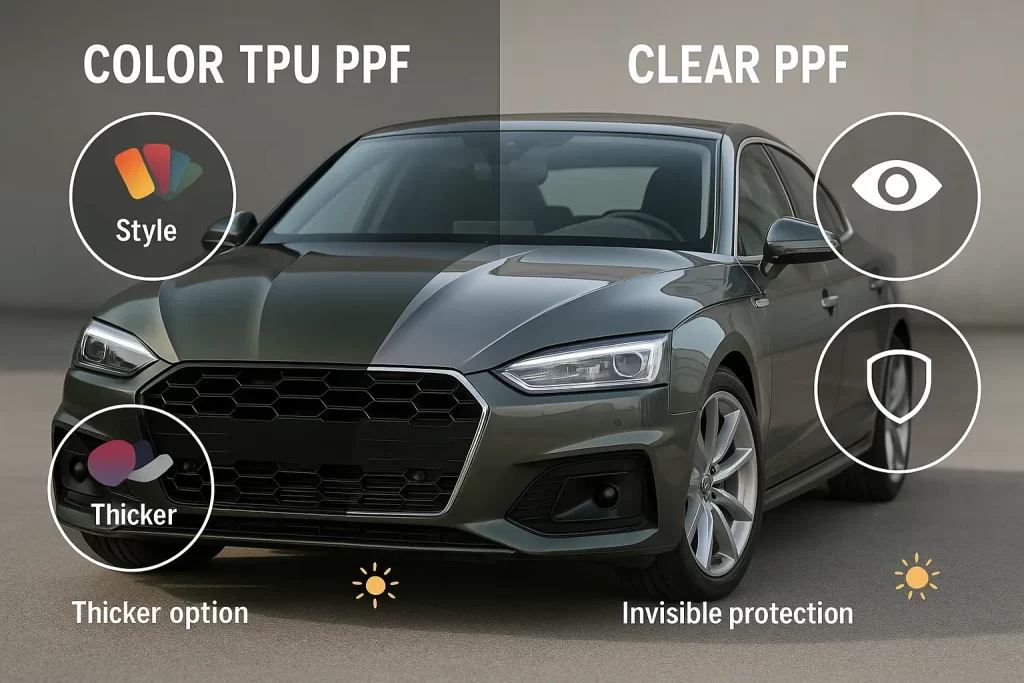
The most significant difference between color and clear PPF is the visual impact. One is designed to be invisible, while the other is designed to be seen. This choice between preservation and transformation is the first one a vehicle owner must make. The aesthetic outcome of each film is completely different. It affects the vehicle's character, finish, and overall presence on the road.
Preservation of Original Paint vs. Complete Transformation
Clear PPF is all about preservation. It is a tribute to the vehicle's factory color. The goal is to keep that color looking as new as the day it was made. The film enhances the existing gloss and depth of the paint. It does not change the car's identity. Color PPF, in contrast, is about transformation. It allows an owner to express their personal style. They can choose a color that is bold, subtle, or unique. It gives an old car a new life or a new car a custom look. It is a temporary cosmetic change that also provides robust protection.
Range of Finishes: Gloss, Matte, Satin
Both clear and color PPF are available in different finishes. A standard clear film has a high-gloss finish. This matches the typical clear coat of most factory paints. However, clear matte and satin films are also available. These are often called "stealth" films. Applying a clear matte film to a glossy paint job gives it a frosted, non-reflective look. Color PPF also comes in a wide array of finishes. You can choose from high gloss, sleek satin, or flat matte colors. This variety gives owners incredible control over the final appearance of their vehicle.
Optical Clarity and the "Orange Peel" Effect
For clear PPF, optical clarity is the most important quality. Premium films have minimal "orange peel." Orange peel is a term for a slightly bumpy texture that can appear on some films. It can make the finish look less smooth than factory paint. High-end clear films are very smooth and have high clarity. With color PPF, optical clarity is not a factor. The film is opaque. However, the quality of the surface finish is still important. Top-tier color films have a very smooth and deep finish, rivaling a high-quality paint job.
How Color PPF Hides Minor Paint Imperfections
This is a key advantage of color TPU PPF. Because the film is opaque, it can cover up minor flaws in the paint underneath. This includes small scratches, swirl marks, or areas where the paint has faded slightly. Installing clear PPF over flawed paint will only lock in and highlight those flaws. The paint must be perfected through polishing before applying clear film. With color PPF, extensive paint correction may not be necessary. This can sometimes save time and money during the preparation phase.
Comparing Protection and Durability
While aesthetics are a major factor, the core function of both films is protection. A common question is whether the addition of color affects the film's durability. In general, high-quality color PPF offers the same level of protection as its clear counterpart. The underlying TPU material is the same. However, there are some small nuances to consider when comparing their protective capabilities. Both are designed to be tough and resilient.
Is There a Difference in Thickness?
Most standard paint protection films, both clear and color, have a similar thickness. They are typically around 8 mils (0.008 inches) thick. This thickness is considered the sweet spot. It is thick enough to absorb impacts from rock chips. It is also thin enough to be flexible for installation. Some manufacturers may offer heavy-duty films that are thicker, up to 10 mils. These are for extreme conditions. The pigment layer in color PPF does not significantly alter the overall thickness or protective capability of the film.
Impact Resistance: Rock Chips and Debris
Both clear and color TPU films excel at providing impact resistance. The soft, flexible nature of the TPU material allows it to absorb and dissipate the energy from a flying stone. This prevents the impact from chipping or cracking the paint. For most daily driving conditions, there is no noticeable difference in the rock chip protection offered by premium clear and color films. Both provide a robust shield for the most vulnerable areas of the vehicle.
Scratch Resistance and Self-Healing Properties
Scratch resistance is another shared benefit. The top coat on both film types is designed to resist light scratches and swirl marks. Most importantly, both clear and color premium films feature self-healing TPU PPF technology. This means light abrasions on the film's surface can be repaired with the application of heat. The sun's warmth or a heat gun can cause the polymers in the top coat to reform. This makes the scratches disappear. This feature works equally well on both clear and color films.
UV Resistance and Paint Fade Prevention
Both film types offer excellent UV protection. They contain UV inhibitors that prevent the film itself from yellowing or degrading. These inhibitors also block the vast majority of harmful UV rays from reaching the vehicle's paint. This prevents the paint from fading or oxidizing over time. For clear PPF, this means the original color stays vibrant. For color PPF, it protects the original paint underneath. It also ensures the color of the film itself remains stable and does not fade prematurely. The UV resistance in TPU PPF is a critical feature for long-term preservation.
Installation Process: Similarities and Nuances
The installation process for both clear and color PPF is broadly similar. It is a skilled job that should be performed by an experienced professional. Both use a wet application method. However, there are some specific challenges associated with installing color PPF. These nuances can make the installation more time-consuming and difficult. This can also affect the final cost of the job.
The Universal Wet Application Method
Both films are installed using a slip solution. This is a mixture of water and a special soap or gel. This solution is sprayed onto the vehicle panel and the adhesive side of the film. It allows the installer to slide the film into its exact position. Once positioned, a squeegee is used to push the solution out. This activates the adhesive and bonds the film to the surface. This fundamental technique is the same for both film types.
Challenges of Aligning Color PPF Panels
With clear PPF, there is some room for error in alignment. Because the film is transparent, a slightly misaligned seam is very hard to see. With color PPF, every panel must be perfectly aligned. Any gap or misalignment between two panels, such as a door and a fender, will be highly visible. It would show the original paint color underneath. This requires an extremely high level of precision from the installer. They must ensure all gaps are consistent and tight.
Edge Wrapping and Seam Management
Properly handling the edges is crucial for a quality installation. Installers try to wrap the film around the edges of panels whenever possible. This creates a cleaner, more seamless look. It also prevents the edges from lifting over time. This is especially important for color PPF. A visible edge could show the original color. For larger panels like a hood, a large sheet of film is used. Sometimes, two pieces must be joined with a seam. Creating an invisible seam with clear film is easier than with color film.
Surface Preparation Requirements for Both
Surface preparation is critical for both installations. The vehicle must be washed, decontaminated, and clayed. This removes all dirt and embedded particles. For clear PPF, the paint must then be polished to perfection. Any swirl marks or scratches will be visible through the film. For color PPF, the paint must still be perfectly clean. However, extensive polishing may not be needed if the film is hiding minor imperfections. Any significant dents or deep scratches must be repaired before applying either film.
Maintenance and Long-Term Care
The maintenance for clear and color TPU PPF is very similar. Proper care is essential to ensure the film lasts for its entire expected lifespan. Both films are durable, but they are not indestructible. Following a few simple rules will keep the film looking great and performing well for years. The main goal is to avoid abrasive materials and harsh chemicals that could damage the film's top coat.
Standard Washing and Cleaning Procedures
Regular washing is important. Use the two-bucket method with a pH-neutral car soap. A soft microfiber wash mitt is the best tool to use. This prevents dirt from being dragged across the surface, which could scratch the film. Do not use automated car washes with abrasive brushes. Touchless car washes are generally safe. When drying, use a clean, plush microfiber towel. Pat the surface dry or use a leaf blower to avoid contact.
Do Color Films Show Dirt Differently?
Yes, the color of the film can affect how visible dirt and dust are. Just like with paint, darker colors like black or dark blue tend to show dust and water spots more easily. Lighter colors like white, silver, and gray are better at hiding dirt. This is a small consideration but can be a factor for owners who want a low-maintenance look. The hydrophobic properties of the top coat on both films help to repel water and keep the surface cleaner for longer.
Polishing and Sealant Application
Neither clear nor color PPF should be polished with abrasive compounds. This can damage the self-healing top coat. If the film needs polishing, a special, non-abrasive PPF-specific polish must be used by a professional. It is highly recommended to apply a sealant or ceramic coating designed for PPF. This adds an extra layer of protection. It enhances the gloss and makes the film even easier to clean. This can be done for both clear and color films.
The Lifespan and Warranty Comparison
Premium clear and color PPF films from reputable manufacturers typically come with similar warranties. A 10- to 12-year warranty is common. This warranty covers defects like yellowing, cracking, and bubbling. The actual color TPU PPF lifespan is expected to be just as long as a clear film under the same conditions. Proper maintenance is key to achieving this longevity. The durability of the underlying TPU material ensures a long service life for both options.
Cost Analysis: Investment and Value
The cost is an important factor in the decision-making process. Color TPU PPF is generally more expensive than clear PPF. The price difference comes from both the material cost and the labor involved in the installation. It is important to view this as an investment in your vehicle. The film provides protection that preserves resale value. It can also save money on potential paint repairs in the future.
Initial Cost of Materials
The material cost for color TPU PPF is higher than for clear PPF. The manufacturing process for colored film is more complex. Integrating pigments into the TPU while maintaining quality and consistency requires advanced technology. This results in a higher price per roll for the raw material. This cost is passed on to the consumer.
The Labor Costs of Installation
The installation of color PPF is more labor-intensive. As mentioned earlier, the need for perfect alignment and careful edge wrapping requires more time and skill from the installer. A full vehicle installation of color PPF can take significantly longer than a clear installation. Because time and skill are the main components of labor cost, the installation price for color PPF will be higher.
Long-Term Value and Resale Considerations
Both films can positively impact a vehicle's resale value. A car with pristine, chip-free factory paint (preserved by clear PPF) is very attractive to buyers. It shows the car has been well cared for. Color PPF also preserves the original paint. When it is time to sell, the owner can remove the film. This reveals the perfect factory paint underneath. This can be a major selling point. A unique color may also appeal to a specific buyer, but a neutral factory color generally has broader appeal. For a deeper look at protective films, a general resource like the Paint protection film Wikipedia page can be useful.
Making the Right Choice for Your Vehicle
Choosing between clear and color PPF depends entirely on your goals. There is no single "better" option. The right choice is the one that best fits your aesthetic preferences, budget, and how you use your vehicle. You should consider whether you want to preserve the original look or create a new one. Both paths lead to excellent protection.
Here's a summary to help you decide:
- Choose Clear TPU PPF if: You love your vehicle's factory color and want to protect it. You own a rare, classic, or exotic car where originality is key. You want invisible protection that enhances the existing finish. Your primary goal is long-term paint preservation and maximizing resale value with the original look.
- Choose Color TPU PPF if: You want to change your vehicle's color without a permanent paint job. You desire a unique look that stands out. Your vehicle's paint has minor imperfections you'd like to cover. You value both custom aesthetics and high-level protection. The benefits of color TPU PPF align perfectly with these goals.
Debunking Common Myths About Both Films
It is important to address some common myths. Some people think color PPF is just a thick vinyl wrap. This is false. It is a true TPU-based protective film. Others believe clear PPF will damage paint upon removal. This is also false for factory paint jobs. Both films are safe and designed for automotive use. Understanding the facts helps to avoid making a decision based on incorrect information. There are many myths about color TPU PPF that can be easily clarified by speaking with a professional.
Environmental and Material Considerations
The environmental impact of automotive products is a growing concern. Both clear and color PPF are based on the same core material, TPU. This gives them a similar environmental profile. The main difference lies in the addition of pigments for the colored versions.
The Core Material and its Impact
TPU is generally considered a more environmentally friendly plastic than older alternatives like PVC. Its production does not create the same harmful byproducts. It is also a very durable material. A product that lasts for over a decade reduces waste and the need for frequent replacement. The long life of the film means fewer resources are consumed over time. The environmental impact of TPU PPF is an important aspect of its modern appeal.
Pigmentation and its Effect on Recycling
The addition of pigments to create color PPF could potentially complicate the recycling process. Separating these pigments from the base TPU material can be challenging. However, the overall impact is relatively small. The main environmental benefit for both films comes from their primary function. By protecting the car's paint, they reduce the need for repainting. Automotive painting releases volatile organic compounds (VOCs) into the atmosphere. Preventing even one repaint over a car's life has a positive environmental effect.
Final Thoughts
The debate of color TPU PPF vs clear PPF comes down to a choice between transformation and preservation. Both films are built on the same advanced thermoplastic polyurethane platform. They offer industry-leading protection against rock chips, scratches, and stains. Both feature self-healing technology and robust UV resistance. The decision rests on your personal vision for your vehicle. If you cherish the factory finish, clear PPF is the perfect invisible guardian. If you crave a unique new look combined with ultimate defense, color PPF is the ideal solution. Either way, you are investing in the long-term health and beauty of your vehicle.


