



Popular Articles
Midnight Purple Paint for GTR R34
2026.01.13
Exploring the Allure of Midnight Purple
2026.01.13
Benefits of Using Carbon Fiber Vinyl Wraps
2026.01.13

About Company
Colorfuul is a global leader in high-end automotive films, offering Color TPU PPF, Transparent PPF, PET Window Films, and Vinyl Wrapping. With exports to over 100 countries, we deliver consistent quality, competitive pricing, and professional service. Beyond production, we provide OEM/ODM customization, shaping the future of automotive aesthetics.
 mary@colorfuul.com
  86 13541196952
 Difference Between Color TPU PPF and Color Protection Film | Guide
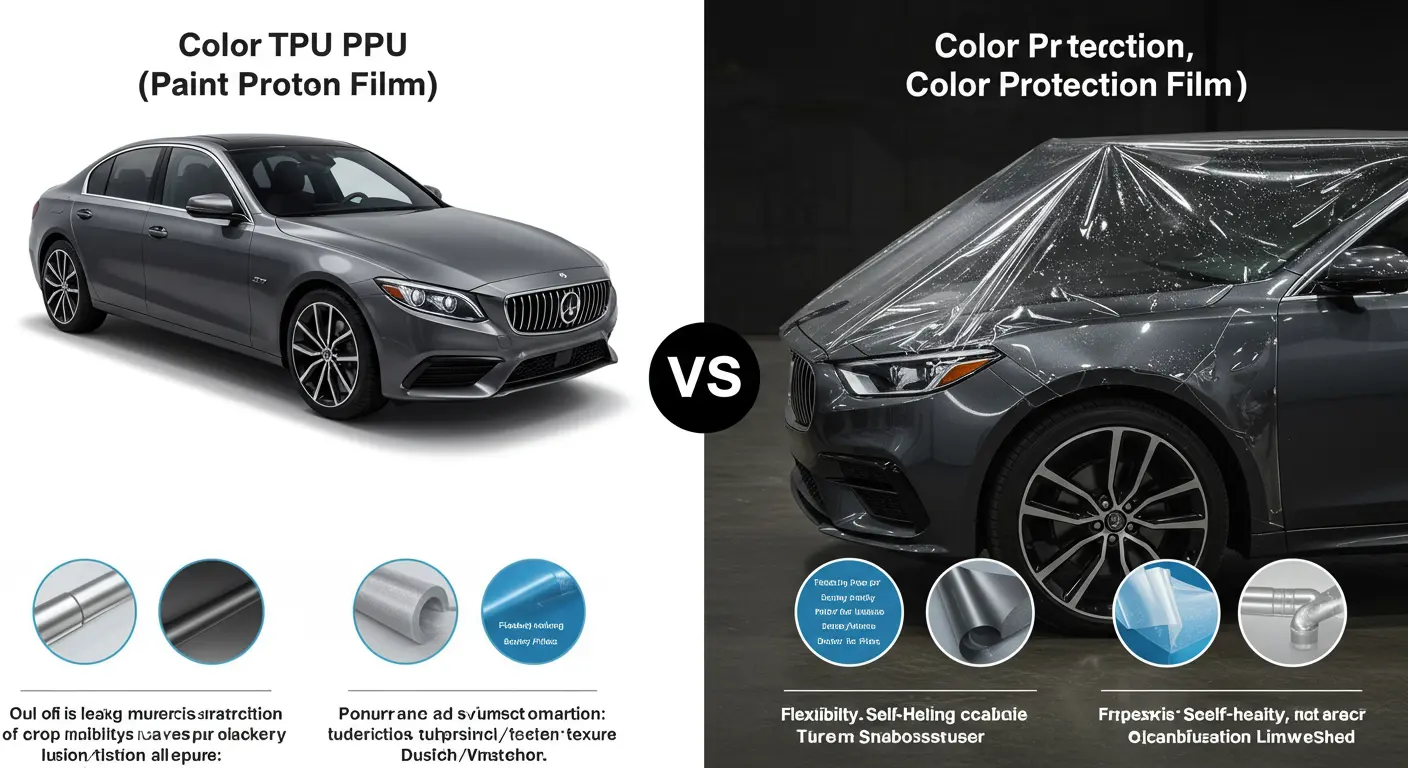
Color TPU PPF Vs Color Protection Film: Compared and Contrasted
Once you begin to research protective surfaces of cars, the same question arises over and over again: What is the actual difference between color TPU PPF and color protection film? Although they all claim to protect the finish of your car, their performance, substances, looks, and durability are very different indeed. We will take a tour of an automotive paint protection comparison, deconstruct TPU paint protection technology, and help you make an informed choice on what to do with your car.
Establishing a Lexicon: What Do We Know About Color Protection Film?
And now that we have plunged into differences, it is time to define what we mean by:
- Color Protection Film may be loosely defined as any type of film applied over the paint of a car that modifies or defends color, such as colored PPF, vinyl wraps (color wraps), or tinted protective film.
- Color TPU PPF is a type a thermoplastic polyurethane (TPU) film designed specifically not only to be colored but also to be high-end protection.
The color protection film brand name can be applied in most markets, and even to less technical PVC or basic wrap films, which do not provide the technical benefits of TPU. So a comparison between TPU PPF and color protection film is, in reality, more of an advanced high-performance TPU-based colored PPF and a more generic color protection/wrap film.
The Heart of the Difference: Material & Structure
Thermoplastic polyurethane (TPU) at the core has numerous benefits, including elasticity, clarity, durability, and yellowing resistance. Many of these strengths are usually not present or are less than those of a TPU polymer-based protective film (such as basic vinyl or colored PVC).
- A superior-quality color TPU PPF film is usually constructed in a multi-layered polyurethane structure:
- Top Coat/Clearcoat layer (that may contain self-healing or scratch-resistant additives)
- TPU substrate/middle layer (provides strength, flexibility, transparency)
Technical Performance: Protection, Self-Healing, and Durability
It is at this point that the actual performance gap can be seen:
- Self-Healing Surface Layer
Self-healing surface layers are another outstanding characteristic of color TPU PPF. Micro-scratches or swirl marks can heal (fade away) when exposed to heat (sunlight or warm air). That intelligent response makes the film appear new and untainted.
- Tensile Strength, Elongation, and Impact Resistance
A good TPU PPF is characterized by a high tensile strength and elongation rate, i.e., it can stretch and absorb stress without tearing. This is necessary in covering curved surfaces and guarding against stone chips, branches, and small collisions.
Lower elasticity in cheaper color protection films implies reduced impact absorption - the material can break, peel, or delaminate when it is stressed.
- Hydrophobic/Coating Performance & UV/Oxidation Resistance
Most TPU films contain a hydrophobic coating performance (water/dirt repellent) layer, or topcoat. This eases the task of cleaning and prevents the staining of the droppings of birds or the splattering of bugs or road dirt. The film can withstand a wide range of environmental stress, combined with the ability to resist UV and oxidation, thereby remaining protective.
- Scratch and Chip Levels of Protection
Due to the tougher and more flexible nature of TPU films, they are excellent at protecting against both levels of scratch and chip protection that are significantly higher than colored wrap films. Manufacturers subject TPU PPF to rock strikes, microabrasions, and environmental grit in a better way.
- Adhesive Bonding & Removal
High-end TPU PPF uses an adhesive system that is designed to bond strongly, creating no bubbles, but can be removed (without damaging paint). The removal and bonding adhesive is a well-balanced component of the system.
- Long-Term Clarity Retention
The long-term retention of clarity is one of the greatest selling points of TPU PPF: despite years of being in the sun, the film remains transparent and neutral and color-true. Low-cost color protection films, however, tend to fade, yellow, or fog, and hence such protection is more of a liability than protection in the long run.
Aesthetic & Finish: Doing More Than Just Protect
In the case of colored TPU wrap vs paint protection film, aesthetics do count. TPU is more flexible to make finishes such as matte, satin, glossy, or even the effects of color-changing TPU paint film without losing protection.
- You may also have glossy vs matte TPU wrap, metallic and satin finish variation, or gradient and rainbow TPU wrap, but still have the same protection in terms of performance.
- On the contrary, a color protection film may provide the desired color but will tend to sacrifice clearness, longevity, or provide an uneven finish, particularly on intricate body lines.
Installation/Maintenance: Making Technology a Reality
Without proper installation and maintenance, even the finest materials do not work. It is upon this that installation semantics and maintenance semantics enter the scene.
- Accurate Cutting and Fitting TPU Film
In using color TPU PPF, accuracy cutting software, and precise templates are utilized by the professionals so that it fits perfectly on every panel, including complex curves. This comes along with contemporary automobile wrap protection. A generic color protection film can be cut less finely, thus resulting in misalignment or visible seams.
- Bubble-Free Application Methods & Heat Shrink Fitting
Since TPU is elastic, installers have the option to employ heat-shrink fitting methods to stretch and fit the film tightly around corners to prevent bubbles or wrinkles. This creates an undulating, smooth finish. Color protection films without elasticity result in a more challenging bubble-free application and visible imperfections in the long run.
- Bonding Power and Side Sealing
Good TPU PPF has washer edge sealing, but it is engineered to eliminate lift in high-stress areas. Even sides and angles are not lost.
- Easy-Peel Removal & Cleanup
TPU PPF has an adhesive that is meant to be able to be removed easily once it is heated without destroying the paint underneath. This peel-off process is a massive bonus to owners who have the option of updating or reselling. Less expensive color protection films can be left behind, need solvent cleanup, or can destroy paint during removal.
- Maintenance & Cleaning
To preserve the film, owners use a routine: mild washing, pH-neutral shampoo, drying under the microfibers, and sporadic polishing. This cleaning and maintenance process is not very tolerant of smaller films that might not stand as well in aggressive washing or the use of chemicals.
Conclusion
The difference between color TPU PPF and color Protection Film in the existing automotive paint protection comparison is not just semantics; it is a technological and performance breakthrough. TPU-based films combine self-healing performance, elastic strength, optical transparency, UV stability, and durability over time in a combination that generic color protection films cannot have. At Colorfuul we are proud to provide high-quality TPU film solutions and tailored growth of superior car wrap protection film systems that promise on art, as well as engineering.


