



Popular Articles
Ultimate Guide to 360° Comprehensive Interior Detailing — Deep Clean, Sanitize and Protect Your Car’s Cabin
2026.02.04
Singapore Car Window Tinting Guide: Rules, Benefits, and How to Choose the Right Film
2026.02.04
The Complete Guide to Colour Wraps — Transforming Your Car’s Look with Style and Protection
2026.02.04
About Company
Colorfuul is a global leader in high-end automotive films, offering Color TPU PPF, Transparent PPF, PET Window Films, and Vinyl Wrapping. With exports to over 100 countries, we deliver consistent quality, competitive pricing, and professional service. Beyond production, we provide OEM/ODM customization, shaping the future of automotive aesthetics.
 mary@colorfuul.com
  86 13541196952
 History of Midnight Purple: Origins & Cultural Impact
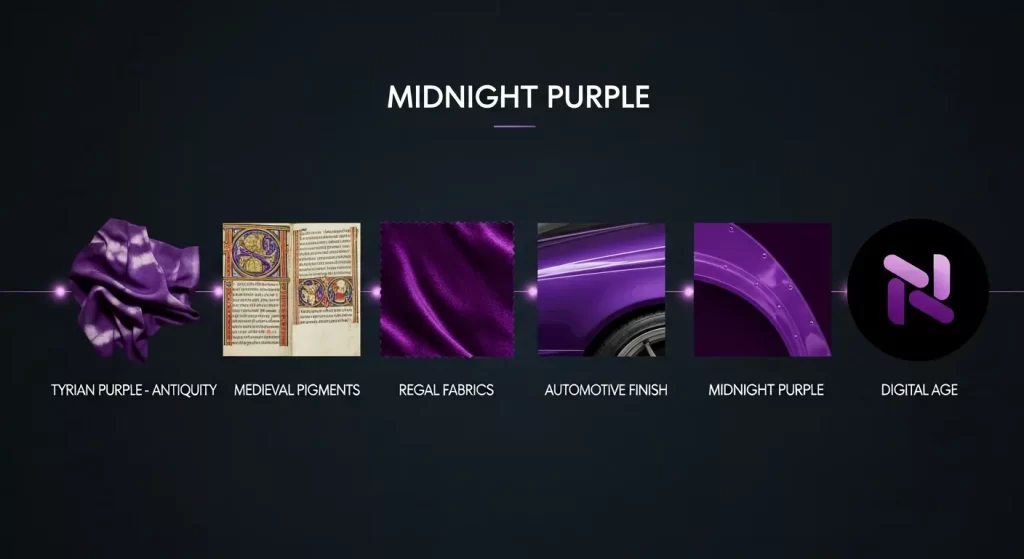
Midnight Purple is a specialized automotive finish that originated in Japan during the mid-1990s as a flagship color for the Nissan Skyline GT-R. You will find that this shade is more than a simple paint choice; it represents a specific era of automotive design where color technology began to match the high-performance engineering of the world’s most respected sports cars.
What Is Midnight Purple and Why Does Its History Matter?
Midnight Purple is a multi-stage metallic paint known for its reactive color-shifting properties that transition between deep violet and near-black. Its history is significant because it represents a turning point in automotive styling where manufacturers used experimental pigments to create a high-end, custom identity for factory-built performance vehicles.
When you look at the history of this color, you see the development of an automotive icon. You understand how a single paint code can define a car's market value and cultural status. Understanding this background helps you appreciate why certain vehicles carry a premium today. It provides you with context on how Nissan moved away from the conservative color palettes of the 1980s. You learn how they embraced a more mysterious and aggressive visual identity that still influences car culture.
Where Did Midnight Purple Originate?
Midnight Purple originated in the design studios of Nissan in Japan during the development of the R33 generation Skyline GT-R in 1995. You can trace its roots to a desire for a color that appeared professional in the shade but revealed a vibrant, metallic depth under direct sunlight.
You should recognize that the mid-90s was a period of rapid growth for the Japanese Domestic Market (JDM). Nissan designers wanted a "hero color" that would distinguish their flagship model from the competition. They settled on a deep violet base, which they designated as paint code LP2. You will find that this original version was darker and more subtle than later iterations. It served as the foundation for what would eventually become a three-part series of colors that are now among the most famous in automotive history.
How Did Midnight Purple Become Linked to the Nissan Skyline GT-R?
Midnight Purple became iconic through the Skyline GT-R because Nissan reserved the shade for limited production runs of their highest-performing chassis. This exclusivity made the color a visual shorthand for the GT-R's elite status, cementing its place in the minds of performance car enthusiasts worldwide.
You will see this link most clearly in the R33 and R34 generations. When you see a purple Skyline, your mind immediately associates it with the V-Spec and special edition models that dominated the streets and tracks of Japan. Nissan used this color to tell a story of performance and mystery. You find that the car and the color grew together. As the GT-R’s reputation for speed increased, so did the desirability of the Midnight Purple finish. It became a symbol of the peak of Japanese engineering.
What Made the Original Midnight Purple Visually Unique?
The original Midnight Purple was visually different from other colors of its time because it used a deep violet base mixed with metallic flakes that absorbed light in the shade but reflected a vibrant glow under sun. It provided a level of visual depth that standard metallic paints of the mid-1990s lacked.
Unique traits of the original LP2 finish:
- Near-Black Appearance: In low light, your car looks like a standard dark charcoal or black.
- Deep Violet Hue: Direct sunlight reveals a rich purple that feels thick and layered.
- Metallic Grain: The flakes are fine enough to look smooth rather than glittery.
- Shadow Contrast: The paint highlights the aggressive fender flares of the R33 by creating deep, dark shadows in the recessed areas.
You get a finish that feels "liquid" on the car's body. It changes your perception of the car’s shape as you walk around it. This reactive nature was rare for factory paint in 1995.
Why Was Midnight Purple 2 Introduced?
Midnight Purple 2 was developed to refine the color-shifting effect by introducing pearlescent pigments that allowed for a more visible transition between blue and violet. This second version aimed to make the "flip" effect more noticeable in a wider range of lighting conditions than the original LP2 code.
You will find that Nissan introduced this version (code LV4) with the R34 GT-R in 1999. They realized that fans wanted more "pop" from the color. You see a shift toward a more modern, technical look with this version. It was a move to stay ahead of the custom paint trends of the late 90s. By introducing MP2, Nissan proved that they could produce a factory finish that looked like a high-end custom job. You get a car that stands out even more during the daytime.
How Did Midnight Purple 2 Differ From the Original Shade?
Midnight Purple 2 refined the original color by moving away from a static dark violet toward a more reactive, pearlescent finish. While the original looked mostly black in the shade, you see a distinct blue-to-purple shift in Version 2 even in lower light environments.
| Version | Era | Visual Tone | Key Difference |
| Midnight Purple (LP2) | 1995–1998 | Deep Dark Violet | Subtle; looks black in most lighting. |
| Midnight Purple 2 (LV4) | 1999 | Blue-Violet Flip | Highly reactive; uses pearlescent pigments. |
| Midnight Purple 3 (LX0) | 2000 | Purple-Blue-Gold | Multi-chrome; shows warmer tones. |
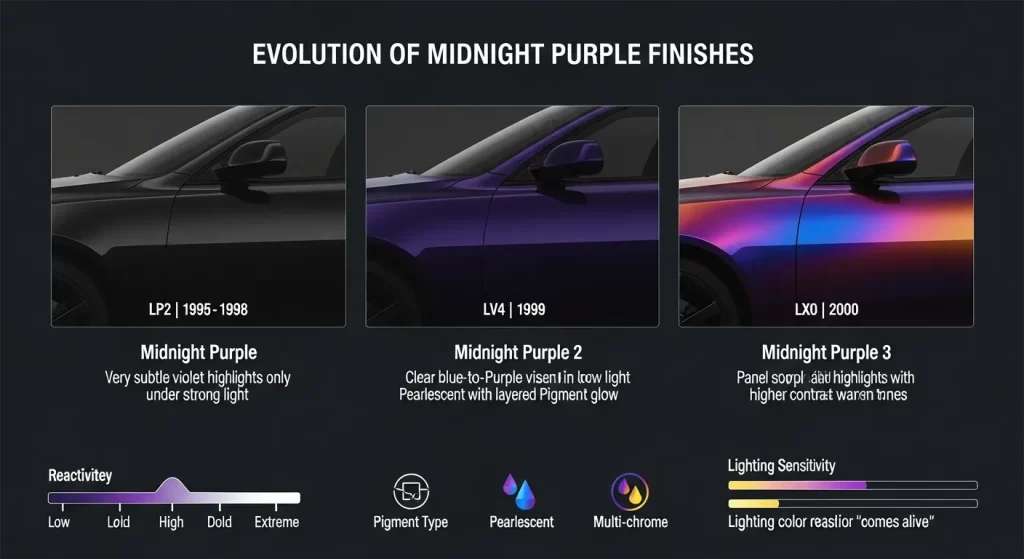
You notice that Midnight Purple 2 is much more vibrant. The introduction of blue undertones makes the car look "cooler" and more metallic. You find that this version is often what people imagine when they think of the color today. It balances the stealth of the original with the flash of a modern show car.
How Did Midnight Purple Expand Beyond the GT-R?
Midnight Purple moved beyond the GT-R lineage as car culture adopted the shade for custom builds, vinyl wraps, and aftermarket resprays across many different platforms. Its status as a "hero color" led enthusiasts to replicate the finish on everything from luxury sedans to compact hatchbacks.
You see the influence of this color in modern automotive media and video games. It became a global symbol for high-performance automotive style. You find that even owners of non-Nissan cars now seek this color to add a touch of JDM history to their projects. This expansion happened because the color represents a specific lifestyle. You are not just choosing a color; you are choosing a piece of car culture that signifies you know your history.
Why Is Midnight Purple Still Relevant Today?
Midnight Purple remains relevant today because it serves as a historical benchmark for automotive paint technology and continues to influence modern factory colors and vinyl wrap trends. Its connection to the golden era of JDM performance ensures that you and other enthusiasts still view it as a premier choice for high-end builds.
You find that modern manufacturers often try to recreate this look with their own specialized shades. You see "Midnight" versions of colors from many different brands now. However, the original Nissan codes remain the gold standard. You can look at the resale prices of original Midnight Purple cars to see its lasting impact. It is a color that has never gone out of style. You find it mentioned in every major automotive publication because it is part of the "DNA" of performance car history.
Why Is Midnight Purple Considered a Pillar Color?
Midnight Purple is considered a pillar color because it anchors the visual identity of an entire era of automotive design and serves as a foundational reference point for color-shifting finishes. It represents a permanent shift in how manufacturers and you, as an owner, use color to communicate prestige and performance.
You should view it as a "pillar" because it is a foundational part of the automotive landscape. It is a color that stands on its own, regardless of the car it is on. You find that it creates a sense of authority. It is a "safe" way to be bold. You get a color that is recognized by everyone from casual observers to die-hard collectors. It has earned its place through decades of presence on the world's most iconic cars. You find that it is a pillar because it will likely be just as relevant thirty years from now.
What Role Did the Nissan Skyline GT-R Play in Midnight Purple’s History?
The Skyline GT-R cemented Midnight Purple’s legacy by providing the high-performance platform necessary to showcase the color's aggressive and premium nature. You find that without the GT-R, Midnight Purple would have likely been another forgotten paint code from the 90s. Instead, the Nissan Skyline GT-R gave the color a stage. You see how the car's dominance in racing and street culture transferred onto the paint itself. It created a situation where you cannot think of one without the other.
Why Is Midnight Purple So Strongly Associated With GT-R Models?
Midnight Purple became synonymous with GT-R models because it was used as the defining finish for the most exclusive limited-production variants of the chassis. You see this association in the way collectors talk about "MP R34s" or "Midnight R33s" as the holy grail of their respective generations. The Midnight Purple GTR represents the peak of the model's history. You find that the association is so strong that even a modern GT-R in this shade immediately feels like a tribute to its ancestors.
How Did Midnight Purple 2 Continue the Color’s Legacy?
Midnight Purple 2 carried the original vision forward by proving that Nissan could evolve the finish while maintaining its mysterious and exclusive character. You find that Midnight Purple 2 was a necessary step in the color's history. It showed you that the "Midnight" identity was not tied to just one paint code. You see how it paved the way for the even more extreme Version 3. It allowed the legacy to grow with the technology of the time, ensuring you had a color that looked as fast as the R34 actually was.
Why Is Midnight Purple Treated as a Pillar Color Today?
Midnight Purple anchors many modern interpretations of automotive style by serving as the primary inspiration for the current generation of color-shifting wraps and paints. You find that the Midnight Purple provides a blueprint for what a "cool" car should look like. It is a pillar because it provides you with a sense of continuity. You see it referenced in modern design studios. It remains a high-intent color that you and other builders use to signal a connection to the legendary roots of performance car culture.
Final Thought
The history of Midnight Purple is a story of how a single decision in a design studio can create a global phenomenon. You see how it moved from a secret project to a pillar of automotive culture. It is a color that you can trust to stay relevant. It represents the best of what happens when engineering and art come together on four wheels.


