



Popular Articles
Ultimate Guide to 360° Comprehensive Interior Detailing — Deep Clean, Sanitize and Protect Your Car’s Cabin
2026.02.04
Singapore Car Window Tinting Guide: Rules, Benefits, and How to Choose the Right Film
2026.02.04
The Complete Guide to Colour Wraps — Transforming Your Car’s Look with Style and Protection
2026.02.04
About Company
Colorfuul is a global leader in high-end automotive films, offering Color TPU PPF, Transparent PPF, PET Window Films, and Vinyl Wrapping. With exports to over 100 countries, we deliver consistent quality, competitive pricing, and professional service. Beyond production, we provide OEM/ODM customization, shaping the future of automotive aesthetics.
 mary@colorfuul.com
  86 13541196952
 How Many Years Does Colored PPF Last on Cars?
High-quality Colored Paint Protection Film (PPF) typically lasts between 5 to 10 years.
While standard vinyl wraps may only survive 2–3 years, premium TPU-based colored PPF is engineered for longevity. With proper maintenance and garage storage, you can expect the upper end of that range (7–10 years), backed by manufacturers' warranties that often cover yellowing, cracking, and peeling.
Why This Matters
If you are investing in changing your vehicle’s look, you want to know if it’s a temporary fling or a long-term commitment. Unlike traditional vinyl wraps that are purely cosmetic, Colored PPF (Paint Protection Film) is a dual-purpose investment. It provides the stunning aesthetic change of a wrap with the heavy-duty protection of clear PPF.
For our customers at Colorfuul, this distinction is critical. You aren't just paying for a color change; you are paying for a "suit of armor" that protects your factory paint from rock chips, scratches, and UV damage for nearly a decade. Understanding the lifespan ensures you see the value in choosing advanced TPU technology over cheaper alternatives.
Colored PPF vs. Vinyl Wrap Lifespan
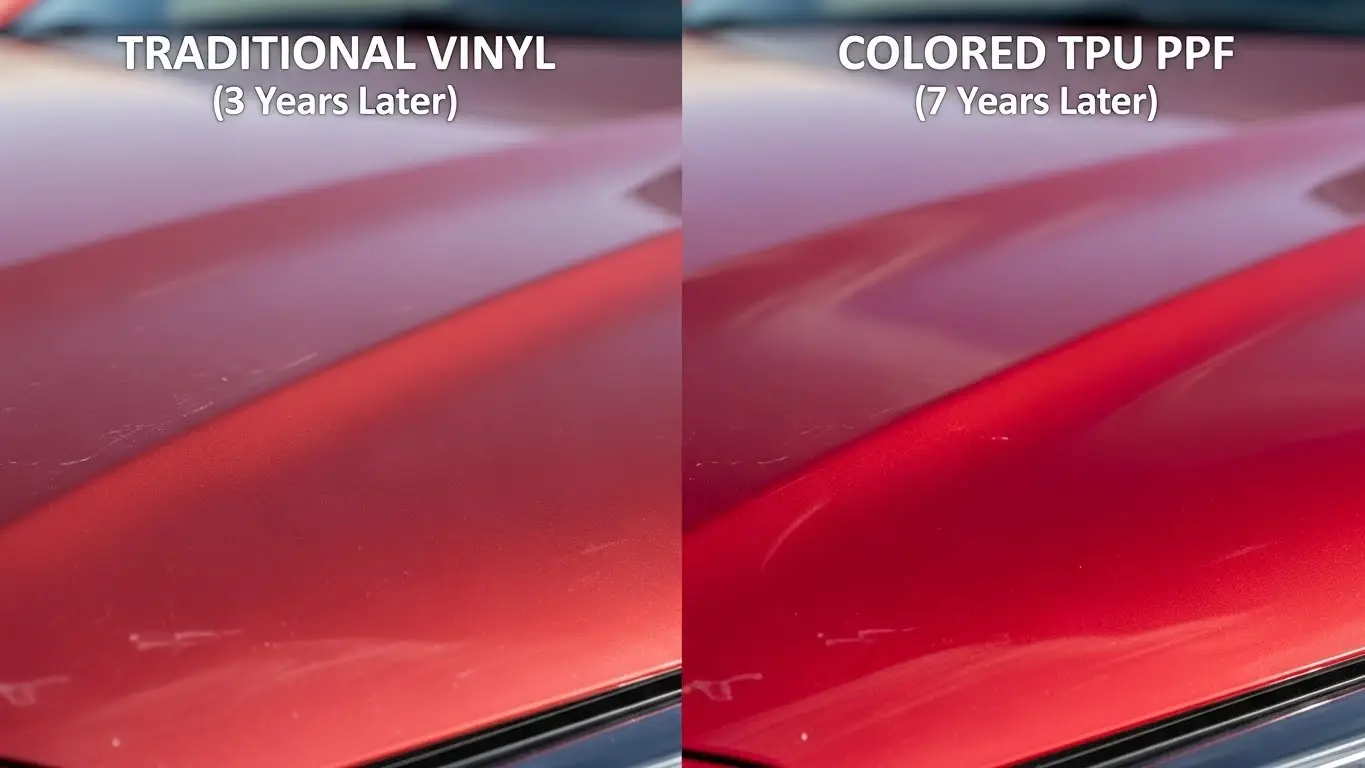
The most common confusion in the industry is between Colored PPF and Vinyl Wraps. They might look similar on day one, but their lifespans are drastically different.
Vinyl wraps are made from PVC (Polyvinyl Chloride), a thinner material that becomes brittle and fades relatively quickly under sun exposure. Colored PPF, specifically the kind we manufacture at Colorfuul, uses TPU (Thermoplastic Polyurethane). This material is naturally flexible, self-healing, and far more resistant to environmental aging.
Comparison: Longevity & Performance
| Feature | Colored TPU PPF | Traditional Vinyl Wrap |
| Average Lifespan | 5 – 10 Years | 2 – 5 Years |
| Material Base | TPU (Thermoplastic Polyurethane) | PVC (Polyvinyl Chloride) |
| Thickness | ~7.5 – 8 mil (Heavy Duty) | ~3 – 4 mil (Thin) |
| Self-Healing | ✅ Yes (Heat activated) | ❌ No |
| UV Resistance | High (Resists fading) | Low (Fades/Chalks) |
| Protection Level | Stops Rock Chips & Scratches | Minor Scratches Only |
Key Factors That Influence Durability
Even the best film needs the right environment to reach that 10-year mark. Here is what actually determines how long your film lasts:
1. Material Quality (TPU is King)
Not all colored films are created equal. Cheaper TPH or PVC films may look good initially but often crack within 3 years. True TPU films resist yellowing and remain flexible, preventing the "orange peel" look that plagues aging vinyl.
2. UV Exposure
The sun is the enemy of any adhesive. While our films have UV inhibitors, a car parked outside 24/7 in a hot climate (like Arizona or Dubai) will see a shorter lifespan than one garaged in a temperate zone.
3. Installation Quality
If edges aren't wrapped and sealed correctly, moisture can creep underneath, causing lifting. Professional installation is non-negotiable for longevity.
Real Cost Breakdown (2025 Data)
Is the extra cost worth it for the extra years? Let's look at the numbers.
- High-Quality Vinyl Wrap: $2,500 – $4,000
- Lifespan: 3 Years
- Cost per year: ~$1,000
- Colored TPU PPF: $5,000 – $8,000
- Lifespan: 7+ Years
- Cost per year: ~$850
While the upfront cost of Colored PPF is higher, the cost per year of ownership is actually lower because you don't have to pay to remove and replace it as often. Plus, you avoid the potential $1,000+ cost of paint correction that vinyl often requires upon removal due to residue.
Maintenance Tips to Extend Life
Want to get the full 10 years out of your colored PPF lifespan and durability? Follow these simple rules.
- Wait 7 Days: Do not wash your car for the first week after installation to allow the adhesive to cure.
- Hand Wash Only: Automated car washes with stiff brushes can lift edges and mar the finish.
- Use pH Neutral Soap: Avoid acidic cleaners that can eat away at the film's top coat.
- Ceramic Boost: Applying a ceramic coating specifically designed for PPF can add a hydrophobic layer, making it easier to clean and shielding it further from UV rays.
Common Mistakes to Avoid
We see many owners accidentally shorten the life of their film. Don't make these errors:
- Pressure Washing Too Close: Keep the nozzle at least 24 inches away. Blasting edges with high pressure will lift the film.
- Wiping Dry: Never wipe a dry car with a towel. Always use a lubricant (detail spray or water) to prevent swirling.
- Leaving Bird Droppings: Acidic contaminants like bird lime or tree sap can etch the film if left for days. Wipe them off immediately.
Expert Tips
"Treat Colored PPF like factory paint, not like a sticker. The self-healing top coat is magic for swirl marks, but it needs heat to work. Leaving your car in the sun occasionally is actually good for TPU films as it activates the self-healing properties."
— Industry Detailing Expert
💡 Pro Tip: If you see a small scratch, pour hot water (not boiling) over the area. Watch the TPU memory kick in and the scratch disappear!
Frequently Asked Questions
Does colored PPF fade in the sun?
High-quality colored PPF is designed with UV inhibitors to resist fading significantly better than vinyl. While minimal fading can occur over a decade, it remains uniform and vibrant far longer than PVC alternatives.
Can I remove colored PPF after 5 years?
Yes, and this is a huge benefit. Because TPU is high-quality, it usually comes off cleanly without leaving the nightmare sticky residue that old vinyl wraps leave behind.
Is colored PPF thicker than vinyl wrap?
Yes, significantly. Colored PPF is usually around 8 mils thick, whereas vinyl is only 3–4 mils. This thickness is what gives it the ability to stop rock chips.
Does the self-healing work on colored PPF?
Absolutely. The top layer of our colored TPU PPF has the same self-healing polymers as clear PPF. Fine scratches from washing will disappear with heat.
How does the warranty work?
Most reputable brands, including Colorfuul, offer warranties (typically 5–10 years) that cover manufacturing defects like yellowing, bubbling, or delamination. It does not cover damage from accidents.
Can I wax colored PPF?
You can, but ensure the wax is non-abrasive and contains no naphtha or kerosene in high concentrations. Ceramic coatings are generally a better choice than traditional wax for PPF.
Is colored PPF worth the extra money?
If you plan to keep your vehicle for more than 3 years, yes. When you factor in the protection of your original paint and the longer lifespan, is colored PPF worth it becomes an easy "yes."
Can colored PPF be installed on any car?
Yes, as long as the factory paint is in good condition. If your clear coat is peeling, PPF installation is not recommended as it may pull more paint off upon removal.
Key Takeaways
- Expect 5–10 Years: Real-world longevity for colored TPU PPF is double that of vinyl.
- Material Matters: Ensure you are getting TPU, not PVC or TPH, for maximum life.
- Protection + Style: You get rock chip protection that vinyl simply cannot offer.
- Maintenance is Key: Hand washing and avoiding pressure washers will extend the film's life.
- Resale Value: Because it protects the paint underneath, your car is worth more when you sell it.


