



Popular Articles
Ultimate Guide to 360° Comprehensive Interior Detailing — Deep Clean, Sanitize and Protect Your Car’s Cabin
2026.02.04
Singapore Car Window Tinting Guide: Rules, Benefits, and How to Choose the Right Film
2026.02.04
The Complete Guide to Colour Wraps — Transforming Your Car’s Look with Style and Protection
2026.02.04

About Company
Colorfuul is a global leader in high-end automotive films, offering Color TPU PPF, Transparent PPF, PET Window Films, and Vinyl Wrapping. With exports to over 100 countries, we deliver consistent quality, competitive pricing, and professional service. Beyond production, we provide OEM/ODM customization, shaping the future of automotive aesthetics.
 mary@colorfuul.com
  86 13541196952
 Midnight Purple Paint Codes Explained (Meaning, Variations & Confusion)
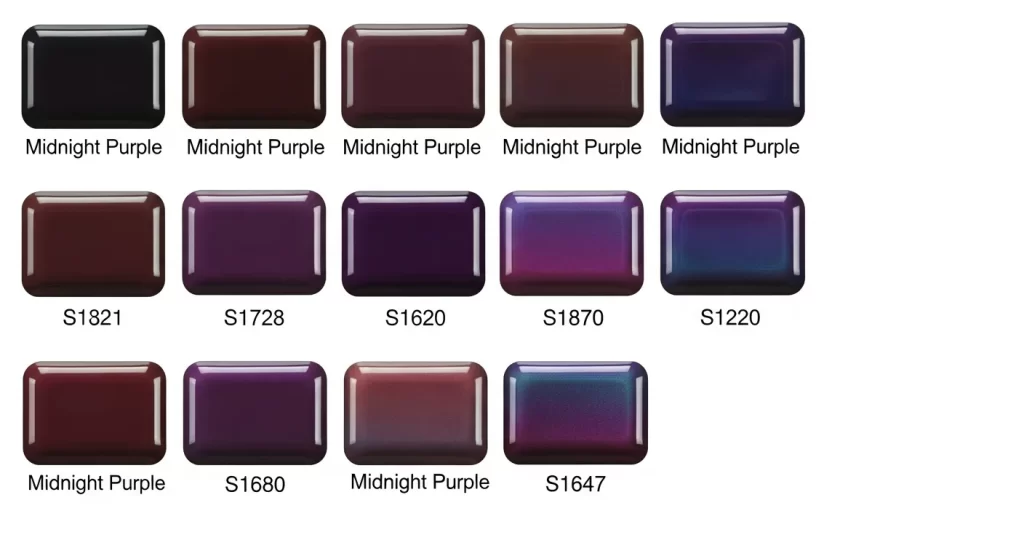
Midnight Purple paint codes are alphanumeric identifiers used by manufacturers to standardize the production of deep violet automotive finishes, and they often cause confusion because the "Midnight Purple" name actually encompasses several distinct generations and formulations that behave differently under light. You will find that a single name does not equate to a single result; instead, these codes serve as a complex color system that has evolved over decades to include varying levels of metallic flake, pearl intensity, and color-shifting properties.
What Are Paint Codes and Why Do They Matter?
Paint codes are specific alphanumeric strings assigned by a manufacturer to a particular color formula to ensure that every vehicle, part, or repair batch remains consistent with the original design. They matter because they act as the "DNA" of a color, providing the exact recipe of pigments, binders, and metallic or pearl additives required to replicate a finish.
You should understand that without a paint code, identifying a color becomes purely subjective. A color like "Dark Purple" could mean a hundred different things depending on the person describing it, but a paint code provides a universal standard. In the world of high-end automotive finishes, where the thickness of a metallic flake or the tint of a blue pigment can completely change the way a car looks in the sun, these codes are the only way to achieve a predictable and professional outcome.
What Does “Midnight Purple Paint Code” Actually Refer To?
People often use the term "Midnight Purple paint code" as if it refers to a single, universal pigment, but it actually refers to a lineage of different formulations that share a dark violet theme. When you hear this term, you must look for the specific generation being discussed, as the visual difference between the original 1990s codes and modern versions is significant.
A Midnight Purple paint code refers to a specific mix of deep violet base layers and reactive top layers. It is a reference point for a look that is meant to appear black in the shadows and vibrant purple in the light. Because the name has become iconic, it is often used as a shorthand for any deep purple metallic, but for those in design and restoration, the code is the only way to distinguish between a subtle plum and an aggressive, shifting indigo-violet.
Why Are There Multiple Midnight Purple Paint Codes?
Midnight Purple has multiple paint codes because the color was intentionally revised and evolved through several "generations" to take advantage of new paint technologies and changing design aesthetics. Each time the manufacturer wanted to change the way the color reacted to light or shifted its hue, a new code was required to track that specific chemical recipe.
Common reasons for multiple codes include:
- Generation Revisions: Moving from a simple metallic to a complex pearlescent finish.
- Technological Advancement: The introduction of multi-chrome pigments that allowed for "Midnight Purple 3."
- Contextual Variation: Creating slightly different versions for different vehicle body shapes.
- Modern Reinterpretations: Newer codes designed to mimic classic 90s shades using modern, more environmentally friendly paint chemicals.
How Do Midnight Purple, Midnight Purple 2, and Midnight Purple 3 Differ in Codes?
Midnight Purple exists in multiple named versions, each designated by a unique code that dictates the "behavior" of the light as it hits the car's surface. You notice that as the version number increases, the complexity of the color shift and the depth of the finish generally become more pronounced.
| Version | Tone Bias | Depth | Common Identification Context |
| Midnight Purple (Original) | Deep Plum / Black | Moderate | Subtle, classy 90s aesthetic. |
| Midnight Purple 2 | Blue / Violet Flip | High | Technical, modern, and reactive. |
| Midnight Purple 3 | Purple / Blue / Gold | Extreme | Aggressive, multi-tone, and "chameleon." |
You will find that the original version is much "warmer," leaning toward a dark grape tone. Version 2 introduced a "cooler" indigo shift, while Version 3 is famous for its ability to show hints of bronze or gold at sharp angles. Each code is a different chapter in the color's history, representing a shift in how you perceive "darkness" and "color" simultaneously.
What Is Midnight Purple Pearl and How Is It Coded?
Midnight Purple Pearl is a finish variation that utilizes translucent mica-based particles instead of standard aluminum metallic flakes to create a softer, more "internal" glow. You should recognize that a "Pearl" code indicates a finish that allows light to penetrate the surface and reflect from within the paint layers, rather than simply bouncing off the top.
How Pearl codes change the look:
- Light Scattering: Pearl pigments create a "shimmer" rather than a "sparkle."
- 3D Effect: The color looks like it is submerged under glass.
- Tone Softness: Pearl versions often have a more sophisticated, "liquid" transition between shadow and light.
- Layering: Pearl codes often require a specific multi-stage application process to achieve the correct depth.
Why Do Midnight Purple Paint Codes Look Different in Real Life?
Paint codes do not guarantee an identical appearance because the final look is heavily influenced by external factors such as lighting, the angle of the surface, and the scale of the object. You might see two cars with the exact same code that look slightly different because of the way the light is hitting their respective body lines.
Visual factors that cause variation:
- Lighting Environment: A cool-white LED will make the purple look blue, while a warm sunset will make it look red.
- Body Contours: Sharp edges catch the light and show the "pop" of the purple, while flat panels may look darker.
- Application Technique: Even with the same code, the pressure of the spray and the thickness of the clear coat can alter the perceived depth.
- Scale: A color that looks great on a small paint swatch might look overwhelming or too dark when applied to an entire vehicle.
Is Midnight Purple a Color-Changing Paint or Is It an Illusion?
Midnight Purple appears to change color due to its reactive pigment structure, but it is technically a "multidimensional" metallic rather than a true chameleon paint that shifts across the entire rainbow. You are seeing a "flip" between the dark base and the vibrant violet highlights, which is often an optical illusion of depth.
While it is frequently called a color shift paint, it stays within the violet-blue-black spectrum. The "change" you see is actually the paint revealing its hidden layers as the light angle changes. It isn't changing its physical hue; it is changing which of its internal pigments are reflecting light back to your eyes at that specific moment. This is why the color is so highly regarded—it provides visual entertainment without the "loudness" of a true multi-chrome finish.
How Should Midnight Purple Paint Codes Be Interpreted Correctly?
Paint codes require proper interpretation as references for a starting point, rather than a guarantee of a fixed visual outcome. You should use the following guidelines to understand what a code is telling you:
- Treat codes as "recipes," not "results": The code tells you what's in the can, not necessarily how it will look on your specific project.
- Consider the "Generation": Always check if the code belongs to the original, MP2, or MP3 families.
- Compare under multiple lights: Never judge a code by how it looks in a single lighting environment.
- Account for the "Base": Some Midnight Purple codes are highly translucent and require a specific black or dark grey base to work correctly.
- Use as a Heritage Link: Recognize that certain codes carry historical weight and are tied to specific legendary models.
Why Do Midnight Purple Paint Codes Matter Beyond Cars?
Midnight Purple paint codes influence more than automotive paint, serving as a standardized reference point for digital designers, fashion houses, and product developers. You find that because these codes are so well-documented, they have become a "color legend" used to define a specific aesthetic in other industries.
In the midnight purple color reference world, these codes are used to create matching vinyl wraps, nail polishes, and even digital themes for software. They provide a "shortcut" to a very specific mood: one of mystery, prestige, and high-performance heritage. When a designer uses a Midnight Purple code as a reference, they are tapping into thirty years of cultural history, ensuring that their project carries the same emotional weight as the cars that made the color famous.
What’s the Biggest Mistake People Make With Midnight Purple Paint Codes?
The most common misunderstanding about Midnight Purple paint codes is the expectation that the color will look "purple" all of the time. You notice that many people are disappointed when their car looks like a standard black in the shade, not realizing that the "Midnight" part of the name is just as important as the "Purple."
The "Midnight" aspect is a deliberate design choice. The codes are engineered to be dark and stealthy. If the color looked bright purple in every lighting condition, it would lose its mystery and its sophistication. The "mistake" is viewing the paint as a bright fashion color rather than a reactive, light-dependent finish. To truly appreciate a Midnight Purple code, you must appreciate the shadows as much as the highlights.
How Is Midnight Purple Defined as a Color?
Midnight Purple is a deep, complex purple shade that sits at the intersection of dark violet and charcoal black. To understand the technical roots of this color, you can explore the Midnight Purple Color definition, which explains how low-frequency light waves and specific pigment densities create that "near-black" effect. It is a shade that relies on depth rather than vibrance to make its impact.
Is Midnight Purple Actually a Color-Changing Shade?
Midnight Purple appears to change due to lighting, but it is technically a "reactive" color rather than a true chameleon pigment. As noted in the discussion of whether Midnight Purple is Color-Changing, the effect is based on "angle-dependency." The actual pigments do not change, but the way your eye perceives the light bouncing off the dark base creates a shifting violet-to-black gradient.
What Makes Midnight Purple Pearl Different From Solid Purple Paint?
Midnight Purple Pearl uses reflective particles like mica to create a soft, internal glow that solid paints cannot replicate. Unlike a solid finish, Midnight Purple Pearl allows light to travel through the upper layers of paint, creating a three-dimensional look. This is why pearl-coded finishes are so desirable; they offer a "liquid" appearance that makes the car's body lines look smoother and more premium.
Why Is Midnight Purple Considered a Pillar Color?
Midnight Purple anchors many design interpretations because it has remained at the top of the desirability list for over thirty years. According to the Midnight Purple, a pillar color is one that remains commercially and stylistically relevant across decades. It is a reliable, high-intent color that enthusiasts and designers return to because it consistently resonates with the human desire for elegance and mystery.
Final Thought
Understanding Midnight Purple paint codes is about looking past the name and into the science of the shift. You are dealing with a color system that rewards the observant. Whether you are a restorer looking for a perfect match or a designer seeking a specific mood, these codes are your map to one of the most respected aesthetics in the world.


