



Popular Articles
Midnight Purple Paint for GTR R34
2026.01.13
Exploring the Allure of Midnight Purple
2026.01.13
Benefits of Using Carbon Fiber Vinyl Wraps
2026.01.13
About Company
Colorfuul is a global leader in high-end automotive films, offering Color TPU PPF, Transparent PPF, PET Window Films, and Vinyl Wrapping. With exports to over 100 countries, we deliver consistent quality, competitive pricing, and professional service. Beyond production, we provide OEM/ODM customization, shaping the future of automotive aesthetics.
 mary@colorfuul.com
  86 13541196952
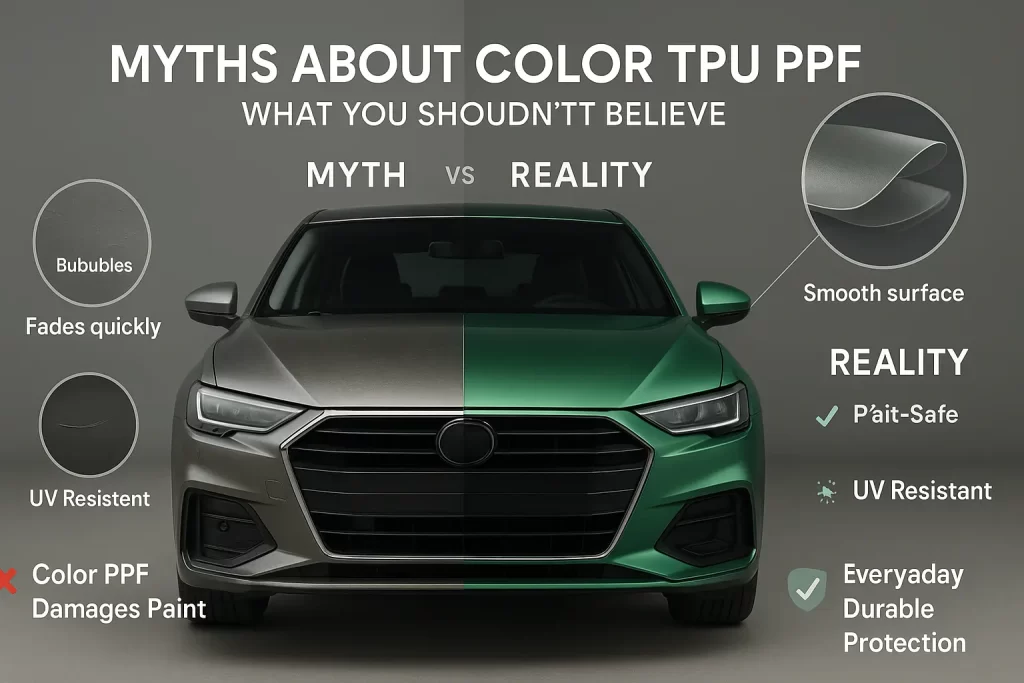
 Myths About Color TPU PPF: What You Shouldn’t Believe
Many myths about color TPU PPF circulate in the automotive community. As a relatively new and advanced technology, it is often misunderstood. This confusion can lead vehicle owners to make decisions based on incorrect information. The purpose of this guide is to separate fact from fiction. We will identify the most common myths surrounding color paint protection film. We will then debunk them with clear explanations based on material science and real-world performance. Understanding the truth is essential for anyone considering this innovative product. It allows for an informed choice about vehicle protection and customization.
Myth 1: Color PPF is Just a Thick Vinyl Wrap
This is perhaps the most common and significant myth about color TPU PPF. Many people assume it is simply a thicker, more expensive version of a standard vinyl wrap. This is fundamentally incorrect. The two products are made from completely different materials. They are engineered for different purposes and have vastly different performance characteristics. While both can change a vehicle's color, their similarities end there. Conflating the two is a major misunderstanding of the technology.
The Fundamental Material Difference: TPU vs. PVC
The core of the issue lies in the base material. Color PPF is made from thermoplastic polyurethane (TPU). Specifically, it uses a high-grade aliphatic TPU for durability and UV stability. Vinyl wraps are made from polyvinyl chloride (PVC). These are two distinct classes of polymer with very different properties. TPU is an elastomer, known for its elasticity, strength, and abrasion resistance. PVC is a more rigid plastic made flexible with additives. This core difference in the tpu ppf materials is responsible for all the performance gaps between the two products.
Comparing Protective Capabilities
The primary function of color PPF is protection. Its TPU construction, typically around 8 mils thick, is designed to absorb and dissipate impacts. It provides robust defense against rock chips, gravel, and other road debris. A vinyl wrap is much thinner, usually 2 to 4 mils thick. Its PVC material is softer and lacks the energy-absorbing properties of TPU. A rock impact will often puncture a vinyl wrap and damage the paint underneath. In terms of protection, there is no comparison. Color PPF is vastly superior.
The Self-Healing Factor
Another key differentiator is the self-healing top coat. Color TPU PPF has a specialized clear coat layer that can repair minor scratches and swirl marks on its own. With the application of heat, the surface can return to a smooth, flawless finish. This technology keeps the film looking new for years. Vinyl wraps do not have this property. Any scratch that occurs on a vinyl wrap is permanent. This is a major technological advantage that a true protective film offers. The ability of self-healing tpu ppf is exclusive to this product category.
Longevity and Durability Differences
The material differences also lead to a significant gap in lifespan. A high-quality color TPU PPF is designed to last for a decade or more. Its aliphatic TPU material is stable and resistant to degradation. A vinyl wrap has a much shorter lifespan, typically 3 to 5 years. Over time, the PVC material can shrink, crack, or fade, especially with heavy sun exposure. The long-term durability of color PPF makes it a more lasting investment in the vehicle's appearance and protection. The expected color tpu ppf lifespan is more than double that of vinyl.
Myth 2: The Color Will Fade Quickly in the Sun
A common concern for any colored automotive product is fading. Potential buyers worry that the vibrant color they choose will look dull and washed out after a few years of sun exposure. This fear is rooted in experiences with older, lower-quality products like cheap vinyl or plastics. For modern, high-quality color TPU PPF, however, this myth is unfounded. These films are specifically engineered for long-term color stability.
The Science of UV Resistance
The primary defense against fading is advanced UV protection. Color TPU PPF is infused with powerful UV inhibitors. These are special molecules blended into the top coat and the TPU core itself. Their job is to absorb and reflect the harmful ultraviolet rays from the sun. This prevents the UV radiation from reaching and breaking down the color pigments. This robust system of uv-resistance tpu ppf is the film's main guard against sun damage.
Automotive-Grade Pigments vs. Standard Dyes
The type of colorant used is also critical. Color PPF does not use simple dyes, which can fade quickly. It uses high-quality, automotive-grade pigments. These are the same types of complex, stable pigments used in modern, long-lasting car paints. These pigments are designed to resist fading and maintain their color integrity for many years, even in harsh sunlight. The combination of stable pigments and powerful UV inhibitors ensures a deep, rich color that lasts.
How Manufacturer Warranties Address Fading
Confidence in the product's color stability is backed by manufacturer warranties. Reputable brands offer warranties that often last for 10 or 12 years. These warranties explicitly cover defects like significant fading or discoloration. A manufacturer would not offer such a long warranty if they expected their products to fail. This warranty provides a strong guarantee to the consumer that the color is engineered to last for the long haul.
Real-World Evidence and Longevity
As color PPF has been on the market for several years now, there is ample real-world evidence of its durability. Vehicles that were wrapped with the first generation of quality color PPF years ago still look vibrant today. The technology has proven itself in the most demanding climates around the world. This track record of performance should give new buyers confidence that fading is not a concern with a premium product.
Myth 3: It Will Damage the Original Paint
This is a major fear for any vehicle owner. The idea that a protective product could actually harm the very thing it is supposed to protect is a serious concern. This myth often stems from horror stories about cheap, old vinyl wraps that left behind stubborn adhesive or even pulled paint off upon removal. With modern color TPU PPF and a proper installation on factory paint, this myth is completely false. The entire system is designed to be safe.
The Science of Modern Automotive Adhesives
High-quality color PPF uses a sophisticated pressure-sensitive adhesive (PSA). This is typically an acrylic-based adhesive that has been engineered specifically for automotive paint. It is chemically stable and inert. This means it will not react with or eat into the vehicle's clear coat. The adhesive is designed to form a strong bond that holds the film securely, yet it is also designed to be cleanly removable after many years. It is a delicate balance achieved through advanced polymer science.
The Importance of Professional Removal
While the adhesive is safe, the removal process must be done correctly. A professional installer has the tools and techniques to remove the film without damaging the paint. This usually involves using steam or heat to soften the adhesive. This allows the film to be peeled back slowly and carefully at the proper angle. Attempting to rip the film off cold and dry could potentially cause issues. Professional removal is just as important as professional installation.
The Difference Between Factory Paint and Resprays
The guarantee of safe removal applies to original, factory-applied paint. Factory paint is baked on at high temperatures and is extremely durable. However, if a vehicle has been in an accident and has a panel that was repainted at a body shop, the quality of that paint may not be as high. A poor-quality respray may not have a strong bond to the vehicle's panel. In these rare cases, it is possible for any film, whether PPF or vinyl, to pull up the poorly bonded paint. This is a failure of the paint, not the film.
How PPF Actually Preserves the Paint
Far from damaging the paint, color PPF is the ultimate preservation tool. For the 10 or more years the film is on the vehicle, the paint underneath is shielded from everything. It is protected from UV rays, rock chips, scratches, acid rain, and bird droppings. When the film is professionally removed, it reveals paint that is in the exact same pristine condition as the day the film was applied. It is like a time capsule for the factory finish.
Myth 4: The Film Doesn't Let the Paint "Breathe"
This is one of the oldest and most persistent myths in the world of vehicle protection. The idea is that paint is like skin and needs to "breathe" to stay healthy. The fear is that applying a film will suffocate the paint, causing it to bubble, peel, or otherwise fail. This myth is based on a complete misunderstanding of modern automotive paint and PPF materials. It has no basis in modern science.
Understanding Modern Paint Curing Processes
This myth originates from the era of old lacquer and enamel paints. These paints could take weeks or even months to fully cure and release all of their solvents. Covering them too soon could indeed trap these solvents. However, modern factory automotive paint is a completely different system. It is a urethane-based paint that is baked and cured at the factory under high heat. By the time a car is delivered, its paint is fully cured and chemically stable. It does not need to release any more solvents.
The Microporous Nature of the Film
Even if the paint did need to release trace amounts of gas, the film would allow it. High-quality paint protection film is microporous. This means it has microscopic pores that are too small for water molecules to pass through, but large enough for vapor and gas molecules to escape. The film is not a solid, impermeable seal like a sheet of glass. It does allow for the transfer of vapor, so the idea of "suffocating" the paint is not physically possible.
What "Breathing" Actually Means (and Why It's Not a Concern)
When people in the industry talk about paint "breathing," they are almost always referring to the solvent-gassing phase of fresh, uncured paint. This is a major concern at a body shop after a respray. A freshly painted panel should be allowed to cure for a period, often 30 days or more, before any film or wax is applied. But for a factory-painted vehicle, this is a non-issue. The paint is ready for protection as soon as it leaves the dealership.
The History of This Myth from Old Paint Technologies
It is important to understand where myths come from. The "breathing" paint myth comes from a time when paint technology was vastly different. It is a piece of outdated knowledge that has been incorrectly applied to modern vehicles and materials. The entire history of color ppf is one of technological advancement, leaving these old concerns far behind. A modern PPF on modern paint is a perfectly compatible and safe system.
Myth 5: Installation is Easy and Can Be a DIY Project
Watching a skilled professional install PPF can make it look deceptively easy. Their smooth, efficient motions can lead some people to believe it is a simple do-it-yourself project. This is a dangerous misconception that can lead to a wasted investment and a very poor result. Installing color PPF is an art form that requires immense skill, patience, and specialized tools. It is a job that should only be performed by trained professionals.
The Need for a Controlled, Clean Environment
A professional installation shop is a controlled environment. It is brightly lit and, most importantly, spotlessly clean. The air is often filtered to reduce dust. This is because any speck of dust, hair, or dirt that gets under the film will be trapped there forever. It will look like a small bubble or imperfection. It is nearly impossible to achieve this level of cleanliness in a home garage. A professional space is the first requirement for a flawless job.
The Skill of Stretching and Conforming the Film
TPU film is flexible, but it has limits. An installer needs to know exactly how much to stretch the film to get it to conform to a complex curve, like a bumper or a side mirror. They do this without creating distortions or stretch marks. This is a tactile skill that takes hundreds of hours of practice to master. An amateur is very likely to overstretch the film, leaving ugly lines, or understretch it, resulting in wrinkles and bubbles.
The Complexity of Edge Work and Seams with Color PPF
Working with color PPF is even more difficult than working with clear film. Because the film is opaque, every edge and seam must be perfect. An installer must carefully wrap the film around the edges of panels to hide the original paint color. Where two pieces of film meet, the seam must be perfectly aligned and barely visible. This level of precision is far beyond the capabilities of a beginner. Any mistake with a colored film is immediately obvious.
Why Professional Installation is a Requirement for Warranty
Manufacturers know that the quality of the installation is just as important as the quality of the film itself. A poor installation will lead to premature failure, such as peeling or bubbling. For this reason, manufacturer warranties are only valid if the film is installed by a certified and authorized professional. Attempting a DIY installation will void the warranty. This leaves the owner with no recourse if the film fails. For a high-end product like color PPF, professional installation is non-negotiable.
Myth 6: All Color PPF Brands Are the Same Quality
In a growing market with many new entrants, it can be tempting to think that all color PPF products are essentially the same. An owner might be tempted by a much lower price from an unknown or generic brand. This is a significant myth. There is a vast difference in quality, performance, and durability between premium brands and their cheaper competitors. The brand name represents years of research, development, and quality control.
Here are some key factors that differ between brands:
- Material Purity and Formulation: Top brands use their own proprietary formulas for 100% aliphatic TPU, ensuring optimal performance and clarity.
- Top Coat Technology: The quality, thickness, and chemical composition of the self-healing and stain-resistant top coat can vary dramatically.
- Adhesive Science: Premium brands have developed advanced adhesives that are both strong and safely removable, a balance that cheap brands often fail to achieve.
- Quality Control: Established manufacturers have multi-million dollar facilities with stringent quality control at every step of the production process.
Differences in Manufacturing and Quality Control
Leading manufacturers have invested heavily in state-of-the-art production facilities. They have teams of chemists and engineers dedicated to perfecting their films. Their manufacturing processes have incredibly tight tolerances. This ensures that every roll of film is consistent in thickness, color, and quality. Cheaper brands often outsource their production or use older, less precise equipment. This can result in inconsistencies and defects in the final product.
The Importance of the Top Coat's Quality
The top coat is one of the most technologically advanced parts of the film. It is where much of the research and development money goes. A premium brand will have a top coat that is highly resistant to stains, has excellent self-healing properties, and a deep, clear finish. A low-quality top coat may stain easily, scratch without healing, or have a cloudy or textured appearance. The quality of this single layer can make a huge difference in the ownership experience.
Variations in Adhesive Formulas
Adhesive science is complex. A cheap, aggressive adhesive might hold the film down well initially, but it could be impossible to remove cleanly after a few years. An adhesive that is too weak will lead to edges peeling up. Reputable brands have spent years perfecting their adhesive formulas to provide the perfect balance of tack, longevity, and safe removability. This is a hidden but critical aspect of the film's quality.
Why Choosing a Reputable Brand Matters
A reputable brand offers more than just a roll of film. It offers a tested and proven system. It offers a global network of trained installers. Most importantly, it offers a strong warranty that the company will stand behind. When you choose a well-known brand, you are buying peace of mind and the assurance of quality. This is one of the key benefits of color tpu ppf from a trusted source. For general context on protective films, the Paint protection film page is a useful resource.
Myth 7: It's Impossible to Repair if Damaged
Some people believe that if a panel of color PPF gets seriously damaged, the entire vehicle wrap is ruined. They imagine a scenario where a deep gouge or tear occurs, and that it is impossible to fix, unlike paint which can be touched up. This myth is false. While the film itself cannot be "touched up" like paint, repairing a damaged section is often easier and more effective than repairing a damaged paint job.
Repairing Minor Scratches with Self-Healing
First, it is important to remember that most minor scratches do not require any repair at all. The self-healing top coat will automatically fix light swirl marks and abrasions with exposure to heat. This handles the vast majority of cosmetic blemishes that can occur. This is a level of repair that paint simply cannot do on its own.
The Process of Replacing a Single Damaged Panel
If the film sustains a deep cut or a major impact that punctures it, the repair process is straightforward. A professional installer can simply remove the film from the single damaged panel. They can then clean the panel and install a new piece of film. This is a much cleaner and more isolated process than repairing paint. A paint repair often requires sanding, priming, and blending the new paint into the adjacent panels to get a perfect match. Panel replacement with PPF avoids this complication.
Color Matching and Consistency Between Batches
A concern with panel replacement is color matching. Reputable manufacturers have extremely high consistency between different production batches of their film. The color of a new roll of film will be a precise match to the film that was installed a year or two earlier. This allows for seamless panel replacements that are undetectable. This is often easier than trying to get a body shop to perfectly match a custom or faded paint color.
Why This is Easier than Repairing Damaged Paint
Repairing a single panel with color PPF is typically faster, cleaner, and less expensive than a high-quality repaint of the same panel. There is no dust from sanding, no fumes from paint, and no need for color blending. The process is self-contained to the affected area. This ability to easily replace individual sections makes color PPF a very practical and serviceable solution for a daily-driven vehicle.
Myth 8: The Film Offers Less Protection Than Clear PPF
This final myth likely stems from the idea that adding color must somehow compromise the film's protective qualities. People may assume that to make room for a pigment layer, something else had to be sacrificed. They might think the film is weaker or thinner as a result. This is a logical but incorrect assumption. High-quality color PPF is engineered to offer the exact same level of protection as its clear equivalent.
A Direct Comparison of Film Thickness and Composition
A direct comparison reveals that clear and color PPF from the same manufacturer have a nearly identical construction and thickness. Both are typically around 8 mils thick. The only difference is the addition of an extremely thin, integrated pigment layer in the colored version. This layer does not reduce the thickness or integrity of the primary protective layers.
How the Pigment Layer is Integrated
The pigment layer is not a simple lamination. It is molecularly bonded or co-extruded with the TPU core. This means it becomes a single, unified material. It does not create a weak point or a potential for delamination. This advanced manufacturing process ensures that the addition of color does not subtract from the film's strength or durability.
Real-World Performance
In real-world testing and owner experiences, color PPF performs identically to clear PPF in its ability to resist impacts and prevent damage. It withstands rock chips, absorbs scratches, and resists stains with the same effectiveness. There is no evidence to suggest that choosing a colored film results in a lower level of protection. The choice is purely an aesthetic one, a key point of our color tpu ppf vs clear ppf article.
The Protective Benefits Are Identical
Ultimately, a vehicle owner can choose a color PPF with full confidence. They are not making a compromise on safety or protection. They simply get the added benefit of a custom, transformative color. For a foundational understanding, one can always review what is tpu paint protection film to see the core technology that underpins both product types. The environmental impact tpu ppf is also similar for both.
Final Thoughts
The many myths about color TPU PPF often create unnecessary hesitation for vehicle owners. By examining the facts, it becomes clear that this technology is a well-engineered, reliable, and high-performance solution. It is not a thick vinyl wrap; it is a true protective film. By moving past these myths, owners can confidently choose a product that provides ultimate personalization and unparalleled protection for their valued vehicle.


