



Popular Articles
Ultimate Guide to 360° Comprehensive Interior Detailing — Deep Clean, Sanitize and Protect Your Car’s Cabin
2026.02.04
Singapore Car Window Tinting Guide: Rules, Benefits, and How to Choose the Right Film
2026.02.04
The Complete Guide to Colour Wraps — Transforming Your Car’s Look with Style and Protection
2026.02.04

About Company
Colorfuul is a global leader in high-end automotive films, offering Color TPU PPF, Transparent PPF, PET Window Films, and Vinyl Wrapping. With exports to over 100 countries, we deliver consistent quality, competitive pricing, and professional service. Beyond production, we provide OEM/ODM customization, shaping the future of automotive aesthetics.
 mary@colorfuul.com
  86 13541196952
 Does PPF Protect Better Than Vinyl Wrap Against Stone Chips?
Yes, Paint Protection Film (PPF) protects significantly better than vinyl wrap against stone chips. The difference lies in the material and thickness: PPF is typically 6–10 mils thick and made from impact-absorbent Thermoplastic Polyurethane (TPU), specifically engineered to deflect debris and self-heal from scratches. In contrast, vinyl wrap is much thinner (usually 3–4 mils) and made from Polyvinyl Chloride (PVC), which is brittle and designed primarily for changing the car's color rather than impact protection. While vinyl can prevent very minor abrasions, a standard highway stone chip will easily tear through vinyl and damage the paint underneath, whereas PPF will absorb the impact and keep the paint pristine.
Why PPF is the Superior Choice for Impact Protection
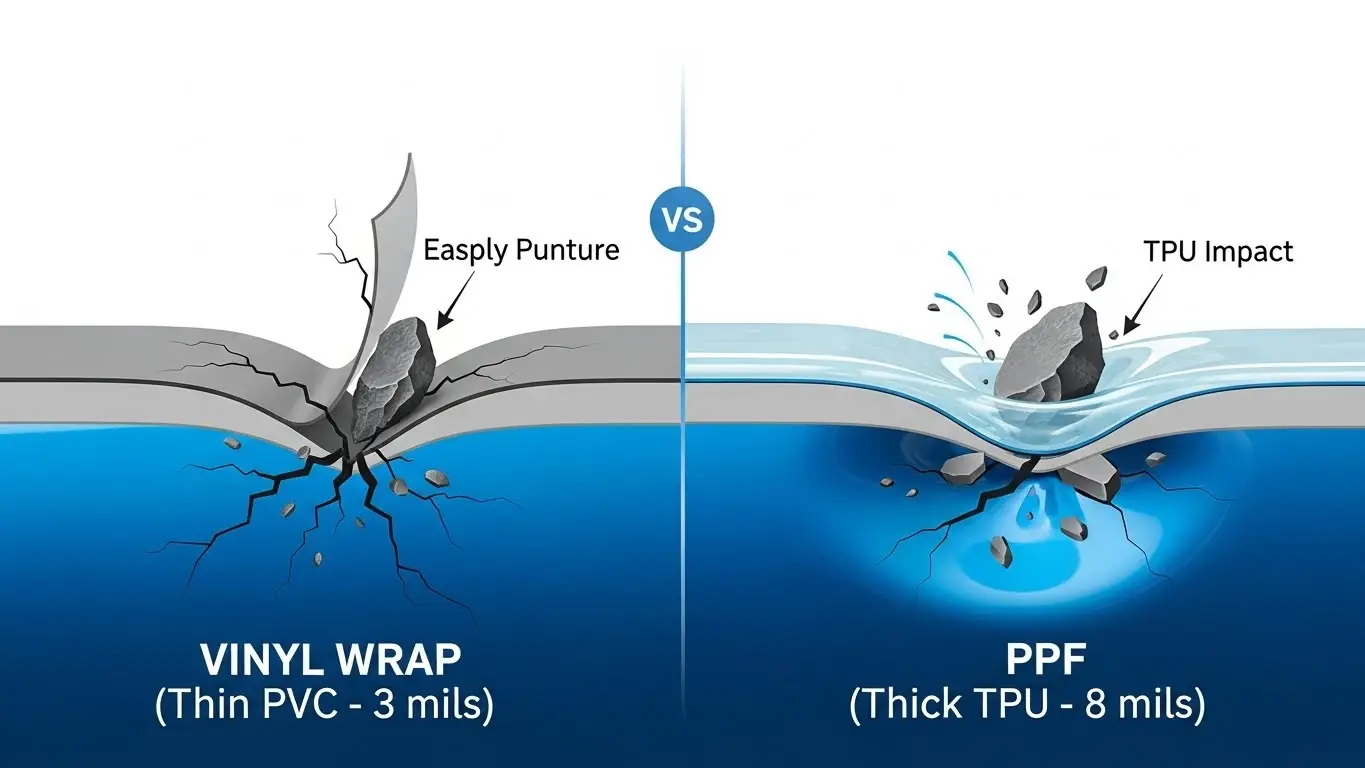
When it comes to defending your vehicle’s clear coat from road hazards, material composition is everything. PPF is not just a plastic sticker; it is a functional armor.
The Physics of Impact Absorption
PPF acts like a trampoline for rocks. Because it is made of elastomeric polyurethane, it absorbs energy upon impact and bounces back. Vinyl, being a harder and more rigid plastic, lacks this elasticity. When a rock hits vinyl, the energy transfers directly through the thin film to the paint, often resulting in a chip or a tear in the wrap itself.
- Self-Healing Properties: High-quality PPF has a top coat that heals swirl marks and light scratches with heat (sunlight or warm water). Vinyl does not self-heal; once it is scratched, it stays scratched.
- Thickness Matters: You are essentially comparing a heavy-duty screen protector (PPF) to a piece of scotch tape (Vinyl).
Can Vinyl Wrap Prevent Rock Chips?
Vinyl wrap offers minimal protection against rock chips. It may stop very light debris or sandblasting, but it will not stop a standard rock impact at highway speeds.
Detailed Explanation:
Many car owners mistakenly believe that because vinyl covers the paint, it protects it. While it offers a barrier against UV rays and bird droppings, it provides a false sense of security against physical impact. If a stone hits a vinyl-wrapped hood, you will often find the vinyl torn and the paint chipped underneath.
However, the industry is evolving. If you love the look of vinyl but need the protection of PPF, newer hybrid films are entering the market. For a deeper dive into these aesthetic options, read our guide on colored PPF vs vinyl wrap to see how you can get the best of both worlds.
Comparing the Materials: TPU vs. PVC
To understand the protection gap, you have to look at the chemistry. The fundamental difference determines why one protects and the other purely decorates.
The Breakdown
- TPU (Thermoplastic Polyurethane): Used in PPF. It is flexible, durable, and resistant to abrasion.
- PVC (Polyvinyl Chloride): Used in Vinyl. It is rigid and brittle in cold temperatures.
For a technical breakdown of these materials, check out the differences between TPU vs PVC car wrap materials.
Comparison: PPF vs. Vinyl Wrap Protection
| Feature | Paint Protection Film (PPF) | Vinyl Wrap |
| Primary Function | Impact Protection | Color Change / Aesthetics |
| Material | TPU (Urethane) | PVC (Polyvinyl) |
| Average Thickness | 6 – 10 mils | 3 – 4 mils |
| Stone Chip Resistance | High (Absorbs impact) | Low (Tears easily) |
| Self-Healing | Yes (Heat activated) | No |
| Lifespan | 7 – 10 Years | 3 – 5 Years |
Is PPF Worth the Money Over Vinyl?
If your priority is preserving your car’s resale value and factory paint, yes, PPF is worth the higher investment. Vinyl is better suited for temporary cosmetic changes.
Detailed Explanation:
PPF is generally more expensive than vinyl due to the cost of TPU material and the complex installation process. However, you must view it as an investment in asset protection. Repainting a hood or bumper due to rock chips can cost as much as the film itself.
When deciding between the two, you should carefully analyze your goals. We have broken down the decision-making process in our article on the pros and cons of colored PPF and vinyl wrap, which helps you weigh budget against protection.
Can You Put PPF Over Vinyl Wrap?
Yes, you can apply PPF over vinyl wrap to protect the custom color, especially in high-impact areas like the front bumper.
Detailed Explanation:
This is a common strategy for enthusiasts who want a specific color shift (using vinyl) but also demand highway protection. You can wrap the car in vinyl first, and then apply "front-end" PPF over the vinyl.
- Note on Removal: Be aware that removing PPF from vinyl later can be tricky; the strong adhesive of the PPF might pull the vinyl up with it when removed.
- Alternative: Instead of layering, consider "Colored PPF," which is a single layer of TPU that is already colored.
Frequently Asked Questions
Does ceramic coating protect against stone chips like PPF?
No. Ceramic coating is a liquid polymer that protects against chemical stains, UV rays, and eases cleaning, but it offers zero protection against rock chips or physical impacts.
How long does PPF last compared to vinyl?
High-quality PPF typically lasts 7–10 years depending on maintenance. Vinyl wraps usually have a lifespan of 3–5 years before they start to fade or crack.
Does PPF turn yellow over time?
Modern PPF uses advanced UV-stable adhesives and top coats that resist yellowing. Older films (from 10+ years ago) had this issue, but top-tier brands today offer warranties against yellowing.
Can I install PPF myself?
It is not recommended. PPF installation requires a wet application process, slip solutions, and precise stretching (squeegeeing) techniques. DIY attempts often result in bubbles, lift lines, and wasted material.
Is colored PPF as protective as clear PPF?
Yes. Colored PPF is made from the same TPU material as clear PPF. It offers the same thickness and impact resistance, just with added pigment for styling.
Key Takeaways
- Thickness Wins: PPF is roughly 2-3 times thicker than vinyl wrap, providing a cushion against rocks.
- Material Science: TPU (in PPF) absorbs shock; PVC (in vinyl) is brittle and tears upon impact.
- Purpose: Choose Vinyl for style; choose PPF for protection.
- Hybrid Options: Colored PPF is now available if you want both style and heavy-duty protection.
Conclusion
If your main goal is to prevent stone chips, road rash, and scratches, PPF is the clear winner over vinyl wrap. While vinyl allows for exciting color customization, it is simply too thin to serve as armor for your vehicle. For the ultimate setup, consider Colored PPF or applying clear PPF over high-impact areas of your vinyl wrap.
Protect your investment wisely. If you are ready to explore the best protective options for your vehicle, check out our detailed comparisons linked above.


