



Popular Articles
Midnight Purple Paint for GTR R34
2026.01.13
Exploring the Allure of Midnight Purple
2026.01.13
Benefits of Using Carbon Fiber Vinyl Wraps
2026.01.13
About Company
Colorfuul is a global leader in high-end automotive films, offering Color TPU PPF, Transparent PPF, PET Window Films, and Vinyl Wrapping. With exports to over 100 countries, we deliver consistent quality, competitive pricing, and professional service. Beyond production, we provide OEM/ODM customization, shaping the future of automotive aesthetics.
 mary@colorfuul.com
  86 13541196952
 How to Prevent Stains on TPU PPF: Proven Hacks That Work
Learning how to prevent stains on TPU PPF is the key to preserving the flawless look of your vehicle for years to come. A modern paint protection film is a marvel of material science, engineered to be highly resistant to damage. However, no material is completely invincible. The world is full of chemical and environmental contaminants that can cause stains or etchings if not dealt with properly. The good news is that with a combination of proactive protection and a consistent care routine, you can easily keep your film looking as perfect as the day it was installed. This guide provides a deep dive into the proven professional methods for preventing stains on your TPU PPF.
The Science of Staining: Understanding the PPF Top Coat
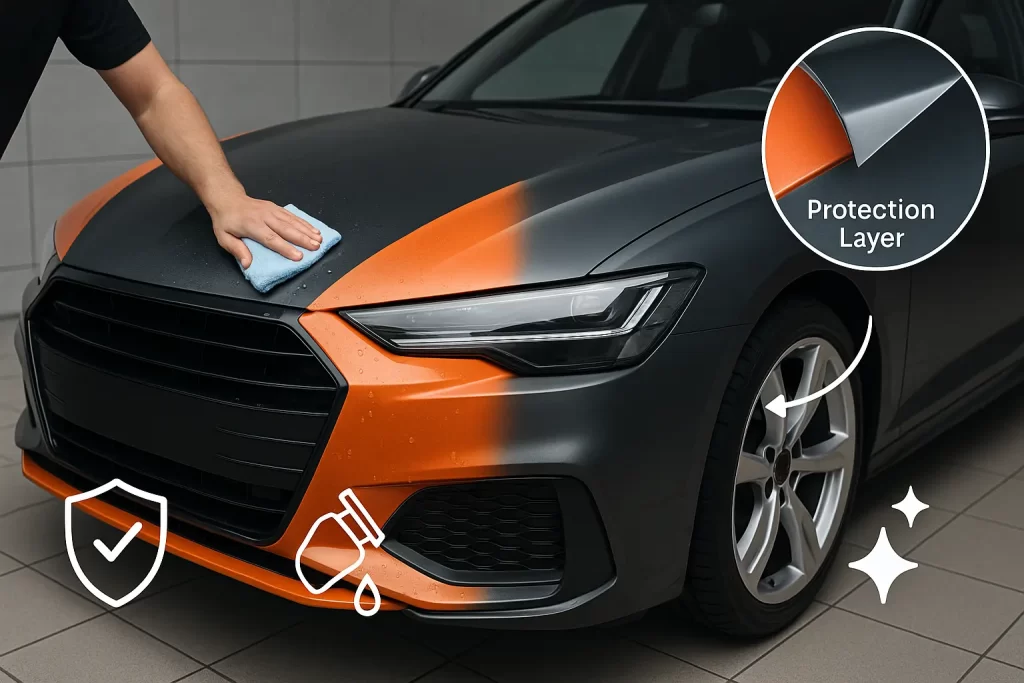
To effectively prevent stains, it is crucial to first understand the surface you are protecting. The stain resistance of a paint protection film is not a property of the main TPU layer. It is a feature of the film's advanced, microscopic top coat. This thin, outermost layer is the frontline defense against all chemical and environmental attacks. Its integrity is the key to a long-lasting, stain-free finish.
How a High-Quality Top Coat Resists Stains
The top coat of a premium PPF is a highly cross-linked polyurethane clear coat. This process of cross-linking creates a very dense and non-porous surface. This means there are very few microscopic holes or pores for contaminants to seep into. When a substance like a bird dropping lands on the surface, the non-porous nature of the top coat prevents it from immediately penetrating and causing a deep stain. It acts as a robust, sealed barrier. For a general overview of protective films, the Paint protection film page offers useful context.
The Difference Between a "Stain" and an "Etching"
It is useful to understand the two main types of surface blemishes. A "stain" is when a colored substance, like a berry or a fluid, is absorbed into the pores of a surface, causing a discoloration. An "etching" is a physical change to the surface itself. It is when a corrosive substance, like the acid in a bird dropping, actually eats into and roughens the top coat. A high-quality PPF top coat is highly resistant to both, but etchings are generally more damaging and difficult to fix.
Why a Damaged or Low-Quality Top Coat is More Vulnerable
If the film's top coat is of low quality or has been damaged by improper cleaning methods (like using abrasive polishes), its stain resistance will be severely compromised. An abraded or degraded top coat becomes more porous. This opens up pathways for contaminants to penetrate and cause deep, often permanent stains. This is why using gentle, PPF-safe cleaning methods is so important. You are not just cleaning the film; you are preserving the integrity of its most important defensive layer.
The Role of Porosity and Chemical Resistance
Ultimately, the ability to prevent stains comes down to two properties: low porosity and high chemical resistance. The manufacturing process of a premium top coat is designed to maximize both. The specific chemical formulation is engineered to be stable and non-reactive when it comes into contact with the common acidic and alkaline substances found in the environment. This combination of a sealed surface and chemical stability is what gives a high-quality film its impressive ability to fend off stains.
The Proactive Defense: Applying a Sacrificial Layer
The single most effective "hack" to prevent stains on TPU PPF is to add another layer of protection on top of the film. While the film's own top coat is excellent, applying a sacrificial, renewable layer of protection takes the defense to a whole new level. This is the ultimate proactive strategy and is highly recommended by most professional installers for long-term care.
The Power of a Ceramic Coating for PPF
The best product to apply over a paint protection film is a high-quality ceramic coating that is specifically formulated for use on PPF. A ceramic coating is a liquid polymer that, when applied, creates a chemical bond with the film's top coat. It cures to form an ultra-thin, hard, and extremely slick layer of glass-like protection. This new, even less porous layer becomes the first point of contact for all contaminants.
How a Coating Fills Microscopic Pores
Even the best PPF top coat has some microscopic texture. A ceramic coating is so fine that it fills in these tiny imperfections. This creates a surface that is even smoother and flatter than the film alone. This ultra-smooth surface makes it incredibly difficult for dirt and contaminants to stick. This property is known as the "self-cleaning" effect.
The Benefits of a High-Quality PPF Sealant
If a full ceramic coating is not desired, a high-quality PPF sealant is another excellent option. A sealant is a synthetic polymer-based product that also creates a protective layer on the film's surface. It does not create the same hard, semi-permanent bond as a ceramic coating, so it needs to be reapplied more frequently (typically every few months). However, it still provides excellent added protection and enhances the hydrophobic properties of the film.
Here are the key benefits of applying a ceramic coating or sealant to your PPF:
- Enhanced Stain Resistance: The coating provides an extra, sacrificial barrier against all types of stains and chemical etchings.
- Increased UV Protection: The coating adds another layer of protection against the sun's harmful UV rays, further preserving the film and the paint.
- Extreme Hydrophobicity: The vehicle will stay cleaner for longer as water and dirt will slide right off the incredibly slick surface.
- Easier Cleaning: When the vehicle is washed, bug splatter, bird droppings, and other contaminants are much easier to remove from the coated surface.
- Enhanced Appearance: A quality coating can increase the depth, gloss, and richness of the film's finish.
Common Enemy #1: Environmental Fallout
The most common and dangerous sources of stains are environmental fallout. These are the things that fall from the sky or are deposited on your car as you drive. Bird droppings and bug splatter are the two most aggressive and time-sensitive threats to your film's finish.
The Chemical Danger: Uric Acid and Enzymes
Bird droppings are highly acidic. They contain a concentrated form of uric acid, which is extremely corrosive. Bug splatter contains a cocktail of complex proteins and enzymes. When these substances are allowed to sit on the film's surface, especially in the heat of the sun, these chemicals will begin to attack and try to eat into the top coat. The heat acts as a catalyst, accelerating the chemical reaction.
Why Quick Removal is Absolutely Critical
Time is the most important factor when dealing with these contaminants. The longer a bird dropping or a large bug splatter is allowed to sit on the surface, the higher the risk of it causing a permanent etching. In direct, hot sunlight, a mark can be left in a matter of hours. The number one rule to prevent stains on TPU PPF is to remove these types of contaminants as soon as you see them.
The Safe Removal Process (Soften, Lift, Clean)
The key to safe removal is to soften the contaminant first. Never try to scrub a hard, dried-on bird dropping. It can contain grit that will scratch the film. Instead, take a soft microfiber towel and soak it in a PPF-safe quick detailer or warm, soapy water. Lay this wet towel over the spot for five to ten minutes. This will rehydrate and soften the dropping. After it is soft, you should be able to gently lift and wipe it away with no pressure.
What to Do if a Light Etching Occurs
If you were not able to remove a dropping in time and a light etching or cloudy spot has been left behind, do not panic. The first thing to try is the sun. Park the car with the affected area in direct sunlight. The heat can sometimes cause the film's top coat to swell and re-flow, which can make the etching less noticeable or even disappear. This is a benefit of the film's self-healing properties.
Common Enemy #2: Plant and Tree-Based Contaminants
Parking under trees can provide shade, but it can also expose your vehicle to a variety of plant-based contaminants. Tree sap, pollen, and berries can all create stubborn stains if not dealt with correctly.
The Sticky Problem of Tree Sap
Tree sap is a sticky, sugar-based substance that can be very difficult to remove once it hardens. The key, again, is quick removal. If you see fresh, liquid sap, it can often be wiped away with a quick detailer. If the sap has hardened, you will need a specialized tar and sap remover that is rated as safe for PPF. Apply the remover to a towel and let it sit on the sap to dissolve it. Never try to scrape hardened sap off with a fingernail or a tool.
Pollen, Berries, and Other Organic Matter
During certain times of the year, a heavy layer of pollen can cover a vehicle. While it looks bad, pollen is generally not harmful if washed off in a timely manner. A more serious threat comes from dark-colored berries that can fall from trees. The juice from crushed berries can cause a powerful organic stain. These should be removed as quickly as possible.
The Risk of Staining from Wet, Decomposing Leaves
A less obvious threat is from wet leaves. If wet leaves, especially from certain types of trees, are left to sit on the surface of a light-colored film for a long period, the tannins and other compounds from the decomposing leaves can leach out and cause a brownish stain. This is another good reason to keep the vehicle clean and not let organic matter sit on the surface for extended periods.
Common Enemy #3: Man-Made and Chemical Contaminants
The modern driving environment is full of man-made chemicals and substances that can be harmful to an automotive finish. These can come from the road itself or from other vehicles.
The Danger of Road Tar and Asphalt
Freshly paved roads or road repairs can lead to small black dots of tar being flung onto the lower parts of a vehicle. This tar will not come off with a normal wash. As with tree sap, a dedicated, PPF-safe tar remover is the correct tool for the job. It is important to remove these tar spots regularly, as they can sometimes cause a very slight yellowing stain on a white film if left for many months.
Fluid Leaks: Oil, Coolant, and Gasoline
It is important to be mindful of fluid leaks from your own vehicle or from others in a parking lot. Gasoline, in particular, is a strong solvent and should be wiped off the film's surface immediately if a spill occurs at the pump. While a high-quality PPF is resistant to these chemicals for short-term exposure, it is never a good idea to let them sit on the surface for a long time.
The Risk of Dye Transfer from Low-Quality Car Covers
For owners who use a car cover, the quality of the cover itself is important. A cheap, low-quality car cover, especially a colored one, can sometimes have unstable dyes. If this cover gets wet and is left to sit on the vehicle, these dyes can transfer to the film, causing a stain that is very difficult to remove. It is important to use a high-quality, breathable car cover from a reputable brand.
The Role of Routine Cleaning in Stain Prevention
The most fundamental strategy to prevent stains on TPU PPF is a simple and consistent cleaning routine. A clean car is a protected car. The vast majority of potential stains can be avoided by simply washing the vehicle regularly and not allowing contaminants to sit on the surface for long periods.
How Regular Washing Prevents Contaminants from Bonding
A regular wash, performed every one to two weeks, will safely remove most of the environmental and road contaminants before they have a chance to harden, bond, or chemically etch the film's surface. It is a simple, proactive measure that is incredibly effective. The complete professional method is detailed in our guide on how to clean color ppf.
The Importance of a pH-Neutral Soap
Using a gentle, pH-neutral car soap is crucial. A harsh soap can strip away any protective sealant or coating you have applied. This would leave the film's top coat exposed and more vulnerable to staining. A good soap will clean the surface effectively without harming the protective layers.
How Self-Healing Properties Can Help with Minor Stains
The self-healing feature of a modern PPF is primarily for repairing scratches. However, in some limited cases, it can also help to reduce the appearance of minor surface etchings.
Can Self-Healing Fix a Chemical Etch?
If a contaminant like a bird dropping has caused a very light etching in the top coat, the self-healing property can sometimes help. The etching is a physical roughening of the surface. The ability of the polymer network to re-flow can sometimes smooth out this minor roughness, making the spot less visible.
Using Heat to Re-flow the Top Coat
To try this, you can gently warm the area with the sun or a heat gun. This will activate the polymer mobility in the top coat. It is not a guaranteed fix, but for very minor etchings, it can often improve the appearance significantly. This is one of the many benefits of the self healing repair ppf technology.
Seasonal and Long-Term Maintenance
Stain prevention is a continuous process that should adapt to the seasons. Long-term inspection is also key to catching any issues early.
Preparing Your PPF for Seasonal Changes
The types of threats your film faces will change throughout the year. Proper winter care for color PPF is crucial. This means more frequent washing to remove corrosive road salt. In the spring, you might face heavy pollen. In the summer, the threats are intense UV and fast-acting bug splatter. Adapting your cleaning routine to the season is a smart strategy.
Recognizing a Permanent Stain vs. a Failing Film
Over many years, a film may show signs of aging. It is important to be able to distinguish between an isolated, permanent stain and the general degradation of a film that is reaching the end of its life. If the entire film is starting to look yellowed, cloudy, or is cracking, it is not a stain issue. These are signs that it may be time to consider a replacement. Our guide on when to replace color ppf can help you identify these signs.
How to Prevent Stains on TPU PPF
The proven hacks to prevent stains on TPU PPF are not complicated. They are a simple combination of proactive protection and consistent, gentle maintenance. By applying a high-quality ceramic coating or sealant, you create a powerful, sacrificial barrier. By removing aggressive contaminants like bird droppings quickly, you stop etchings before they can start. And by following a regular, professional washing routine, you remove most threats before they have a chance to bond to the surface. Following these simple steps will ensure that your paint protection film continues to look flawless and stain-free for its entire, decade-long lifespan, protecting both your vehicle and your investment.


