



Popular Articles
Midnight Purple Paint for GTR R34
2026.01.13
Exploring the Allure of Midnight Purple
2026.01.13
Benefits of Using Carbon Fiber Vinyl Wraps
2026.01.13
About Company
Colorfuul is a global leader in high-end automotive films, offering Color TPU PPF, Transparent PPF, PET Window Films, and Vinyl Wrapping. With exports to over 100 countries, we deliver consistent quality, competitive pricing, and professional service. Beyond production, we provide OEM/ODM customization, shaping the future of automotive aesthetics.
 mary@colorfuul.com
  86 13541196952
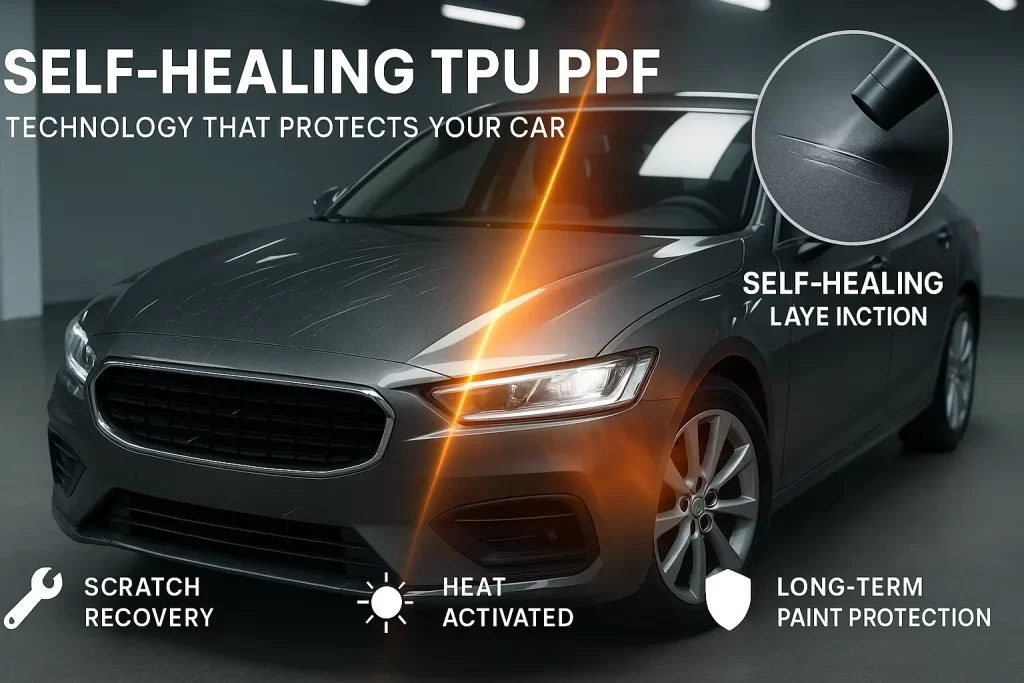
 Self-Healing TPU PPF: Technology That Protects Your Car
A self-healing TPU PPF is a revolutionary product in vehicle care. This advanced paint protection film has the remarkable ability to repair minor scratches on its own. It actively works to keep a car’s surface looking smooth and flawless. This is not science fiction; it is the result of advanced material science. This guide will explore the incredible technology behind self-healing films. We will explain how it works, what its benefits are, and what its limitations are. Understanding this feature is key to appreciating the true value of modern paint protection film. It is a defining characteristic that sets it apart.
What is Self-Healing Technology in PPF?
Self-healing technology refers to a material's intrinsic ability to repair minor damage and return to its original state. In the context of paint protection film, it means the film's surface can automatically mend light scratches and swirl marks. This feature ensures the film itself, and thus the vehicle, maintains a pristine, like-new appearance for years. It is a functional property that actively combats the wear and tear of daily driving and regular washing. This technology elevates PPF from a passive barrier to an active defensive shield.
Defining "Self-Healing" in This Context
The term "self-healing" can sound almost magical. However, it is a precise scientific process. The healing is not instantaneous, and it does not repair all types of damage. It is specifically designed to correct superficial imperfections in the film's top layer. These are the types of marks that dull a vehicle's finish over time. The process is based on the chemical properties of the materials used. It involves the rearrangement of polymer molecules to restore a smooth surface. It is a predictable and engineered characteristic of the film.
The Purpose: Eliminating Swirl Marks and Light Scratches
The primary purpose of the self-healing function is to combat cosmetic damage. The most common type of damage to any car's finish is swirl marks. These are microscopic scratches caused by improper washing and drying techniques. Over time, they build up and create a spiderweb effect that is visible in direct sunlight. Self-healing PPF eliminates these marks. It also repairs other light abrasions, such as scuffs from clothing or fingernail scratches around door handles. The goal is to maintain a perfect, scratch-free surface.
Where the Magic Happens: The Top Coat Layer
It is a common misconception that the entire TPU film is self-healing. The healing property is actually located in the film's outermost layer. This is a very thin, specialized clear coat that is applied over the thicker TPU core. This top coat is made from a unique class of polymers called elastomers. These materials have a flexible, memory-like structure. The TPU core provides the impact protection from rocks, while the top coat provides the self-healing from scratches. Both layers work together to offer complete protection.
A Brief History of Self-Healing Materials
The concept of self-healing materials is not new. Scientists have been developing them for decades for various applications. They have been used in aerospace, electronics, and medical devices. The goal has always been to create products that are more durable and have a longer lifespan. The application of this technology to automotive paint protection film was a major breakthrough. It brought a high-tech, industrial concept to the consumer market. The history of color PPF and clear films is deeply connected to these advancements in material science.
The Science Behind the Healing: How It Works
The self-healing process is a fascinating example of polymer chemistry in action. It is not a chemical reaction but a physical rearrangement of molecules. The top coat of the film is designed at a molecular level to have this ability. Understanding this process requires looking at the microscopic structure of the material. The entire mechanism is based on restoring this structure after it has been disturbed.
The Polymer Network: A Microscopic Explanation
The top coat is made of long-chain polymer molecules, specifically polyurethanes. During manufacturing, these chains are linked together in a process called cross-linking. This creates a flexible, interconnected network. You can imagine it like a microscopic fishnet or a trampoline. This network is what gives the top coat its strength and flexibility. When a light scratch occurs, it does not break the polymer chains. It simply pushes them apart and creates a valley or groove in the network.
The Concept of Polymer Chain Mobility
The key to the healing process is the mobility of these polymer chains. The cross-links in the network are not rigid like in a hard plastic. They are flexible, allowing the chains to move around to some extent. The material is in a constant state of wanting to return to its lowest energy state. This is a smooth, flat surface where the polymer network is evenly distributed. A scratch represents a higher energy state because the chains are pushed into an unnatural position.
The Role of Heat as a Catalyst
Heat acts as the catalyst that allows the healing to happen. Applying heat to the film adds energy to the polymer network. This increased energy makes the polymer chains vibrate and move more freely. It gives them the mobility they need to overcome their displaced positions. The chains begin to slide and shift back towards their original, low-energy configuration. This is why the healing process is much faster on a hot day or when a heat gun is used.
Reforming Bonds: Restoring the Smooth Surface
As the polymer chains move, they begin to fill in the groove that was created by the scratch. The flexible network essentially pulls itself back into a flat plane. The displaced molecules settle back into their original positions. This causes the valley of the scratch to become level with the surrounding surface. To the naked eye, the scratch completely disappears. The surface is restored to its original smoothness and clarity. No material is lost or gained; it is simply rearranged.
The Key Component: The Elastomeric Top Coat
The performance of the self-healing function depends entirely on the quality and composition of the top coat. This layer is the most technologically advanced part of the paint protection film. Manufacturers invest millions in research to perfect their top coat formulas. It must be able to heal scratches effectively while also resisting stains, chemicals, and UV radiation. It is a multi-functional material that is critical to the film's overall performance.
The Material Composition of the Top Coat
The top coat is typically a proprietary polyurethane clear coat. It is an elastomeric polymer, which means it has a high degree of elasticity. The specific chemical formula is a closely guarded trade secret for each manufacturer. It involves a precise blend of polyurethane resins, cross-linking agents, and additives like UV inhibitors. This complex formulation determines the speed and effectiveness of the healing, as well as the top coat's overall durability. The specific tpu ppf materials used in this layer are what differentiate premium films.
Why This Layer is Crucial for Performance
Without a high-quality top coat, a paint protection film would be much less effective. The underlying TPU core is porous and could stain easily. The TPU itself is not designed to resist fine scratches and swirl marks. The top coat seals the TPU, providing the necessary chemical resistance. It also provides the self-healing surface that maintains the aesthetic appearance. It is the layer that provides the gloss and the slick feel of the film. Its performance directly impacts the owner's day-to-day experience.
How Thickness and Density Affect Healing Speed
The properties of the top coat, such as its thickness and density, can influence the healing process. A thicker top coat may be able to heal slightly deeper scratches. The density of the polymer cross-linking also plays a role. A more densely cross-linked network may be stronger but less mobile, potentially healing more slowly. A less dense network might heal faster but be softer and more prone to scratching. Manufacturers must find the perfect balance to create a top coat that is both tough and able to heal effectively.
The Difference Between High and Low-Quality Top Coats
There is a significant difference between the top coats on premium films and those on cheaper alternatives. A high-quality top coat will have excellent clarity, a deep gloss, and powerful self-healing capabilities. It will also be highly resistant to staining and yellowing. A low-quality top coat may heal poorly or not at all. It may be prone to staining from bug splatter or bird droppings. It might also have a slight texture or "orange peel" that detracts from the vehicle's appearance. The quality of this layer is a major factor in the film's overall price and performance.
How to Activate the Self-Healing Properties
One of the great benefits of this technology is that the healing process can be activated in several simple ways. This allows an owner to easily maintain a flawless finish on their vehicle. The activation methods range from completely passive to more active and direct. Understanding these methods helps an owner get the most out of their paint protection film.
Passive Healing: Using the Sun's Natural Heat
The easiest and most common way to activate the self-healing is to do nothing at all. Simply parking the vehicle in the sun on a warm day is often enough to erase minor swirl marks and scratches. The sun's radiant heat provides the energy needed to trigger the polymer realignment. In warm climates, the film is constantly healing itself from the minor abrasions of daily life. This passive healing is one of the technology's most convenient features.
Active Healing: Using a Heat Gun
For a faster or more focused healing process, a heat gun can be used. This is often done by professional detailers or knowledgeable owners. The heat gun should be set to a low temperature. It must be held several inches away from the film's surface. It should be kept in constant motion to distribute the heat evenly. Holding the heat gun too close or in one spot for too long can damage the film. When done correctly, this method can make scratches disappear in a matter of seconds.
Active Healing: Using Warm Water
A safer method for active healing at home is to use warm water. Pouring a container of warm (not boiling) water over the scratched area can provide enough thermal energy to activate the healing process. The temperature should be warm to the touch, similar to a hot tap. This gentle method is very effective for most light scratches and eliminates the risk of overheating the film with a heat gun.
What is the Optimal Temperature for Healing?
The self-healing process begins to accelerate as the surface temperature of the film rises. While some healing can occur at room temperature over a long period, the process becomes much more efficient at temperatures above 40 degrees Celsius (104 degrees Fahrenheit). Most top coats are engineered to heal quickly and completely at temperatures around 60 degrees Celsius (140 degrees Fahrenheit). This is a temperature that is easily reached on the surface of a car parked in the sun.
What Types of Damage Can and Cannot Be Healed?
It is crucial to have realistic expectations about the self-healing technology. Understanding the boundaries of its capabilities will prevent disappointment and help an owner know when a more serious repair is needed. The technology excels at cosmetic maintenance but has clear limits when it comes to significant impacts.
Here is a general guide to what the film can typically heal:
- Healable Damage: Fine scratches from automatic car wash brushes. Swirl marks from improper washing or drying. Light scuffs from clothing, bags, or bushes. Fingernail scratches around door handles and trunk lids. Minor abrasions from daily use.
- Non-Healable Damage: Rock chips that puncture the film. Deep scratches that cut through the top coat into the TPU. Any tear or rip in the film. Damage caused by a vehicle collision. Intentional vandalism with a sharp object.
Damage That Heals: Swirl marks from washing, light fingernail scratches, scuffs from clothing
The self-healing function is at its best when dealing with the thousands of micro-scratches that accumulate over time. These are the marks that rob a paint job of its gloss and clarity. The film's ability to consistently erase these marks is what keeps the vehicle looking freshly detailed for years. It is a constant process of renewal that maintains the perfect finish that was present on the day of installation.
Damage That Does Not Heal: Deep cuts, rock chip punctures, tears in the film
The healing mechanism relies on rearranging the polymer network of the top coat. If a scratch is deep enough to cut through the top coat and into the TPU core, it cannot be healed. Similarly, if a rock hits with enough force to puncture the film, the damage is permanent. The purpose of the film in these cases is to be a sacrificial barrier. It absorbs the damage so the paint underneath is unharmed. The film has done its job, but the damage to the film itself will remain.
Understanding the Limits of the Technology
The limit of the technology is the thickness and integrity of the top coat. Any damage that exceeds the depth of this layer is beyond its ability to repair. It is a surface-level repair system. This is an important distinction. It is designed for maintaining aesthetic perfection, not for repairing significant physical trauma to the film. Having this clear understanding is key to being satisfied with the product's performance.
When a Panel Replacement is Necessary
If the film on a particular panel sustains damage that cannot be healed, the solution is simple. A professional installer can remove the film from just that one panel. They can then install a new piece of film. This is much easier, faster, and often cheaper than repainting a damaged panel. The ability to replace individual sections makes PPF a very practical and serviceable product, even when damage exceeds the self-healing capability.
The Benefits of a Self-Healing Surface
The addition of self-healing technology provides numerous tangible benefits. These advantages enhance the ownership experience and increase the overall value of the paint protection film. The ability to self-repair is not just a novelty; it is a core feature that delivers practical results. It is one of the main reasons why modern PPF is considered such a premium and desirable product.
Maintaining a Flawless, "Wet Look" Finish
A self-healing surface constantly works to eliminate the imperfections that dull a finish. This means the film retains its deep gloss and clarity for much longer. It preserves the "wet look" that is characteristic of a freshly detailed car. The vehicle continues to look its best day after day, year after year. This lasting aesthetic perfection is one of the most appreciated benefits for car enthusiasts and discerning owners.
Reducing the Need for Abrasive Polishing
Traditional paint care often involves using abrasive polishes to remove swirl marks. This process removes a small amount of the clear coat each time it is done. It can only be done a limited number of times before the clear coat becomes too thin. With a self-healing PPF, the need for abrasive polishing is eliminated. The film takes care of the swirl marks on its own. This is a healthier, non-invasive way to maintain a perfect finish.
Enhancing the Longevity of the Film's Appearance
A paint protection film can last for ten years or more. However, a non-healing film could accumulate a significant number of scratches over that time. It would still be protecting the paint, but the film itself would look worn. A self-healing film ensures that the film's own appearance remains excellent throughout its entire service life. The color tpu ppf lifespan is not just about protection; it is also about looking good for that entire period.
Increasing the Overall Value Proposition of PPF
The inclusion of self-healing technology significantly increases the value of a PPF installation. It adds a layer of active maintenance that other products cannot offer. It is a key feature that justifies the premium cost of high-quality films. The combination of impact protection from the TPU and cosmetic perfection from the self-healing top coat creates a complete solution. This is one of the primary benefits of color tpu ppf and clear films. For more on protective films in general, the Paint protection film page is a useful resource.
Does Self-Healing Work on Both Clear and Color PPF?
A common question is whether the self-healing feature is exclusive to clear films. Owners considering a color PPF want to know if they will get the same advanced technological benefits. The answer is a resounding yes. The self-healing technology works equally well on both clear and high-quality color paint protection films.
The Top Coat is the Same
The self-healing property is located in the film's top coat. In both clear and color PPF from a premium manufacturer, this top coat is essentially the same material. It is a transparent, durable, elastomeric polyurethane layer. The color in a color PPF is located in a separate layer underneath this clear top coat. Because the outermost surface is the same on both products, the self-healing performance is also the same.
How Healing Affects Gloss vs. Matte Finishes
Self-healing technology works on films with different finishes, including gloss and matte. On a gloss film, the healing process restores the smooth, highly reflective surface. On a matte film, the top coat has a slightly textured surface at a microscopic level to scatter light. The self-healing process restores this original matte texture, removing the scratch and the glossy spot it might have created. The result is a consistent, flawless finish, regardless of the sheen.
No Difference in Performance
There is no compromise in self-healing performance when choosing a color film over a clear one. A vehicle owner can select the aesthetic option they prefer with full confidence. They will receive the same high level of scratch-repairing capability. This is a critical point when making a color tpu ppf vs clear ppf decision. The choice is purely about looks, not about sacrificing technological features.
Debunking Myths About Self-Healing Technology
Like any advanced technology, self-healing PPF is surrounded by some myths and misconceptions. These can create unrealistic expectations or unnecessary fears. It is important to address these myths directly to provide a clear and accurate picture of what the technology can do.
Myth: The Film is Indestructible
This is the most important myth to debunk. The term "self-healing" can lead some people to believe the film is invincible. As we have discussed, the technology has clear limits. It will not heal deep cuts or punctures. It is a system for maintaining cosmetic perfection, not for providing immunity to all forms of damage.
Myth: The Healing Effect Wears Out Quickly
Some people worry that the film can only heal a certain number of times before the effect stops working. This is not true. The healing process is a physical rearrangement of molecules, not a chemical reaction with a limited number of uses. As long as the top coat is intact, it will continue to have the ability to self-heal for the entire life of the film. The property does not diminish over time with proper care.
Myth: All "Self-Healing" Films Are the Same
Many cheap films now claim to be "self-healing." However, the quality and effectiveness of this feature can vary enormously. A low-quality top coat may heal very slowly, incompletely, or only from very minor marks. Premium films have top coats that have been perfected through years of research. They heal faster and more effectively. As with many things, you get what you pay for. It is important to look past the marketing claims and choose a reputable brand. Many of these points are covered in our guide to myths about color tpu ppf.
The Future of Self-Healing PPF
The technology behind self-healing PPF is constantly improving. Manufacturers are in a continuous race to innovate and create films that perform even better. The future of this technology promises films that are smarter, faster, and more resilient. The performance we see today is impressive, but it is likely just the beginning of what is possible.
Faster Healing at Lower Temperatures
A major area of research is developing top coats that can heal more quickly and at lower ambient temperatures. The goal is to create a film that can self-heal almost instantly, even on a cool day, without the need for direct sun or applied heat. This would make the technology even more effective and convenient, especially in colder climates.
Increased Resistance to Deeper Scratches
Scientists are also working on ways to improve the toughness of the top coat without sacrificing its healing ability. This could lead to films that can heal from slightly deeper or more significant scratches than what is possible today. This would further expand the range of damage that the film can automatically correct.
Integration of Other Smart Properties
The top coat is a platform for innovation. In the future, it may be integrated with other advanced properties. This could include even more advanced hydrophobic (water-repelling) and oleophobic (oil-repelling) technologies. This would make the films even slicker and more resistant to all forms of contamination, keeping them cleaner for longer. The environmental impact tpu ppf is also a consideration in future material development.
Final Thoughts
The technology of self-healing TPU PPF is a true game-changer for vehicle protection. It is the feature that allows a car to maintain a perfect, showroom-quality finish for years on end. By understanding the science behind its elastomeric top coat, owners can appreciate the incredible innovation that goes into this product. It actively eliminates the swirl marks and light scratches that plague unprotected cars. While not invincible, its ability to constantly renew its own surface is a benefit that no other form of protection can offer. It is the defining feature of a modern, high-quality paint protection film. For a broader understanding of the product, you can always review what is tpu paint protection film.


