



Popular Articles
Ultimate Guide to 360° Comprehensive Interior Detailing — Deep Clean, Sanitize and Protect Your Car’s Cabin
2026.02.04
Singapore Car Window Tinting Guide: Rules, Benefits, and How to Choose the Right Film
2026.02.04
The Complete Guide to Colour Wraps — Transforming Your Car’s Look with Style and Protection
2026.02.04
About Company
Colorfuul is a global leader in high-end automotive films, offering Color TPU PPF, Transparent PPF, PET Window Films, and Vinyl Wrapping. With exports to over 100 countries, we deliver consistent quality, competitive pricing, and professional service. Beyond production, we provide OEM/ODM customization, shaping the future of automotive aesthetics.
 mary@colorfuul.com
  86 13541196952
 What's the Difference Between TPU and PVC Car Wraps?
The main difference lies in durability and composition. PVC (Vinyl) is a rigid plastic that relies on added chemicals to stay flexible, typically lasting 2–3 years before cracking or fading. TPU (Colored PPF) is a naturally elastic, rubber-like material that offers self-healing properties, withstands rock chips, and lasts 5–10 years. While PVC is cheaper upfront ($2k–$4k), TPU ($4k–$8k) provides superior long-term protection.
Why This Matters
For car enthusiasts and luxury vehicle owners, choosing between TPU and PVC isn't just about color—it's about "costume vs. armor."
If you’ve browsed our Colored PPF vs Vinyl Wrap guide, you know that the industry is shifting. For decades, PVC (Polyvinyl Chloride) was the standard for changing a car's color. But in 2024-2025, TPU (Thermoplastic Polyurethane) has revolutionized the market. Understanding the chemical and physical differences between these two materials will help you decide if you want a temporary style change or a decade of protection.
The Science: Plastic vs. Rubber
To understand performance, we have to look at the molecular level.
PVC: The Rigid Plastic
PVC is naturally a hard, rigid plastic (think of PVC pipes). To make it flexible enough to wrap around a car, manufacturers add chemical plasticizers.
- The Problem: Over time, UV rays and heat cause these plasticizers to evaporate (outgas).
- The Result: The wrap becomes brittle, cracks, and loses its color—often within 2 to 3 years. This is why old vinyl wraps look "baked" onto the paint.
TPU: The Elastic Shield
TPU is a hybrid material that bridges the gap between rubber and plastic. It is naturally flexible and elastic without relying on unstable plasticizers.
- The Advantage: It creates a "memory" effect. If TPU is scratched or stretched, it wants to return to its original shape.
- The Result: This is the secret behind Self-Healing Technology. When exposed to heat (sun or hot water), the molecular structure resets, making swirl marks disappear.
TPU vs. PVC: The Breakdown
Here is how the two materials compare in real-world performance.
| Feature | PVC (Vinyl Wrap) | TPU (Colored PPF) |
| Primary Goal | Cosmetic / Style Change | Protection + Style |
| Thickness | 2–4 mil (Thin) | 7.5–10 mil (Thick) |
| Lifespan | 2–3 Years | 5–10 Years |
| Self-Healing | ❌ No | ✅ Yes (Heat activated) |
| Texture | Often has "Orange Peel" | Smooth / Glass-like |
| Protection | Minimal (Stops light scratches) | High (Stops rock chips) |
| Eco-Impact | Toxic (Contains Chlorine) | Recyclable & Safe |
Main Topic 3: The "Orange Peel" Effect
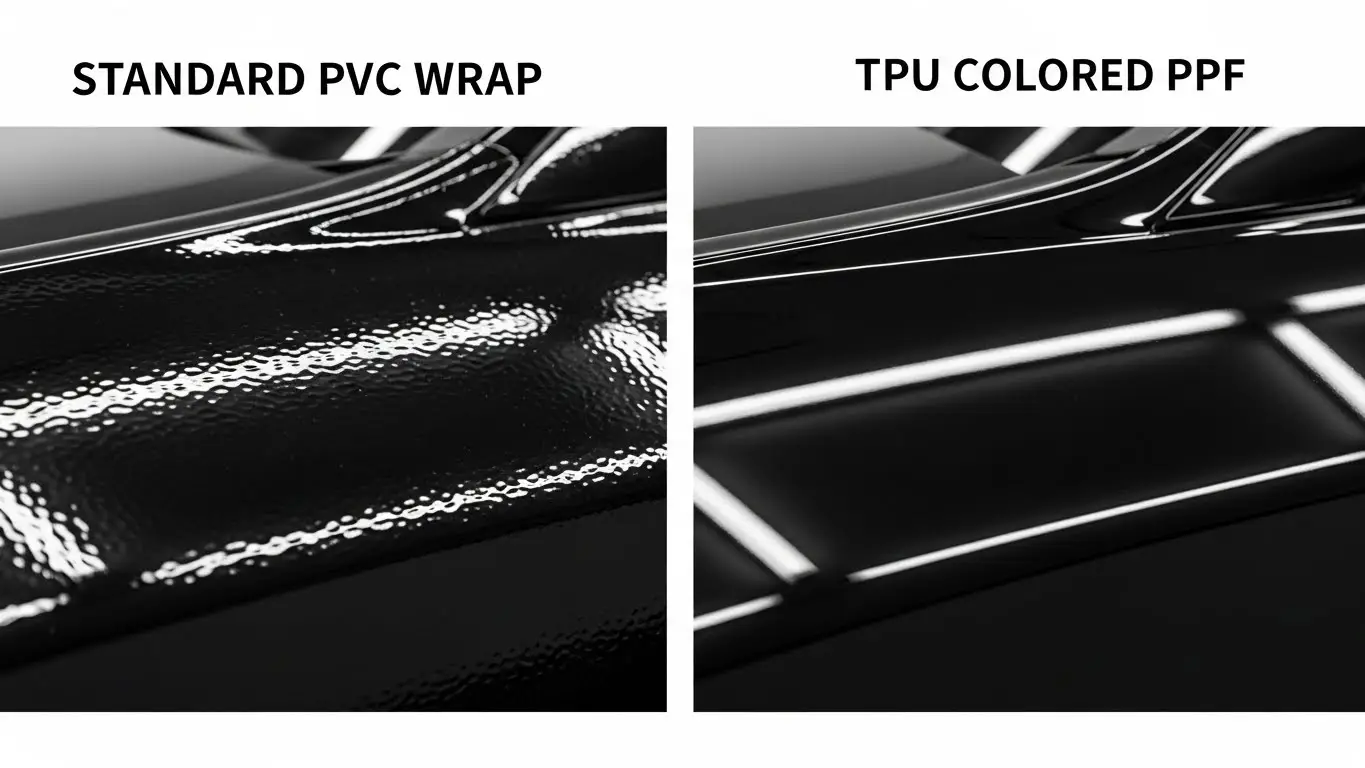
One of the biggest complaints with traditional PVC vinyl is the texture. Because PVC is a cast or calendered plastic, it often creates a bumpy texture known as "orange peel," which distorts reflections.
TPU Difference:
High-quality TPU films, like Colorfuul’s Color PPF, use advanced manufacturing techniques that result in a mirror-like finish. The material is optically clear (before color is added), allowing for a depth of gloss that looks indistinguishable from—or often better than—factory paint.
Cost Analysis (2025 Market Rates)
Is TPU worth the extra investment? Let's look at the numbers.
PVC Wrap Costs
- Material: Low cost.
- Installation: $2,000 – $4,000 (Average for a full sedan).
- Frequency: Needs replacing every 3 years.
- 10-Year Cost: You would need to wrap the car 3 times, totaling roughly $9,000.
TPU Wrap Costs
- Material: Premium cost (Raw TPU is 3-5x more expensive than PVC).
- Installation: $4,000 – $8,000.
- Frequency: One install lasts 5–10 years.
- 10-Year Cost: One-time cost of roughly $6,000.
💡 Expert Insight: While PVC is cheaper today, TPU is often cheaper over the life of the vehicle, especially when you factor in resale value. A car with pristine original paint protected by TPU is worth significantly more than one with micro-marring from a vinyl install.
Common Mistakes to Avoid
- Assuming All Wraps Protect Paint:PVC vinyl is thin (roughly the thickness of a Post-it note). A rock hitting PVC at highway speeds will likely tear the vinyl and chip the paint underneath. TPU absorbs the impact like a trampoline.
- Ignoring "Dry" vs "Wet" Application:PVC is typically installed "dry," which can sometimes lead to adhesive marks if not done by a pro. TPU is installed "wet," allowing the installer to float the film perfectly into place for a defect-free finish.
- Failing to Check the Brand:Not all TPU is created equal. Ensure you are getting Aliphatic TPU (which resists yellowing), not Aromatic TPU (which yellows quickly). Note: All Colorfuul PPF products use non-yellowing Aliphatic TPU.
Expert Tips for Choosing
- For Leased Vehicles: If you are leasing a car for 24 months and just want to change the color to matte black, PVC is a cost-effective choice. You can peel it off before returning the car.
- For Daily Drivers & Luxury Cars: If you own the car and drive it on highways, TPU is mandatory. The rock chip protection alone saves thousands in body shop repaint costs.
- The "Hybrid" Option: Some manufacturers offer "TPH" (Thermoplastic Polyolefin Hybrid), which is a mix of PVC and chemical softeners. It claims to be cheap like PVC and soft like TPU. Avoid this. It typically yellows within 12 months. Stick to pure TPU for real performance.
Frequently Asked Questions
Yes. TPU (Thermoplastic Polyurethane) is the raw material used to make Paint Protection Film (PPF). When people say "Colored PPF," they are referring to a wrap made from TPU rather than the traditional PVC.
Absolutely. While many TPU films already have a hydrophobic top coat, adding a ceramic coating can further enhance gloss and ease of cleaning. Just ensure the coating is compatible with flexible films.
It can. If left on too long (past the 3-year mark), the sun can bake the PVC adhesive into the clear coat, leading to peeling issues or residue that requires heavy polishing to remove.
TPU is a more complex material to manufacture. It requires advanced chemical engineering to achieve elasticity and optical clarity. Additionally, the installation takes longer because the material is thicker and requires wet application.
High-quality Aliphatic TPU is highly resistant to yellowing. Unlike PVC, which yellows as plasticizers evaporate, TPU remains stable under UV light for up to 10 years.
It is not recommended. TPU installation requires "wet application" techniques, specific squeegee pressures, and knowledge of how to stretch the material without creating "lift lines." PVC is generally more forgiving for DIY beginners.
Yes! TPU is now available in Gloss, Matte, Satin, and even Metallic finishes. You can get the popular "Stealth" or "Frozen" look with the protection of PPF.
Compared to PVC, yes. PVC releases toxic chemicals (dioxins) when burned and contains chlorine. TPU is biodegradable in specific conditions and does not contain toxic plasticizers, making it a greener choice.
Key Takeaways
- Material: PVC is rigid plastic; TPU is elastic rubber-plastic hybrid.
- Longevity: TPU lasts 2-3x longer than PVC (up to 10 years).
- Protection: Only TPU provides real protection against rock chips and scratches.
- Finish: TPU offers a smoother, "paint-like" finish without orange peel.
- Value: TPU has a higher upfront cost but protects the vehicle's resale value better.


