



Popular Articles
Midnight Purple Paint for GTR R34
2026.01.13
Exploring the Allure of Midnight Purple
2026.01.13
Benefits of Using Carbon Fiber Vinyl Wraps
2026.01.13
About Company
Colorfuul is a global leader in high-end automotive films, offering Color TPU PPF, Transparent PPF, PET Window Films, and Vinyl Wrapping. With exports to over 100 countries, we deliver consistent quality, competitive pricing, and professional service. Beyond production, we provide OEM/ODM customization, shaping the future of automotive aesthetics.
 mary@colorfuul.com
  86 13541196952
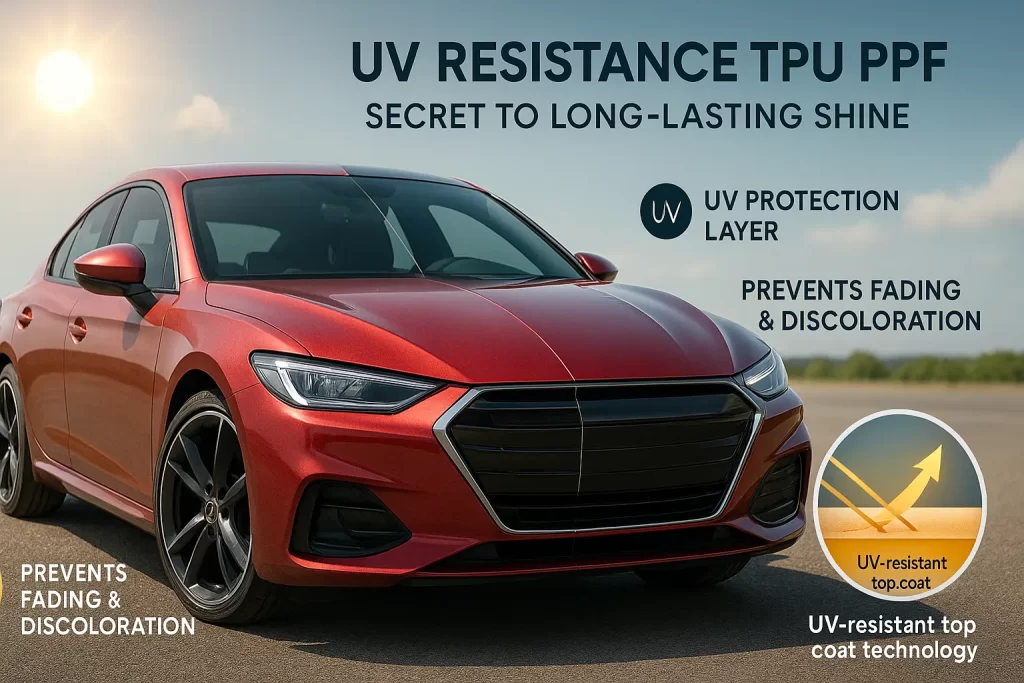
 UV Resistance TPU PPF: Secret to Long-Lasting Shine
The UV resistance in TPU PPF is a critical technology for long-term vehicle protection. While paint protection film is renowned for stopping rock chips, its ability to combat the invisible threat of ultraviolet (UV) radiation is equally important. The sun is a relentless force that can degrade both a vehicle’s paint and the protective film itself. A high-quality film is engineered with a sophisticated multi-level defense system against this damage. This guide will provide a deep dive into this essential feature. We will explore what UV radiation is, how it harms automotive surfaces, and the advanced materials that provide this vital protection.
Understanding the Threat: What is UV Radiation?
To appreciate the solution, one must first understand the problem. Ultraviolet radiation is a form of electromagnetic energy emitted by the sun. It is invisible to the human eye because its wavelengths are shorter than those of visible light. While it is essential for life on Earth, it also has a destructive side. It is a powerful force that can break down the chemical bonds in various materials. This process, known as photodegradation, is the reason why colors fade, and plastics become brittle when left outdoors.
The Different Types of UV Rays (UVA, UVB, UVC)
UV radiation is typically categorized into three types based on its wavelength. UVC has the shortest wavelength and is the most energetic. However, it is almost completely absorbed by the Earth's ozone layer and does not reach the surface. UVB has a medium wavelength and is responsible for causing sunburn. It can penetrate the top layers of materials, causing significant damage. UVA has the longest wavelength. It can penetrate deeper into materials, including a car's clear coat and base coat. Both UVA and UVB rays are a major concern for automotive finishes.
How UV Radiation Damages Materials at a Molecular Level
UV radiation is a high-energy force. When UV photons strike a material, this energy can be absorbed by the molecules within it. This added energy can cause the chemical bonds that hold the polymer chains together to break. This process creates highly reactive particles called free radicals. These free radicals then attack other polymer chains, causing a chain reaction of degradation. This molecular-level damage is what leads to the visible signs of decay, like fading colors and cracking materials. For a general overview of materials damaged by the elements, a resource like the Paint protection film page offers some context.
The Specific Effects on Automotive Paint: Fading and Oxidation
Automotive paint is a complex multi-layer system. The top layer is a clear coat, which provides gloss and some UV protection. Below that is the base coat, which contains the color pigments. UV radiation attacks both layers. It can break down the clear coat, causing it to lose its gloss and become cloudy. This is known as oxidation. The UV rays that penetrate to the base coat can break down the color pigments. This causes the vibrant colors to lose their intensity and appear washed out. This process is called fading.
The Effects on Polymers: Yellowing, Cracking, and Brittleness
Polymers, the class of materials that includes plastics and protective films, are also highly susceptible to UV damage. The photodegradation process breaks down the long, flexible polymer chains that give a material its strength and elasticity. As these chains are broken, the material becomes weaker and more rigid. This leads to it becoming brittle and prone to cracking. Certain types of polymers, when they degrade, also undergo color changes. The most common of these is yellowing, which was a major problem for early protective films.
The Core Solution: Aliphatic Thermoplastic Polyurethane
The first and most important line of defense against UV damage is the choice of the core material for the film. The entire foundation of a modern, high-quality paint protection film is built upon a specific type of plastic. This material was chosen for its inherent ability to withstand UV radiation without degrading. This choice is the primary reason why modern films can last for a decade or more, a significant point in the history of color ppf.
A Critical Material Choice: Aliphatic vs. Aromatic TPU
As discussed in our guide to tpu ppf materials, thermoplastic polyurethane (TPU) comes in two main classes: aromatic and aliphatic. Aromatic TPU has a chemical structure that contains benzene rings. These rings are highly susceptible to absorbing UV energy, which leads to a chemical reaction that causes the material to turn yellow. Aliphatic TPU has a different chemical structure without these UV-sensitive rings. This makes it inherently stable when exposed to sunlight. All premium, non-yellowing PPF is made from 100% aliphatic TPU.
The Inherent UV Stability of Aliphatic TPU
The stability of aliphatic TPU is a passive defense. Its molecular structure simply does not react to UV radiation in a way that causes discoloration. It does not absorb the UV energy that leads to yellowing. This means that even without any special additives, an aliphatic TPU film will remain optically clear for a very long time. This is the baseline requirement for any high-quality protective film. It ensures the film itself does not become an aesthetic problem over time.
The Failure of Early PVC Films Due to UV Damage
The importance of this material choice is highlighted by the failure of early paint protection films. Many of the first consumer-grade films were made from polyvinyl chloride (PVC). PVC has very poor UV stability. When exposed to the sun, these films would begin to yellow and turn brown in as little as one or two years. They would also become hard and brittle, making them prone to cracking and extremely difficult to remove. This negative experience is why the development of aliphatic TPU was such a game-changer for the industry.
Why a Quality Base Material is the First Line of Defense
Starting with a UV-stable base material is essential. If the core of the film is prone to degradation, no amount of additives or coatings can fully save it. The entire system would be built on a weak foundation. By using aliphatic TPU, manufacturers ensure that the film has a natural, built-in resistance to the primary cause of polymer decay. This provides the longevity and durability that customers expect from a premium product. It is the first and most critical step in creating a UV-resistant film.
The Active Defense: How UV Inhibitors Work
While aliphatic TPU provides a stable foundation, it is not the only line of defense. To create a truly robust and long-lasting film, manufacturers add a sophisticated package of chemical additives. These are known as UV inhibitors or stabilizers. These molecules are blended directly into the film's various layers. They provide an active defense system that works to neutralize UV radiation before it can cause any harm. This active system is what provides the highest level of protection.
What are UV Inhibitors and Stabilizers?
UV inhibitors are chemical compounds designed to protect a material from photodegradation. There are two main types used in paint protection film: UV absorbers and light stabilizers. UV absorbers work by taking in the UV radiation and converting it into a different form of energy. Light stabilizers work by interrupting the chemical degradation process that has already been initiated. A high-quality PPF will contain a synergistic blend of both types of inhibitors to provide comprehensive protection.
The Mechanism of UV Absorbers
UV absorbers are molecules that are highly efficient at absorbing UV radiation. They are like microscopic sponges for UV light. When a UV photon strikes a UV absorber molecule, the molecule absorbs the energy. It then quickly releases this energy in the form of low-level, harmless heat. This process happens billions of times per second across the film's surface. It effectively intercepts the UV radiation and disarms it, preventing it from ever reaching and breaking the polymer bonds of the TPU or the paint underneath.
The Role of Hindered Amine Light Stabilizers (HALS)
No UV absorber is 100% efficient. A small amount of UV radiation may still get through and create free radicals in the polymer. This is where Hindered Amine Light Stabilizers, or HALS, come in. HALS are a type of light stabilizer. They do not absorb UV radiation. Instead, they act as scavengers. Their job is to find and neutralize the free radicals that have been created by UV damage. By doing so, they stop the chain reaction of degradation before it can spread. HALS act as a self-renewing defense system that provides very long-term protection.
How These Additives are Integrated into the Film
These protective additives are integrated into the film during the manufacturing process. They are blended into the liquid formulas for both the TPU core and the self-healing top coat. This ensures that the UV protection is distributed evenly throughout the entire thickness of the film. It is not just a surface coating that can wear off. This deep integration is key to the film's long-term performance. It provides a reservoir of UV protection that lasts for the entire lifespan of the product.
Dual-Action Protection: Shielding the Film and the Paint
The comprehensive UV resistance system in a modern TPU PPF provides a powerful dual-action benefit. It not only protects the vehicle's paint from UV damage, but it also protects the film itself. This is a crucial point that is often overlooked. A film that cannot protect itself from the sun cannot be expected to protect the paint underneath for very long. This two-fold protection is what makes the technology so effective.
Here are the four key protective benefits of this dual-action system:
- Protects the Film from Yellowing: The combination of an aliphatic TPU base and UV inhibitors ensures the film remains optically clear and does not discolor over time.
- Protects the Film from Cracking: By preventing the breakdown of the polymer chains, the UV resistance system keeps the film flexible and prevents it from becoming brittle and cracking.
- Protects the Paint from Fading: The film blocks over 99% of UVA and UVB rays, acting like a powerful sunscreen to prevent the color pigments in the paint from fading.
- Protects the Clear Coat from Oxidation: By shielding the factory clear coat from UV radiation, the film prevents it from oxidizing, which preserves its gloss and prevents a cloudy appearance.
Benefit 1: Preventing the Film from Yellowing
The most visible benefit of the UV resistance package is the prevention of yellowing. This is what allows a clear film to remain truly invisible. It is also what ensures that a white color PPF stays a pure, bright white. This stability is a primary indicator of a high-quality film. A film that yellows is a clear sign of a poor-quality material or an inadequate UV inhibitor package.
Benefit 2: Preventing the Film from Cracking or Becoming Brittle
The second benefit for the film itself is the preservation of its physical properties. UV degradation makes polymers rigid and brittle. A well-protected film will retain its flexibility and elasticity for its entire lifespan. This is crucial for its performance. A flexible film can absorb impacts more effectively. It also makes the film much easier to remove cleanly at the end of its life. A brittle film would crack into small pieces during removal.
Benefit 3: Preventing the Vehicle's Paint from Fading
This is the primary protective benefit for the vehicle owner. The film acts as a powerful shield that preserves the original color and vibrancy of the factory paint. A vehicle with PPF will show significantly less paint fade over a decade compared to an unprotected vehicle. This is especially important for vehicles with bright, rich colors like red or blue, which are more prone to fading.
Benefit 4: Preventing the Clear Coat from Oxidizing
In addition to preserving the color, the film also protects the integrity of the factory clear coat. The clear coat is the first layer of the paint system to be attacked by UV radiation. This can cause it to break down and appear dull or chalky. By blocking the UV rays, the PPF keeps the clear coat in its original, pristine condition. This preserves the vehicle's deep gloss and shine.
How UV Resistance Impacts the Entire PPF System
The benefits of UV resistance extend to every component and feature of the paint protection film. It is a foundational property that supports all other aspects of the film's performance. Without robust UV stability, other advanced features like self-healing would be compromised, and the film's lifespan would be drastically shortened.
Protecting the Self-Healing Top Coat
The self-healing top coat is an advanced polymer layer. Like the TPU core, it is also susceptible to UV degradation if not properly protected. UV exposure could make the top coat hard and brittle. This would destroy its ability to flex and rearrange its molecules, thus eliminating the self-healing effect. The UV inhibitors in the top coat are essential for preserving the self-healing tpu ppf function for the long term.
Preserving the Integrity of the Adhesive
The adhesive layer can also be affected by UV radiation and the heat it generates. A high-quality adhesive is designed to be stable across a wide range of temperatures. The UV blocking provided by the upper layers of the film helps to shield the adhesive. It prevents it from becoming overly aggressive or failing prematurely. This ensures the film stays bonded securely and can be removed cleanly when the time comes.
Ensuring the Long-Term Lifespan of the Film
Ultimately, UV resistance is the key to the film's longevity. It is the primary defense against the environmental factor that causes the most damage over time: the sun. A film with a superior UV resistance package will look better and perform better for a much longer period. This is why manufacturers are so confident in offering 10- or 12-year warranties. This technology is a cornerstone of the impressive color tpu ppf lifespan.
The Importance for Both Clear and Color PPF
UV resistance is equally important for both clear and color paint protection films. For clear films, it is essential for preventing yellowing and maintaining invisibility. For color films, it is critical for preventing the custom color from fading. In both cases, it protects the film from physical degradation and shields the original paint underneath. The choice between a color tpu ppf vs clear ppf is an aesthetic one, but the underlying UV protection technology is the same.
Testing and Validating UV Resistance
Manufacturers do not simply guess about their film's UV resistance. They subject their products to rigorous and standardized testing procedures. This is done both in the laboratory and in the real world. This scientific validation is what allows them to confidently warranty their products against UV damage for such long periods. It is a process of proving the technology's effectiveness.
Laboratory Testing: The Role of Accelerated Weathering Machines
The primary method for lab testing is through the use of accelerated weathering machines. The most common type is a xenon arc weathering chamber. This machine uses a powerful xenon arc lamp to replicate the full spectrum of natural sunlight, including intense UV radiation. It also simulates other environmental factors like rain and humidity. A sample of the film is placed inside this chamber. Running the machine for a few thousand hours can simulate the effects of many years of outdoor exposure. This allows engineers to quickly see how a new material formula will perform over time.
Real-World Testing in Harsh Climates
In addition to lab testing, manufacturers also conduct extensive real-world testing. They have test vehicles and outdoor exposure racks in some of the world's harshest climates. Locations with intense sunlight and high temperatures are ideal for this. These real-world test sites provide invaluable data on how the films hold up under actual driving conditions. This long-term monitoring helps to validate the results from the accelerated lab tests.
How Manufacturers' Warranties Guarantee UV Performance
The end result of all this testing is the manufacturer's warranty. When a company offers a 10-year warranty against yellowing and cracking, they are making a promise based on extensive scientific data. They are confident that their product will withstand at least a decade of sun exposure without failing. This warranty is the consumer's ultimate assurance that they are buying a product with proven, high-performance UV resistance.
What to Look For: Signs of UV Failure in Low-Quality Films
The importance of choosing a quality film is highlighted by the visible failure of cheap alternatives. A low-quality film without proper UV protection will begin to show signs of degradation quickly. The most obvious sign is yellowing, where a clear film takes on a dingy, brownish tint. The film may also become hazy or cloudy. In more advanced stages of failure, it can become brittle and start to form small cracks on the surface, a phenomenon known as crazing.
Debunking Myths Related to UV Protection and PPF
There are several common myths and misconceptions surrounding UV protection and how it relates to different automotive products. Clarifying these points can help owners make a more informed decision. The UV protection offered by a true TPU PPF is a unique and powerful feature that should not be confused with other, less effective solutions.
Myth: A Ceramic Coating Offers the Same UV Protection
A ceramic coating does offer some UV protection. It creates a hard, glossy layer that can reflect some UV rays. However, it is not a dedicated UV blocking system like PPF. A ceramic coating is microscopically thin. It does not contain the same level of UV absorbers and HALS as a thick PPF. While it helps to slow down oxidation, it does not provide the near-total UV blockade that a paint protection film does. PPF is a far superior solution for preventing long-term paint fade.
Myth: All Films Offer Good UV Resistance
This is a dangerous myth. As we have discussed, the difference between a film made from aliphatic TPU and one made from aromatic TPU or PVC is enormous. Cheaper films may not use an aliphatic base. They may also skimp on the expensive UV inhibitor package. A low-cost film may claim to have UV protection, but its performance and longevity will be vastly inferior to a premium product. The level and durability of UV resistance is a major differentiating factor between brands.
Myth: The UV Protection Wears Off After a Few Years
Some people worry that the UV inhibitors are like a coating that can wash away or wear out over time. This is not how they are designed. The UV absorbers and HALS are integrated directly into the material of the film. They are locked within the polymer matrix. While their effectiveness may very slowly decline over a very long period, they provide robust protection for at least a decade. Many of these points are related to general misconceptions, which are covered in our article on myths about color tpu ppf.
The Broader Context of UV Resistance
The development of highly UV-resistant films has had a profound impact on the entire paint protection industry. It was one of the key technological hurdles that had to be overcome to make long-term, invisible protection a reality. This innovation enables many of the other benefits that we associate with modern PPF.
A Look Back at the Historical Struggle with UV Damage
The early history of PPF was plagued by the problem of UV degradation. The yellowing and cracking of old PVC films gave the entire product category a bad reputation for a time. The successful development of UV-stable aliphatic TPU and advanced inhibitor packages was the turning point that saved the industry. It transformed PPF from a short-term, flawed solution into a reliable, long-term investment. The overall benefits of color tpu ppf are only possible because of this underlying stability. The environmental impact tpu ppf is also improved by creating a product that lasts much longer.
Final Thoughts
The UV resistance in TPU PPF is a foundational technology that is essential for the product's performance and longevity. Through a sophisticated combination of a stable aliphatic TPU base and an active defense system of UV inhibitors, a modern film can fight off the constant attack of the sun. This dual-action protection shields both the film itself and the precious paint underneath. It prevents yellowing, cracking, fading, and oxidation. This allows a vehicle to maintain its shine and value for a decade or more. It is the secret ingredient that ensures a long-lasting, flawless finish. For a complete overview of the product, you can explore what is tpu paint protection film.


