



Popular Articles
Midnight Purple Paint for GTR R34
2026.01.13
Exploring the Allure of Midnight Purple
2026.01.13
Benefits of Using Carbon Fiber Vinyl Wraps
2026.01.13

About Company
Colorfuul is a global leader in high-end automotive films, offering Color TPU PPF, Transparent PPF, PET Window Films, and Vinyl Wrapping. With exports to over 100 countries, we deliver consistent quality, competitive pricing, and professional service. Beyond production, we provide OEM/ODM customization, shaping the future of automotive aesthetics.
 mary@colorfuul.com
  86 13541196952
 Seasonal Care for TPU PPF: A Complete Survival Guide
Proper seasonal care for TPU PPF is the key to ensuring your paint protection film looks flawless and performs optimally for its entire lifespan. While modern PPF is an incredibly durable material, it is not invincible. Each season brings a unique set of environmental challenges, from the intense sun and heat of summer to the grime, moisture, and potential corrosives of colder months. By adapting your maintenance routine to meet these challenges, you can protect your investment and keep your vehicle looking pristine year-round. This comprehensive survival guide will provide a deep dive into the best practices for seasonal PPF care, covering everything from pre-season preparation to specific techniques for every type of weather.
Why Seasonal Care for PPF is Important
A paint protection film is a long-term investment in your vehicle's appearance and value. A proactive approach to seasonal care is the best way to protect that investment. Simply washing the car the same way all year is not enough. The threats the film faces in the peak of summer are very different from those it faces in the middle of a cold, wet season. A smart owner understands these changing threats and adapts their care routine accordingly.
Understanding How Temperature Affects the Film
Temperature has a significant effect on the properties of the thermoplastic polyurethane (TPU) film. In hot weather, the film becomes softer and more pliable. This can make it slightly more susceptible to certain types of damage but also makes its self-healing properties more active. In cold weather, the film becomes stiffer and less flexible. This can affect how it responds to impacts and can slow down the self-healing process. A good care routine takes these temperature-related changes into account.
The Different Contaminants of Different Seasons
The types of contaminants that attack your vehicle's finish change with the seasons. Summer brings a high concentration of bug splatter, bird droppings, and tree sap, all of which are accelerated by the heat. Colder, wetter months can bring increased mud, road grime, and in some climates, highly corrosive road salt. Each of these contaminants requires a specific approach for safe and effective removal.
Protecting the Film's Top Coat Year-Round
The film's top coat is its first and most important line of defense. It provides the gloss, the hydrophobicity, and the self-healing properties. The goal of seasonal care is to protect this top coat from the specific threats of each season. In the summer, this means protecting it from UV damage and acidic etchings. In colder months, it means protecting it from abrasive grime and corrosive salts. A consistent, year-round focus on preserving the top coat is essential. For a general overview of protective films, the Paint protection film page offers useful context.
Maximizing the Lifespan of Your Investment
A high-quality PPF is warrantied to last for a decade or more. A proactive seasonal care routine is the best way to ensure the film not only survives for that long but looks great for the entire duration. By preventing damage before it happens and addressing seasonal threats quickly, you can easily maximize the lifespan of the film and get the most value out of your investment.
Pre-Season Preparation: The Foundation of Care
The best way to handle seasonal challenges is to prepare for them in advance. Before the start of a particularly harsh season (whether it is a hot summer or a cold, wet winter), performing a thorough deep clean and applying a durable layer of protection is the most effective strategy. This sets a strong foundation for the months ahead.
The Importance of a Deep Clean and Decontamination
The first step in any pre-season prep is a meticulous cleaning of the film. This goes beyond a standard wash. It should include a full chemical decontamination with an iron remover and a tar remover. This process removes all the bonded contaminants that have accumulated over the previous months. This ensures that the surface is perfectly clean and ready for a new layer of protection. It is a reset for the film's surface.
Applying a Durable Sacrificial Layer (Ceramic Coating or Sealant)
This is the single most important step in proactive seasonal care. After the film is perfectly clean, you should apply a high-quality, durable layer of protection over the top of it. A ceramic coating specifically designed for PPF is the best option. This creates a hard, slick, and long-lasting sacrificial barrier. This coating will take the brunt of the seasonal abuse, protecting the film's own top coat underneath. If a full ceramic coating is not an option, a high-quality synthetic paint sealant is a great alternative.
Inspecting the Film for any Existing Damage
Before the harsh season begins, it is a good idea to perform a close inspection of the film. Look for any signs of damage, such as deep scratches, punctures, or any edges that may be starting to lift. Catching these small issues and having them addressed by your installer before they are exposed to harsh weather can prevent them from becoming bigger problems.
Here are the key steps for a successful pre-season preparation:
- Thorough Wash: Perform a multi-step hand wash using the two-bucket method.
- Chemical Decontamination: Use an iron remover and a tar remover to deep clean the film's surface.
- Gentle Clay Bar Treatment: If necessary, use a fine-grade clay bar with plenty of lubrication to remove any remaining bonded contaminants.
- Apply Protection: Apply a durable, PPF-safe ceramic coating or synthetic sealant to the entire film surface.
- Inspect the Film: Do a final, close-up inspection of the entire installation to check for any pre-existing issues that need attention.
Care During Colder, Wetter Months
Colder, wetter seasons present a unique set of challenges for a vehicle's finish. While the sun's intensity may be lower, the amount of abrasive and chemical-laden grime on the roads is often much higher. A consistent cleaning routine during these months is crucial.
The Challenge of Increased Road Grime and Mud
During wet seasons, the roads are covered in a grimy mixture of dirt, oil, and other pollutants. This mixture is constantly being splashed onto the lower sections of your vehicle. If this grime is left to sit, it can be difficult to remove and can have an abrasive effect on the film's surface. Mud can also be a problem, as it can contain sand and other gritty materials that can cause scratches if not washed off correctly.
The Importance of Frequent, Gentle Washing
The key to combating this increased level of dirt is to wash the vehicle more frequently. Do not let a thick layer of road grime build up for weeks on end. A gentle wash every one to two weeks is ideal. This regular cleaning prevents the dirt from bonding to the surface and makes each wash much easier and safer. The goal is to stay ahead of the grime.
Techniques for Pre-Soaking and Rinsing Heavy Grime
When the vehicle is heavily soiled, the pre-soak and pre-rinse steps are more important than ever. Always start with a thorough rinse with a pressure washer to knock off as much mud and grit as possible. Following this with a snow foam pre-soak is highly recommended. The foam will encapsulate the heavy grime and allow it to be rinsed away safely, minimizing the risk of scratching the film during the hand wash phase. A detailed guide on this process can be found in our article on how to clean color ppf.
The Impact of a Hydrophobic Coating in Wet Weather
This is where a pre-season application of a ceramic coating really pays off. The extreme hydrophobic properties of a good coating make the film's surface incredibly slick. This means that mud and road grime will not stick as aggressively. Much of it will be rinsed away by the rain as you drive. This self-cleaning effect keeps the vehicle looking cleaner for longer and makes the washing process much faster and easier.
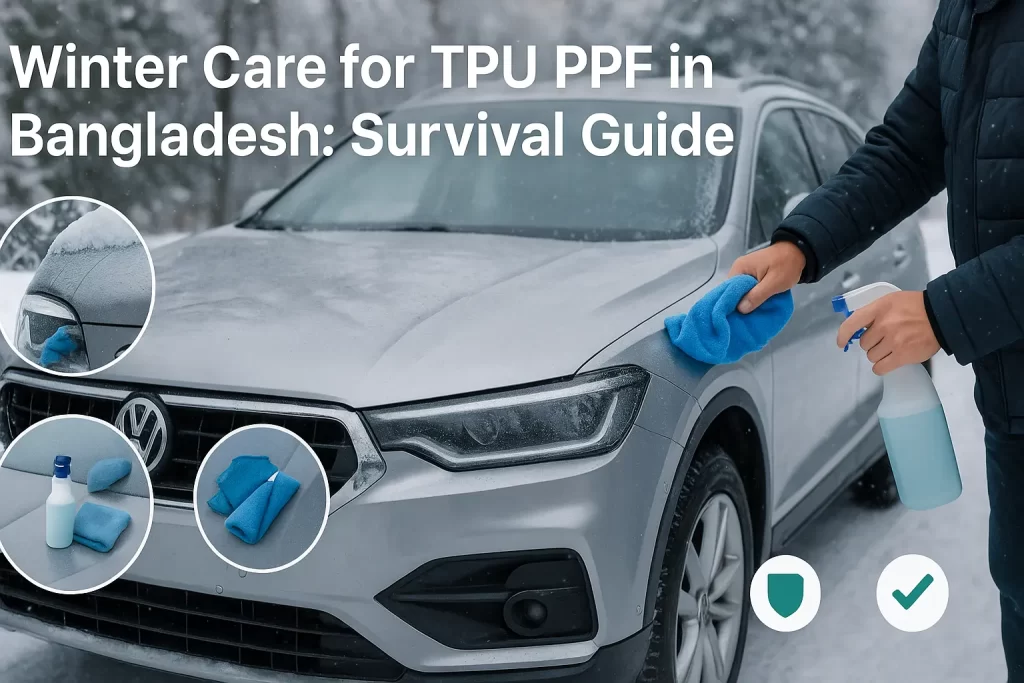
Care During Harsh Winter Conditions (Snow and Ice)
For vehicles in climates that experience true winter conditions, the threats become even more severe. Snow, ice, and especially the chemicals used to treat the roads can be very damaging to any automotive surface. Special precautions are needed during these months.
The Danger of Corrosive Road Salt and Brine
To prevent ice from forming on the roads, municipalities often use rock salt or a liquid salt brine solution. These chemicals are highly corrosive. When this salty slush gets splashed onto your vehicle, it can attack any exposed surfaces. A PPF provides an excellent barrier against this corrosion. However, it is critical to wash this salt off the film regularly. If left to sit, it can be harsh on the film's top coat.
Safe Snow and Ice Removal Techniques
Never use a hard plastic ice scraper to remove ice from a PPF-covered surface. This will cause deep scratches that are beyond the film's ability to self-heal. Similarly, do not use a stiff-bristled brush to push heavy snow off the vehicle. This can also cause abrasions. The safest way to remove snow is with a soft foam snow broom or by using a leaf blower. For ice, it is best to use the vehicle's defrost system or to let it melt naturally.
The Benefit of a Pre-Winter Sealant Application
Applying a durable ceramic coating or sealant just before winter is the best defense. This protective layer will prevent the corrosive salt from making direct contact with the film's top coat. It will also make it much harder for ice to bond to the surface, making removal easier. This proactive step is the key to a successful winter survival strategy. The principles of winter care for color PPF are universal, focusing on protection from grime and corrosives.
The Importance of Cleaning the Vehicle's Undercarriage
While PPF protects the painted surfaces, do not forget about the rest of the vehicle. It is important to frequently rinse the undercarriage of the car during the winter. This removes the salt buildup that can cause rust and corrosion on the chassis and suspension components. Many touchless car washes have undercarriage sprayers that are great for this.
Care During Hot, Sunny Months
Hot and sunny seasons bring their own set of challenges. The primary threats during these months are intense UV radiation and the accelerated etching from environmental contaminants.
The Threat of Intense UV Radiation
The sun's UV rays are at their most powerful during the summer. This radiation attacks the polymer structure of the film and the pigments in the paint. A high-quality PPF has powerful UV inhibitors to combat this. However, adding a ceramic coating provides another layer of UV protection. Keeping the film clean also helps, as a clean, glossy surface will reflect more of the sun's energy.
The Danger of Bird Droppings and Bug Splatter Baking in the Sun
The heat of the summer sun acts as an accelerator for chemical reactions. When a bird dropping or a large bug splatter lands on a hot panel, the acids and enzymes within them become much more aggressive. They can begin to etch the film's top coat in a matter of hours, not days. This is the period of highest risk for this type of damage.
The Importance of Quick Contaminant Removal
Because of this accelerated etching process, it is critical to remove these types of contaminants as quickly as possible during the summer. It is a good practice to keep a bottle of PPF-safe quick detailer and a soft microfiber towel in your car. This allows you to safely remove a bird dropping as soon as you see it, before it has a chance to cause any damage. This is the number one hack to prevent stains on ppf.
How a Protective Coating Shields the Top Coat from Heat
A ceramic coating can also help to dissipate heat more evenly across the surface. More importantly, the hard, sacrificial layer of the coating is what will face the brunt of any chemical attack. An etching from a bird dropping will occur on the coating, not on the film's permanent top coat. The coating can then be polished and reapplied if needed, leaving the film underneath unharmed.
Maintaining the Film's Advanced Properties Through the Seasons
A key part of seasonal care is understanding how the weather affects the film's special features, like its ability to self-heal. Adjusting your expectations and techniques based on the temperature is important.
How Colder Temperatures Affect the Self-Healing Feature
The self-healing process relies on the mobility of the polymers in the film's top coat. In cold weather, these polymers become stiffer and less mobile. This means that the self-healing effect will be much slower or may not appear to work at all on its own. A light scratch that would disappear in an hour on a hot summer day might linger for a long time in the cold.
Performing a Safe Self-Healing Repair in Cooler Weather
If you get a light scratch during a colder month and want to fix it, you will need to actively apply heat. The safest way is to bring the vehicle into a heated garage. Letting it sit in the warm space for a few hours will often be enough to allow the scratch to heal. A heat gun or warm water can also be used, as detailed in our guide to self healing repair ppf.
Long-Term Inspections and End-of-Life
Seasonal care is also a good time to perform a more detailed inspection of your film. This allows you to monitor its health and to know when it might be nearing the end of its long service life.
Performing a Post-Season Inspection
After a particularly harsh season, it is a good idea to give your film a close look. After a deep clean, inspect each panel under good lighting. Look for any new rock chips, deep scratches, or other damage that may have occurred. Check the edges of the film for any signs of lifting.
Recognizing the Signs That It's Time for a Replacement
A high-quality PPF can last for a decade or more. However, it will eventually wear out. The signs of a film reaching its end-of-life include a general yellowing or cloudy appearance, cracking or brittleness, and a significant loss of its hydrophobic and self-healing properties. Our guide on when to replace color ppf provides a detailed look at these signs.
Final Thoughts
A proactive approach to seasonal care for TPU PPF is the best way to protect your investment and keep your vehicle looking its best. The challenges may change with the weather, but the core principles of care remain the same. Keep the film clean with gentle, regular washing. Protect the film's top coat with a high-quality sealant or ceramic coating. And address any aggressive contaminants as quickly as possible. By following this simple survival guide, you can ensure that your paint protection film provides a flawless finish and durable protection, no matter what the season throws at it.


