



Popular Articles
Ultimate Guide to 360° Comprehensive Interior Detailing — Deep Clean, Sanitize and Protect Your Car’s Cabin
2026.02.04
Singapore Car Window Tinting Guide: Rules, Benefits, and How to Choose the Right Film
2026.02.04
The Complete Guide to Colour Wraps — Transforming Your Car’s Look with Style and Protection
2026.02.04

About Company
Colorfuul is a global leader in high-end automotive films, offering Color TPU PPF, Transparent PPF, PET Window Films, and Vinyl Wrapping. With exports to over 100 countries, we deliver consistent quality, competitive pricing, and professional service. Beyond production, we provide OEM/ODM customization, shaping the future of automotive aesthetics.
 mary@colorfuul.com
  86 13541196952
 How Do I Calculate How Much PPF I Need for My Car?
To calculate the amount of Paint Protection Film (PPF) needed for your car, you must measure the length of each specific panel you intend to cover and add 4 to 6 inches of margin to every side for handling, stretching, and wrapping edges. For a full body wrap on a standard sedan, you will typically need a 50-foot to 55-foot roll of 60-inch wide film. If you are only covering the "Front Clip" (hood, bumper, fenders, and mirrors), you generally need 10 to 12 linear feet of a 60-inch roll. It is crucial to factor in an additional 10–15% material waste buffer to account for installation errors or complex curves.
Understanding PPF Roll Sizes and Calculations
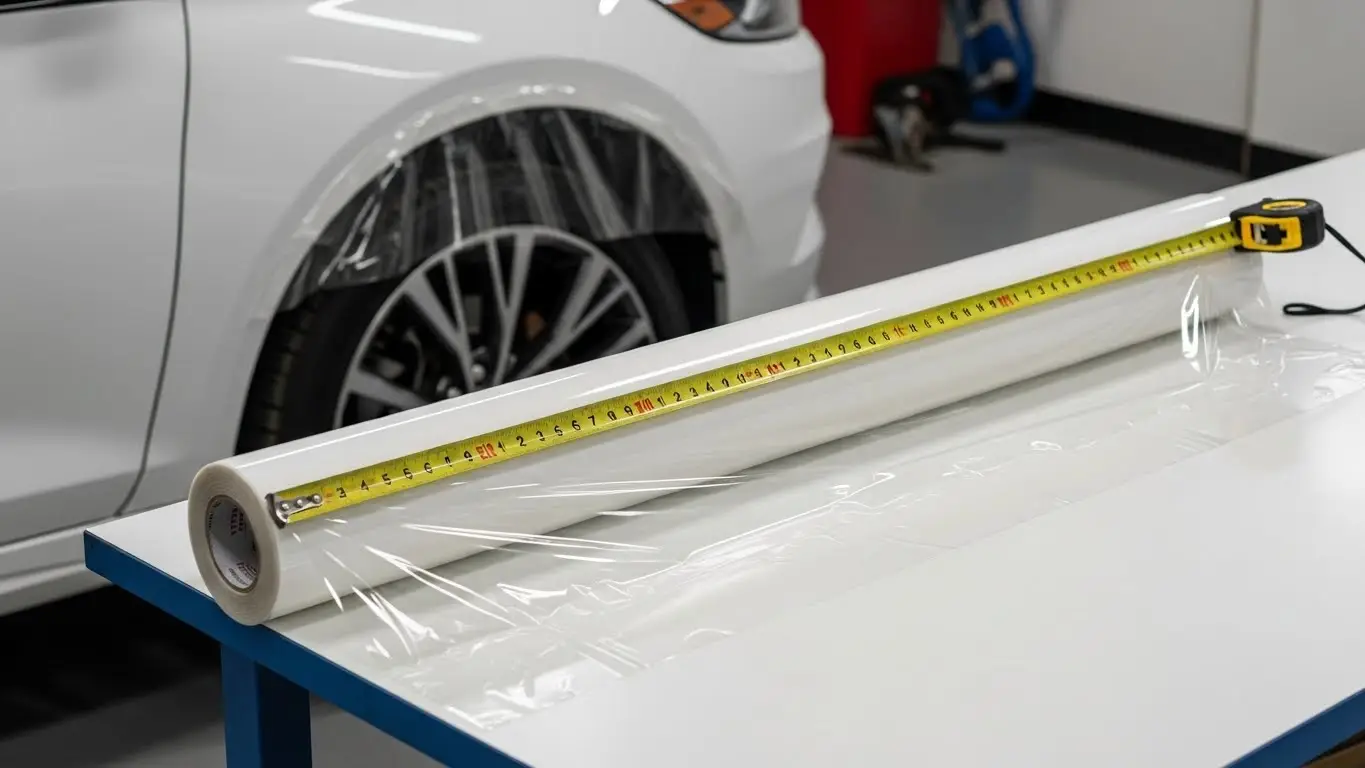
Before you start measuring your vehicle with a tape measure, it is important to understand how PPF is sold. Most professional automotive films come in rolls that are 60 inches wide. This width is standard because it is wide enough to cover the hood of almost any passenger vehicle without a seam.
When you buy film, you are usually purchasing by the linear foot. For example, if you buy "10 feet" of film, you are getting a sheet that is 10 feet long by 60 inches wide.
- Standard Width: 60 inches (fits most hoods and roofs).
- Narrower Widths: 12, 24, or 36 inches (used for rockers, pillars, or mirrors to save money).
- Buffer Zone: Always add extra length to your measurement to allow the installer to pull and stretch the film.
Image Suggestion: An infographic showing a standard 60-inch PPF roll next to a sedan, highlighting the "Front Clip" zone vs. "Full Body" zone.
Alt Text: Diagram comparing PPF material needs for full car wrap versus front clip protection.
How Many Linear Feet of PPF for a Full Car?
Most standard sedans require between 50 and 60 linear feet of 60-inch wide PPF for a full wrap.
This estimate assumes you are wrapping every painted surface: the hood, roof, trunk, bumpers, doors, and quarter panels. Larger vehicles, such as full-size SUVs or trucks, will require significantly more material, often pushing into the 65 to 75-foot range.
If you are trying to figure out the specific breakdown, you can check out this guide on how to calculate PPF for car projects, which breaks down the math for different vehicle sizes.
Material Estimation by Vehicle Type
| Vehicle Type | Full Wrap (Linear Feet) | Front Clip Only (Linear Feet) |
| Small Coupe / Hatchback | 45 - 50 ft | 8 - 10 ft |
| Standard Sedan | 50 - 55 ft | 10 - 12 ft |
| Compact SUV / Crossover | 55 - 60 ft | 12 - 14 ft |
| Full-Size Truck / SUV | 65 - 75 ft | 14 - 16 ft |
Do I Need a Bulk Roll or a Pre-Cut Kit?
For beginners, a pre-cut kit is often safer, but bulk rolls offer better value for full wraps.
A bulk roll requires you to stretch the film over the panel and cut the excess off with a blade (requiring high skill). A pre-cut kit is designed by software to fit your specific make and model, meaning you just line it up and squeegee it down.
However, pre-cut kits can be more expensive per square foot. If you are budget-conscious and willing to learn the cutting technique, buying a bulk roll is cheaper. For a deeper dive into the financial differences, read our breakdown of the PPF installation cost and DIY guide.
How Much PPF Do I Need for Just the Hood?
You typically need 6 to 7 linear feet of a 60-inch roll to cover a car hood.
Most car hoods are between 45 and 60 inches long. However, because hoods curve downwards, you need significant excess material on all sides to pull the film tight (tension) so it lays flat without wrinkles.
Steps to Measure Your Hood:
- Measure the hood from the base of the windshield to the front grille.
- Measure the width from fender to fender.
- Add 4 inches to the length and 4 inches to the width.
- If the width exceeds 60 inches (rare, but possible on supercars or wide trucks), you may need a specialized 72-inch roll.
Frequently Asked Questions
Does PPF shrink over time?
No, high-quality PPF does not shrink significantly. However, if it was over-stretched during installation, the edges might pull back slightly, leaving a glue line. This is why calculating the right amount of slack is vital.
Can I piece together scraps for larger panels?
It is not recommended. While you can use scraps for mirrors or door handles, using multiple pieces on a hood or door will leave a visible seam, which collects dirt and looks unsightly. Always use a single sheet for large panels.
What is the "Front Clip" package?
The Front Clip is the most common PPF package. It covers the highest-impact areas: the front bumper, the entire hood, both front fenders, and the side mirrors. It balances protection with cost.
How do I account for mistakes?
If you are a DIY installer, purchase at least 20% more material than you measured. It is very common to ruin the first piece of film (usually a complex bumper) while learning how the adhesive tacks and shifts.
Key Takeaways
- Standard Roll: Most calculations are based on a 60-inch wide roll.
- Full Wrap: Plan for 50–55 linear feet for a standard sedan.
- Front Clip: Plan for 10–12 linear feet for basic front-end protection.
- Margin of Error: Always add 4-6 inches per panel and buy 10-15% extra material for mistakes.
Conclusion
Calculating the right amount of PPF is the first step toward a successful installation. Whether you are buying a 50-foot roll for a full color-change wrap or just 10 feet for a front-end shield, accuracy saves you money. Always measure your specific panels, account for the "stretch" margin, and check if a pre-cut kit might save you the hassle of manual trimming.
Ready to start your project? Grab your tape measure and start mapping out your panels today.


