



Popular Articles
Ultimate Guide to 360° Comprehensive Interior Detailing — Deep Clean, Sanitize and Protect Your Car’s Cabin
2026.02.04
Singapore Car Window Tinting Guide: Rules, Benefits, and How to Choose the Right Film
2026.02.04
The Complete Guide to Colour Wraps — Transforming Your Car’s Look with Style and Protection
2026.02.04

About Company
Colorfuul is a global leader in high-end automotive films, offering Color TPU PPF, Transparent PPF, PET Window Films, and Vinyl Wrapping. With exports to over 100 countries, we deliver consistent quality, competitive pricing, and professional service. Beyond production, we provide OEM/ODM customization, shaping the future of automotive aesthetics.
 mary@colorfuul.com
  86 13541196952
 What's the Difference Between TPU and PVC Wraps?
TPU (Thermoplastic Polyurethane) is a premium, elastomeric protection film designed to shield vehicle paint from physical damage, boasting self-healing properties and a 7–10 year lifespan.1 In contrast, PVC (Polyvinyl Chloride) is a thinner, rigid vinyl material used primarily for aesthetic color changes, offering limited protection and a shorter 3–5 year lifespan. Simply put: choose TPU for protection, and PVC for style.
Why This Matters
For car enthusiasts and installers in 2025, the line between "styling" and "protection" is the most critical decision you'll make. Choosing the wrong material can lead to wasted budget, damaged paint, or a finish that degrades in under two years.2
If you are a shop owner, explaining this difference to customers is vital for managing expectations. If you are a car owner, understanding the distinction between a TPU shield and a PVC cosmetic wrap ensures you get exactly what you pay for—whether that's rock-chip resistance or a stunning new color.
The Core Science: Plastic vs. Elastic
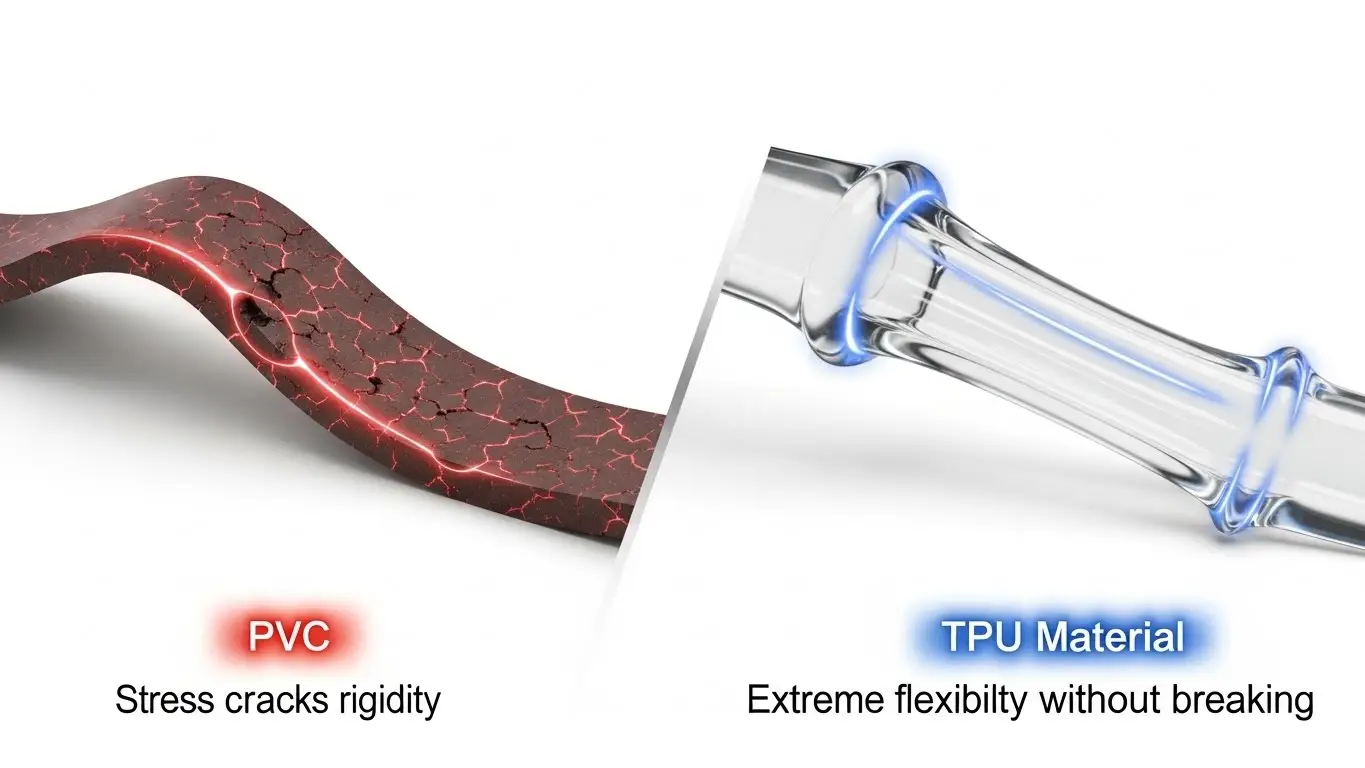
To understand the performance difference, we have to look at the chemistry.
PVC (Polyvinyl Chloride) is essentially a rigid plastic.3 To make it flexible enough to wrap around a car bumper, manufacturers add chemicals called plasticizers. Over time, UV rays and heat cause these plasticizers to evaporate. This is why older vinyl wraps become brittle, crack, and are difficult to remove.
TPU (Thermoplastic Polyurethane) is different.4 It is an elastomer, meaning its chemical structure is naturally flexible. It doesn't rely on additives to stretch. This natural elasticity is what gives TPU its famous "self-healing" ability—when scratched, the material "flows" back into its original shape under heat.5
💡 Pro Tip: This chemical stability is why we explore the specifics of yellowing resistance in our guide onwhat is aliphatic TPU film.
Comparison: TPU vs. PVC at a Glance
Here is the data-driven breakdown of how these two materials compare in the 2024-2025 market.
| Feature | TPU (Protection Film) | PVC (Vinyl Wrap) |
| Primary Function | Paint Protection (PPF) | Color Change / Aesthetics |
| Material Base | Urethane (Elastomer) | Vinyl (Plastic) |
| Thickness | 6–8+ mils (Thick) | 3–4 mils (Thin) |
| Self-Healing | ✅ Yes (Heat activated) | ❌ No |
| Lifespan | 7–10 Years | 3–5 Years |
| Impact Resistance | High (Stops rock chips) | Low (Scratches easily) |
| Yellowing | Resists yellowing (Aliphatic) | Prone to fading/discoloration |
| Cost | $$$(Premium) | $$ (Budget-Friendly) |
TPU: The Invisible Shield
TPU is the gold standard for Paint Protection Film (PPF). When you see a high-end sports car that looks brand new after 50,000 miles, it’s likely wrapped in TPU.
1. Impact Absorption
Because TPU is softer and thicker (usually around 8 mils), it absorbs the energy from road debris. When a stone hits PVC, it often punches right through to the paint. When it hits TPU, the film absorbs the blow and bounces back.
2. Self-Healing Technology
This is the "magic" trick of TPU. The elastomeric polymers are chemically designed to remain fluid but solid. If you wash your car and create swirl marks, or if a bush grazes the side, leaving the car in the sun or pouring hot water on it will cause the scratches to vanish.6
3. Hydrophobic Finish
Modern TPU films often come with a top coat that mimics ceramic coating. Water beads up and sheets off, making the car significantly easier to clean than standard factory paint or sticky PVC vinyl.
PVC: The King of Customization
While TPU wins on protection, PVC has historically ruled the world of customization. It is the material of choice for "color change wraps."
1. Infinite Color Palette
PVC is easier to pigment during manufacturing. This allows for thousands of finishes: matte, satin, gloss, chrome, color-shift, and carbon fiber textures. If you want your car to look like a spaceship or have a matte military green finish, PVC has traditionally been the answer.
2. Cost-Effectiveness
For a driver who wants to change their car's look every 2 or 3 years, PVC is affordable. It allows for short-term trends without the heavy investment required for TPU protection.
3. Conformability
PVC is thinner, making it easier for installers to manipulate around extremely complex curves and door handles without the tension lines that can sometimes occur with thicker TPU.
The 2025 Trend: Colored TPU (The Best of Both Worlds)
This is where the industry is shifting in 2025. For years, you had to choose: Protection (Clear TPU) or Style (Colored PVC).
Now, we are seeing the rise of Colored TPU PPF.
This innovation takes the protective, self-healing, thick properties of TPU and infuses it with the pigments previously found only in PVC.
- You get the color: Real gloss black, matte grey, or racing red.
- You get the protection: No stone chips, self-healing scratches.7
- You get the finish: A paint-like depth that PVC vinyl cannot achieve because it has no "orange peel" texture.
If you are torn between the two technologies, looking into colored TPU might be your solution. You can learn more about how different film technologies stack up in our article on TPU vs TPH film technology.
Cost Breakdown: What to Expect
Pricing varies by region and vehicle size, but here are the average market rates for 2024-2025.
PVC Vinyl Wrap Costs
- Partial Wrap (Roof/Hood): $250 – $600
- Full Exterior Wrap: $2,500 – $4,500
- Lifespan Cost: You will likely replace this twice in 10 years.
TPU PPF Costs
- Full Front (High Impact Areas): $1,800 – $2,500
- Full Car Protection: $5,000 – $8,000+
- Lifespan Cost: One installation typically lasts the life of your ownership (7-10 years).
The Verdict: TPU has a higher upfront cost, but if you plan to keep the vehicle or want to preserve its resale value, the cost-per-year is often lower than replacing PVC wraps multiple times.8
Common Mistakes to Avoid
1. Confusing TPH with TPU
Some cheaper films are labeled "TPH." This is essentially PVC mixed with plasticizers to feel like TPU. It is cheaper, but it does not have the true durability or non-yellowing properties of Aliphatic TPU.9 Always verify the material.
2. Using PVC for Highway Driving
If you commute on highways, a PVC wrap will look "sandblasted" on the front bumper within 6 months. It cannot handle high-speed debris. Do not install PVC expecting it to stop rock chips.
3. Ignoring Removal Times
PVC wraps must be removed before they crack (usually year 3 or 4). If you leave a PVC wrap on for 7 years, it may bake onto the clear coat, costing thousands in labor to scrape off. TPU does not have this issue.10
Expert Tips for Installers and Owners
- For Gloss Levels: High-quality TPU is actually glossier than factory clear coat. PVC often has a slight texture (orange peel).11 If "mirror finish" is the goal, TPU wins.
- Maintenance: You can ceramic coat both TPU and PVC, but TPU holds the coating better due to its porosity and top-coat technology.
- Layering: A common trick in 2025 is to wrap the car in colored PVC for style, and then apply clear TPU on the front bumper to protect the vinyl from tearing.
Frequently Asked Questions
Is TPU wrap better than vinyl (PVC)?
Yes, for protection and durability.12 TPU is thicker, self-healing, and resists rock chips.13 However, for pure color customization on a budget, PVC vinyl offers more variety.
Can TPU wraps be colored?
Yes. Colored PPF (TPU) is a rapidly growing trend in 2025. It offers the color change of vinyl with the thickness and protection of traditional PPF.
How long does a TPU wrap last?
A high-quality TPU film typically lasts 7 to 10 years.14 It is resistant to UV rays and won't crack or brittle like PVC does over time.15
Why is TPU so much more expensive than PVC?
TPU is a complex elastomer that is more difficult to manufacture.16 The raw materials (urethane) cost significantly more than the PVC plastic used in standard vinyl.
Does PVC wrap protect car paint?
Minimally. PVC protects against UV fading and very light scratches, but it will not stop rock chips, road debris, or deep scratches like TPU will.17
Can you put ceramic coating on TPU?
Absolutely. While many TPU films are already hydrophobic, adding a ceramic coating enhances the gloss and makes the surface even easier to clean.
What happens if I leave a PVC wrap on too long?
The adhesive can harden, and the film can crack. Removing it becomes a labor-intensive process that can sometimes damage the clear coat underneath.
Is TPH the same as TPU?
No. TPH is a "hybrid" cheaper alternative—usually PVC with enhanced plasticizers.18 It lacks the true longevity and non-yellowing clarity of pure TPU.19
Does TPU yellow over time?
High-quality Aliphatic TPU does not yellow. Cheaper "Aromatic" TPU or PVC films are the ones prone to yellowing under UV exposure.20
Key Takeaways
- TPU is for protection: It stops rocks, heals scratches, and lasts up to 10 years.21
- PVC is for style: It changes color affordably but offers minimal physical protection.
- Cost vs. Value: TPU costs 2x more upfront but retains value by preserving the original paint.
- The Hybrid Solution: Colored TPU is emerging as the superior choice for those wanting both color and protection.
- Check the Material: Ensure you aren't buying TPH (enhanced PVC) when you are paying for TPU quality.


